Catalogue
of Making
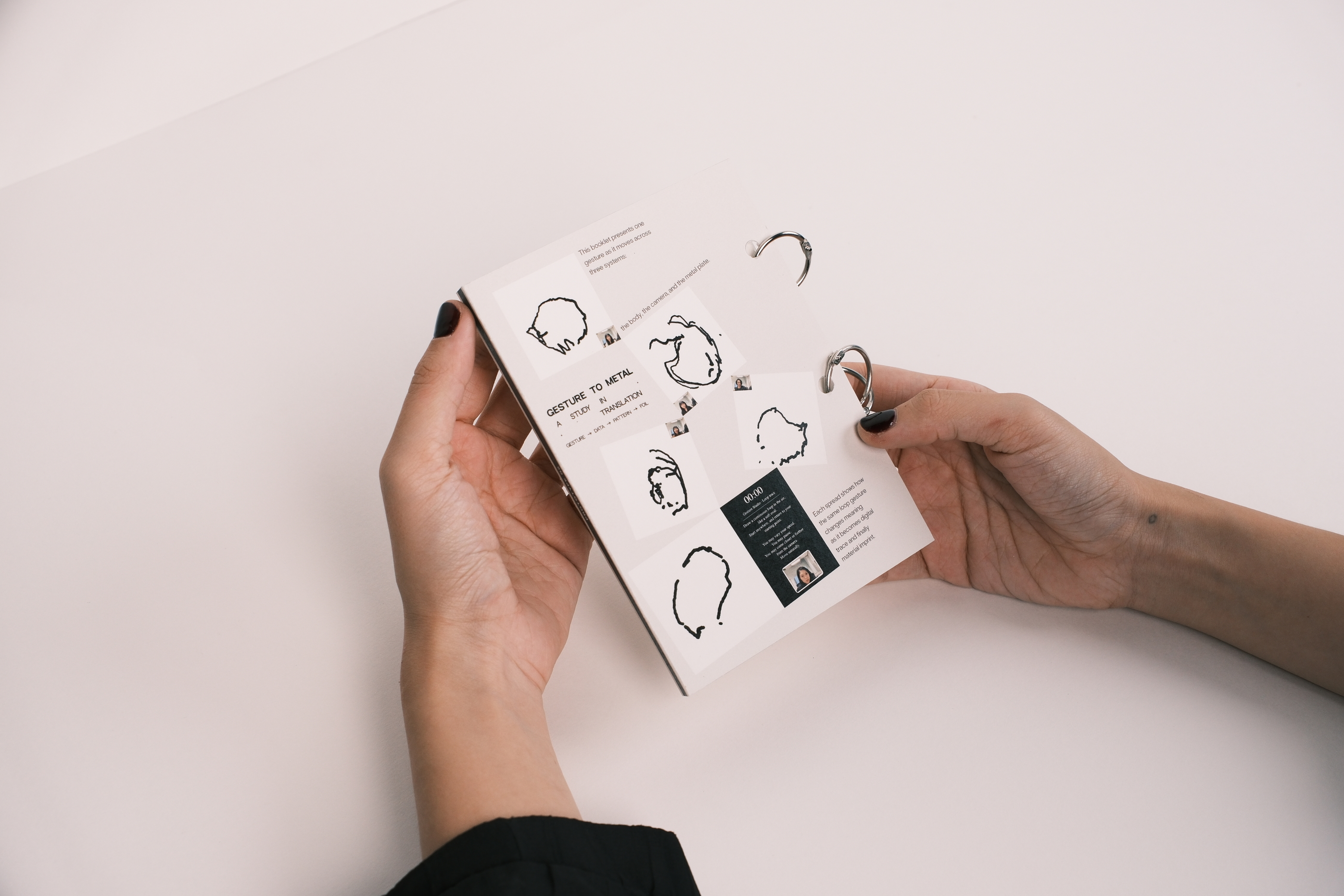
Prototype 2 looks at how a simple loop gesture changes as it moves through the camera, the code, and the material. I started by tracing the loop through my p5.js interface, then translated the digital trace into a foil embossing. This let me study how movement behaves when it shifts from gesture to data to material texture. After testing it myself, I asked four other people to perform the same loop so I could compare how different bodies produce different traces across the same system.
After testing the loop gesture myself, I invited four friends to perform the exact same task. I gave everyone the same instructions and the same 10-second duration so I could compare their traces fairly. Holding the rules constant lets me see what changes because of individual behaviour and what stays consistent because of the system.
This comparison helps me understand which qualities of gesture are personal, which are structural, and how the translation pipeline responds to different hands.
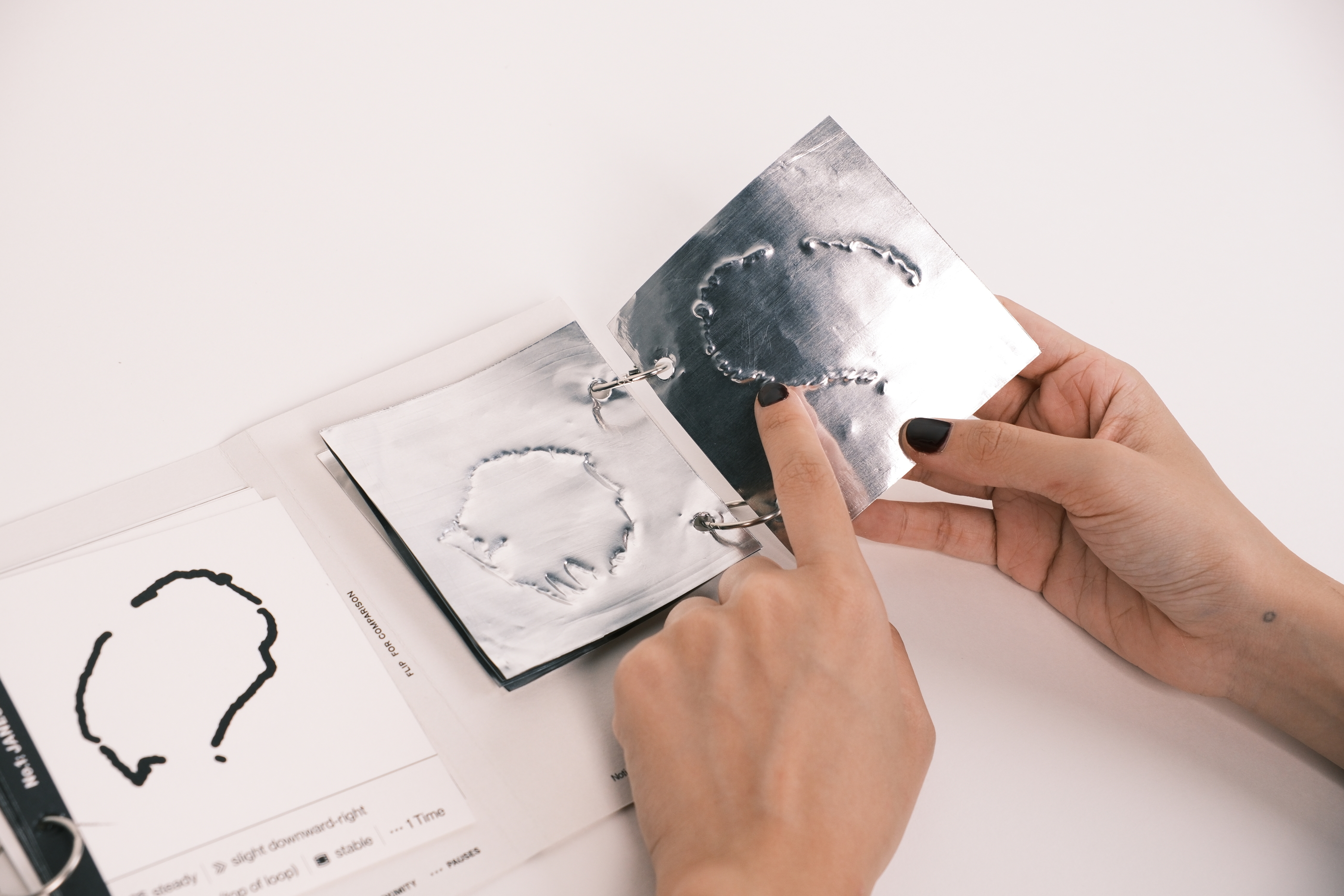
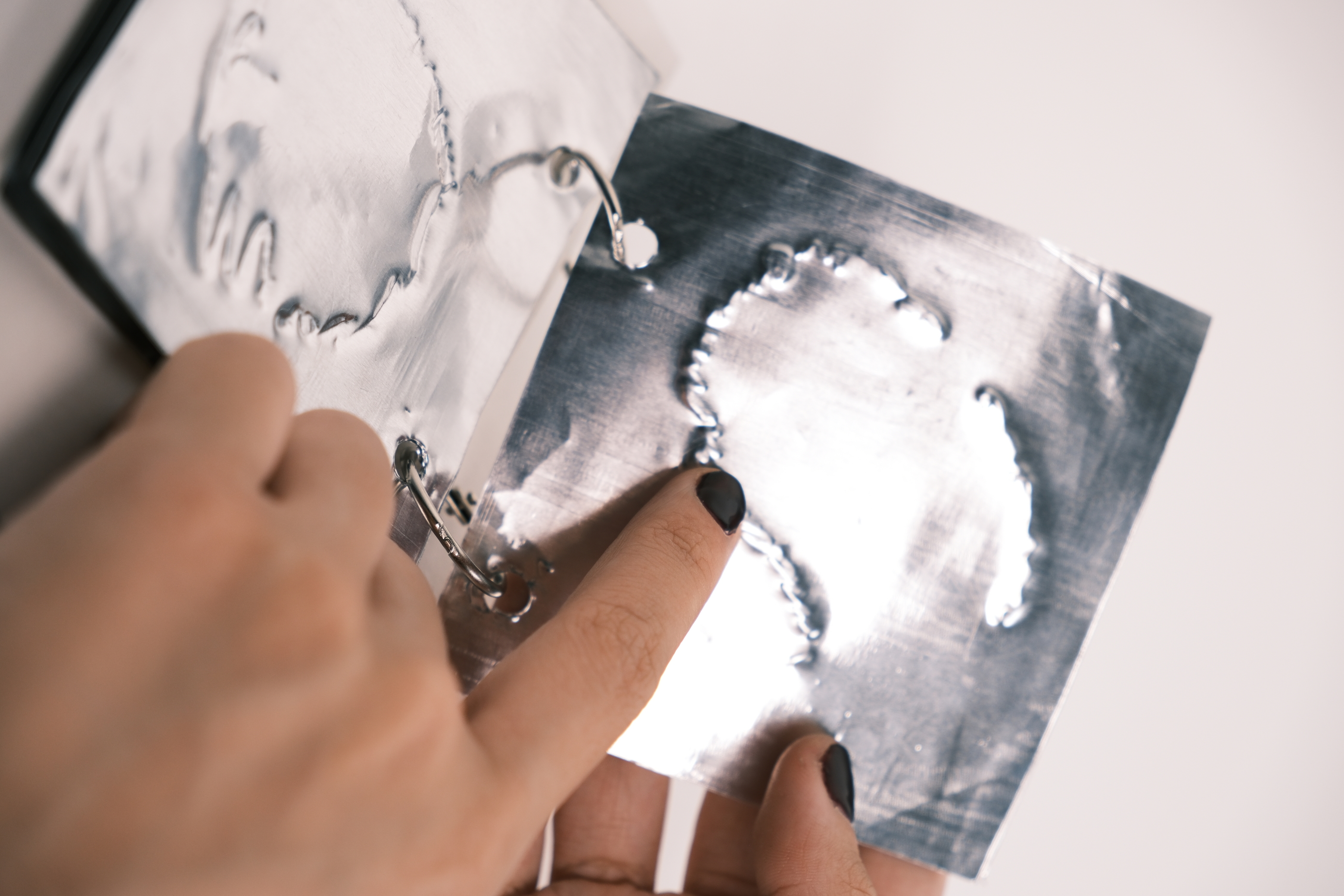
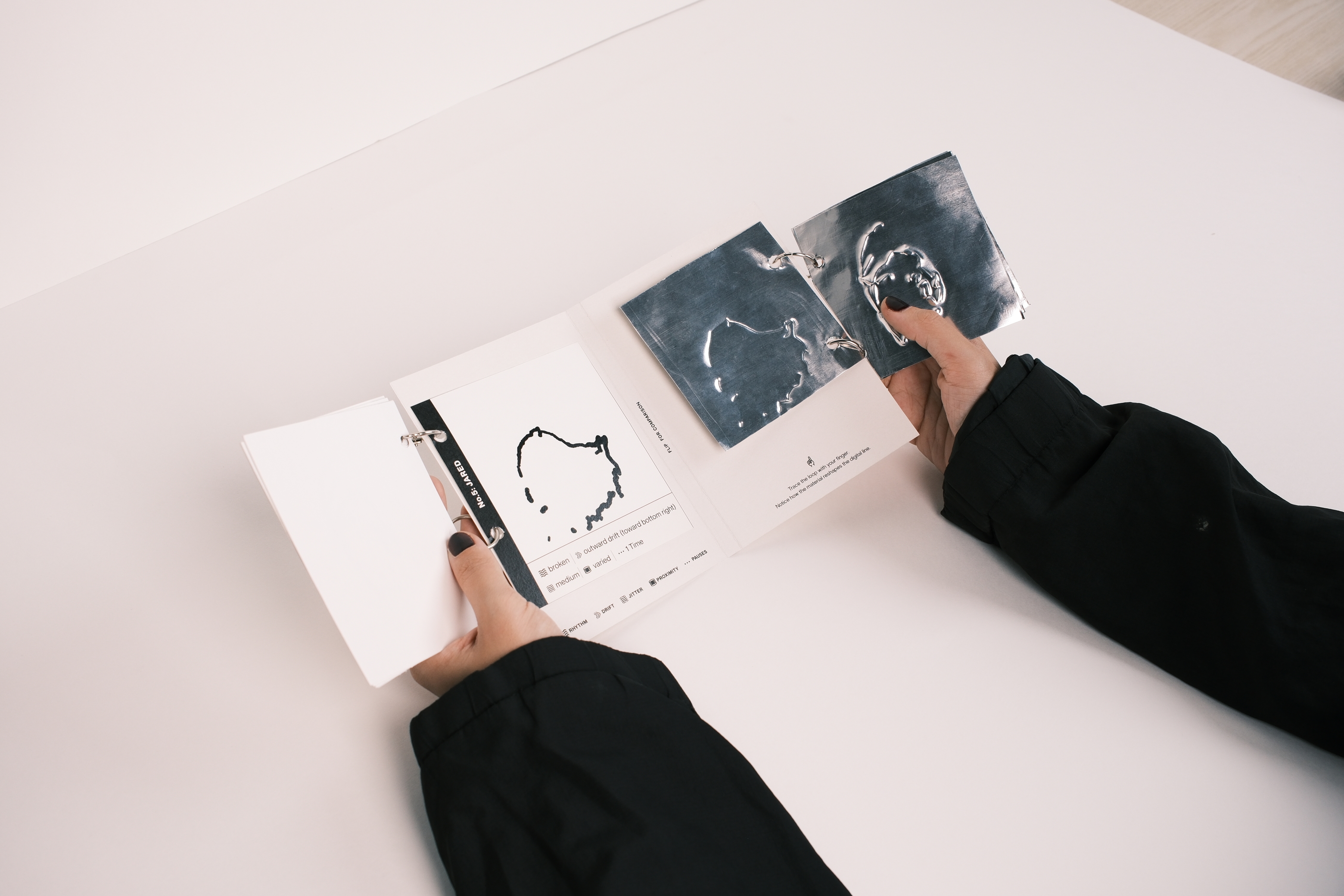
After capturing each participant’s loop gesture in Gesture Studio, I generated a printed trace at a 1:1 scale. I then asked them to transfer that same loop into material form by embossing it onto a 9×9 cm aluminium foil square. The printed trace was placed above the foil with a soft surface underneath, and participants used a stylus to follow the path.
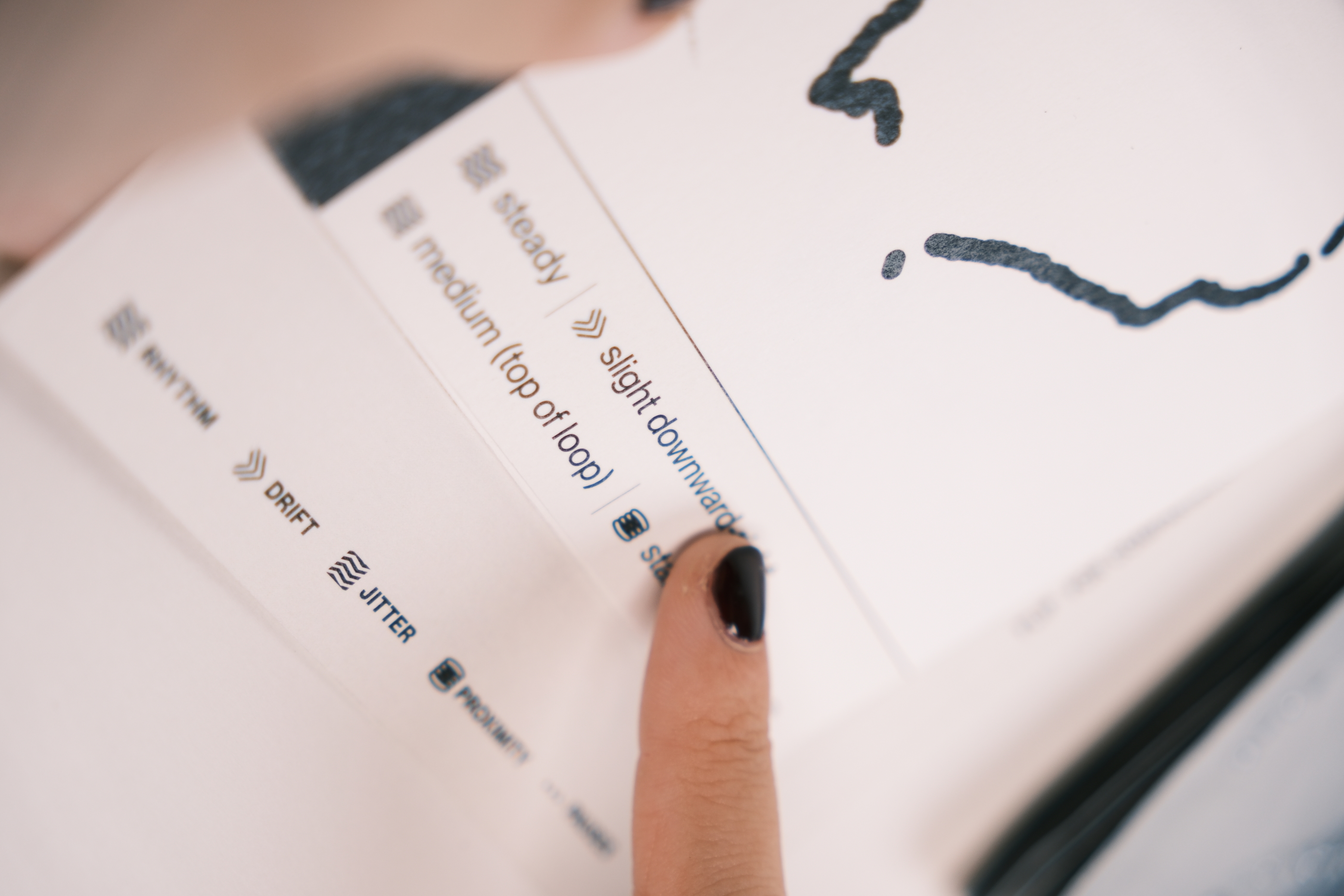
This step lets me compare how the same movement behaves across two systems. The digital trace preserves speed, jitter and proximity as data-driven line qualities, while the foil version reveals how the hand negotiates pressure, resistance and small physical corrections. It shows what qualities survive the translation and what the material brings back into the gesture.