Catalogue
of Making
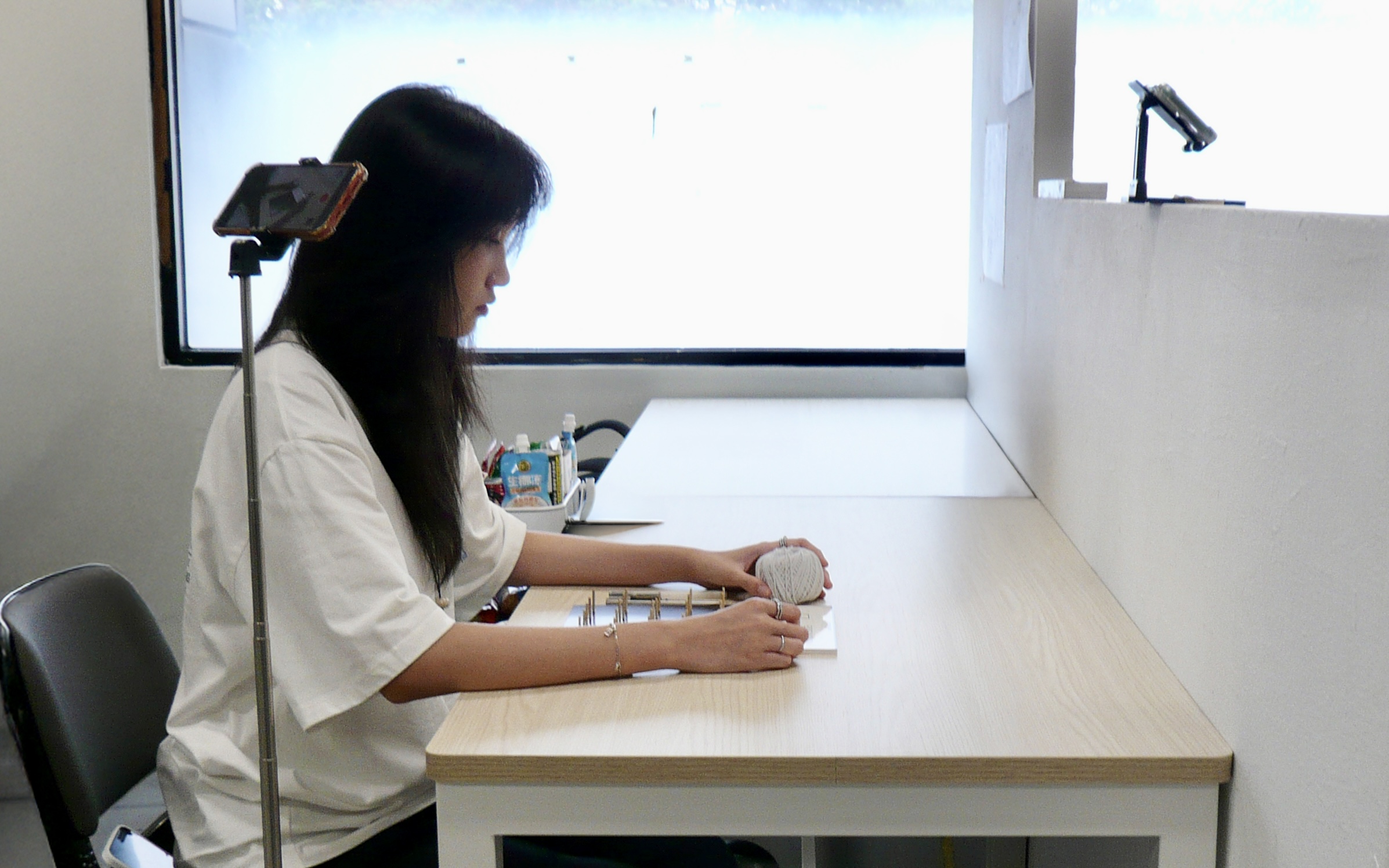
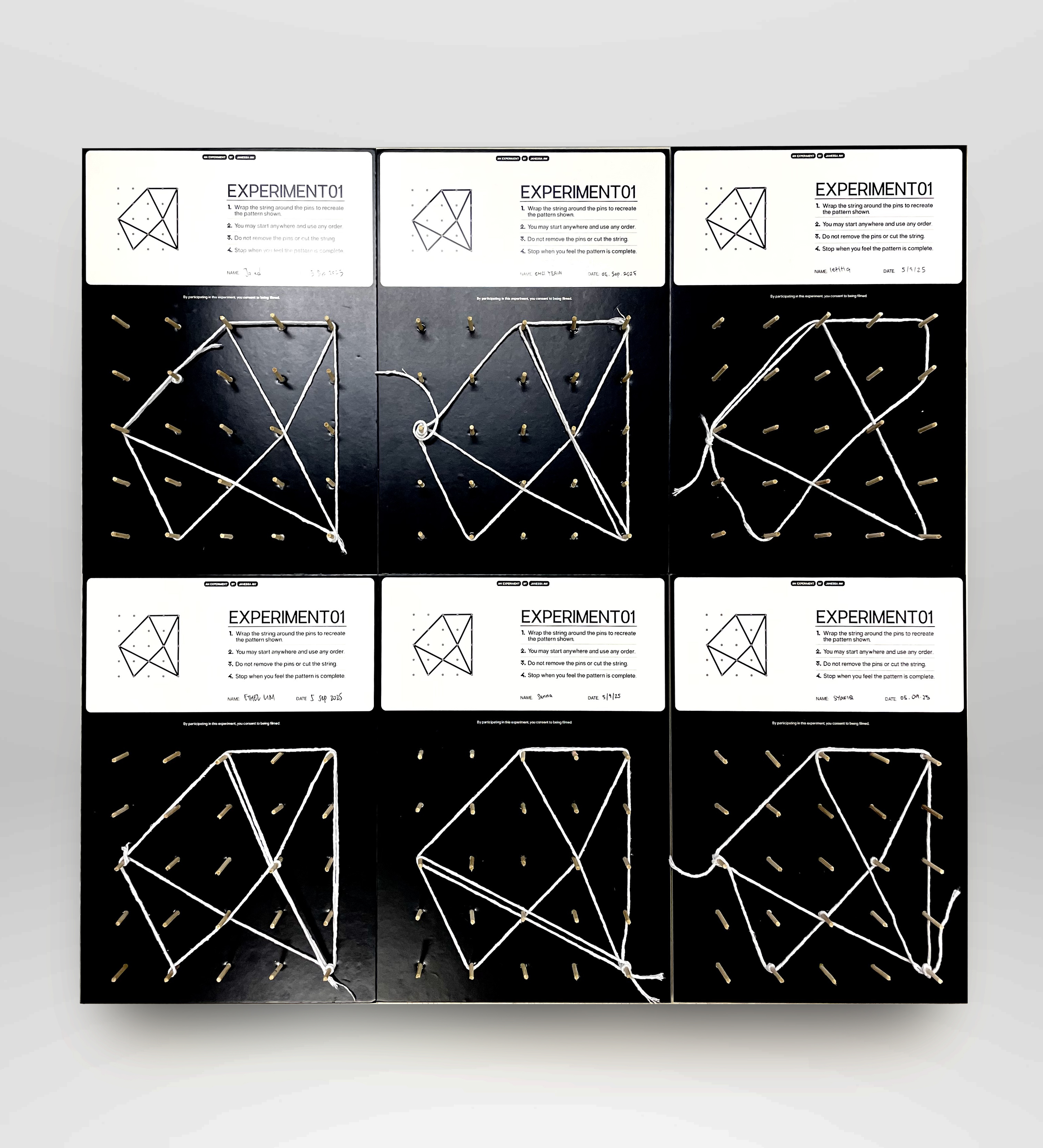
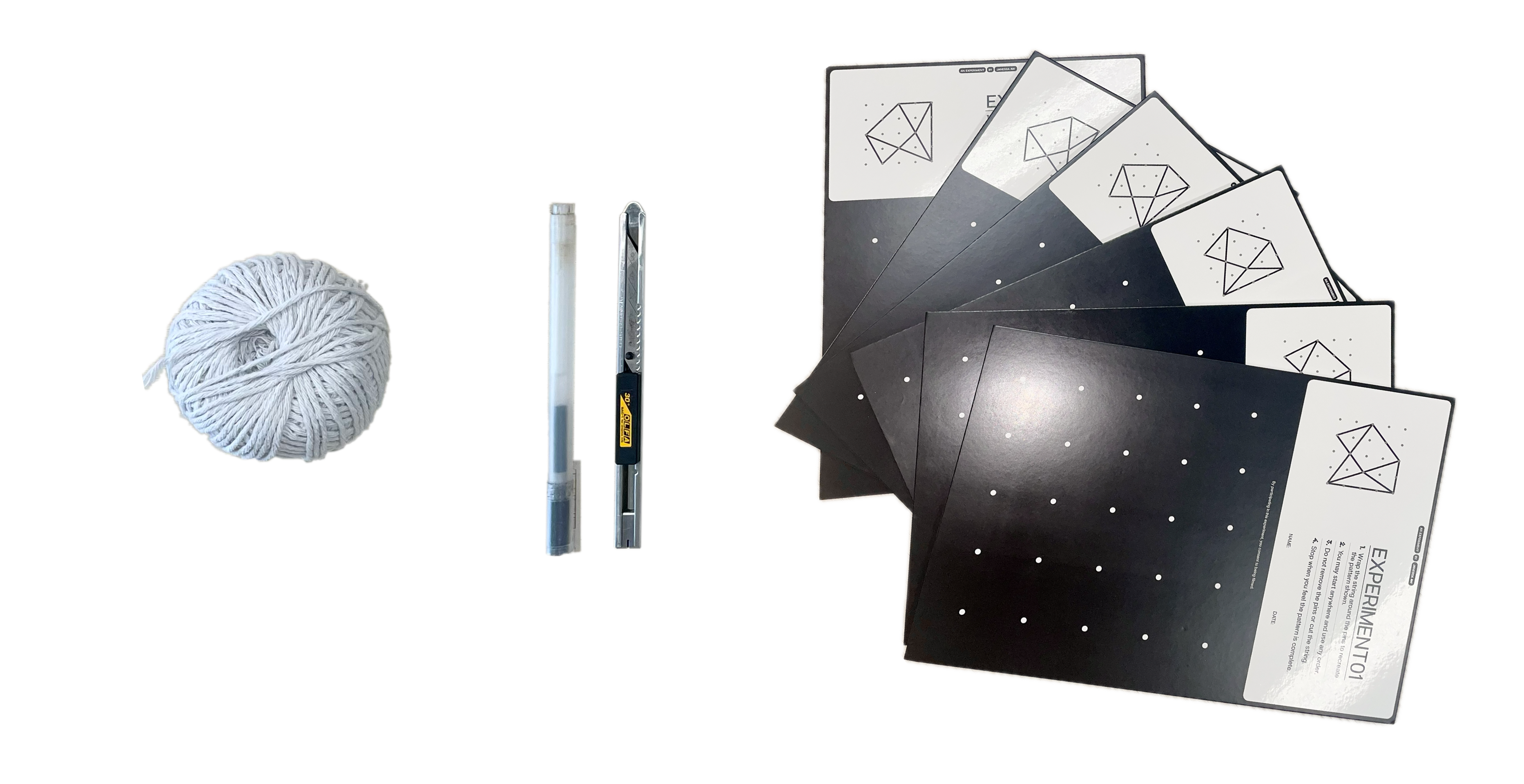
For this pins-and-string study, I generated a simple looped pattern in p5.js and used it as a prompt for participants. Each person received the same printed pattern and the same instructions, but had to recreate it by winding string around nails on a board. The experiment lets me compare how a coded pattern behaves once it is rebuilt through tension, knots and tiny hand decisions.
Even though everyone started from the same printed pattern, instructions and parameters, the outcomes drifted almost immediately. The tension of the string changes, the angle of each wrap shifts, and tiny hesitations create new diagonals that weren’t part of the original code. Seeing these variations helps me understand the pattern as something flexible rather than fixed, and shows how instructions behave once they move through different hands.