Catalogue
of Making
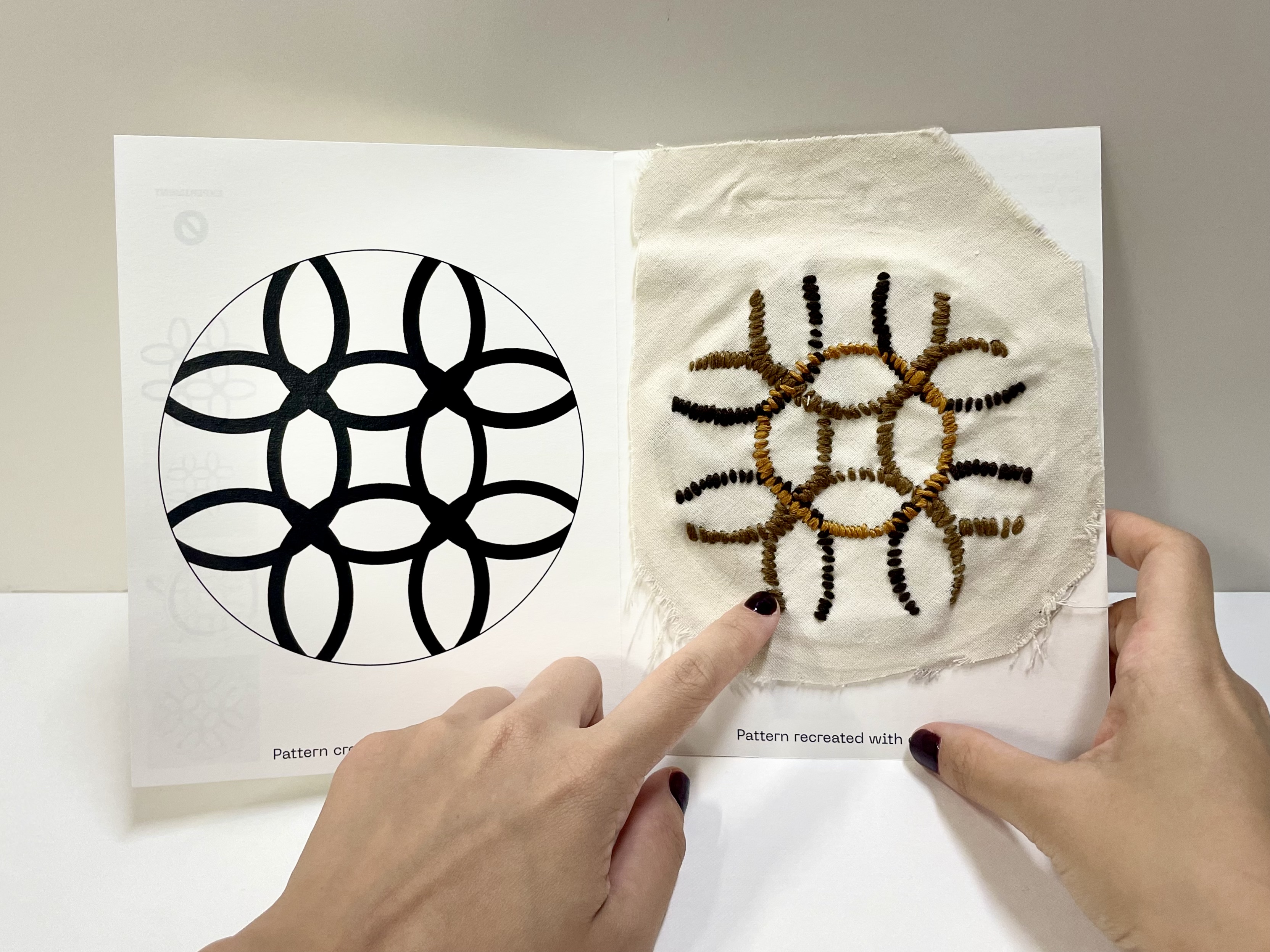
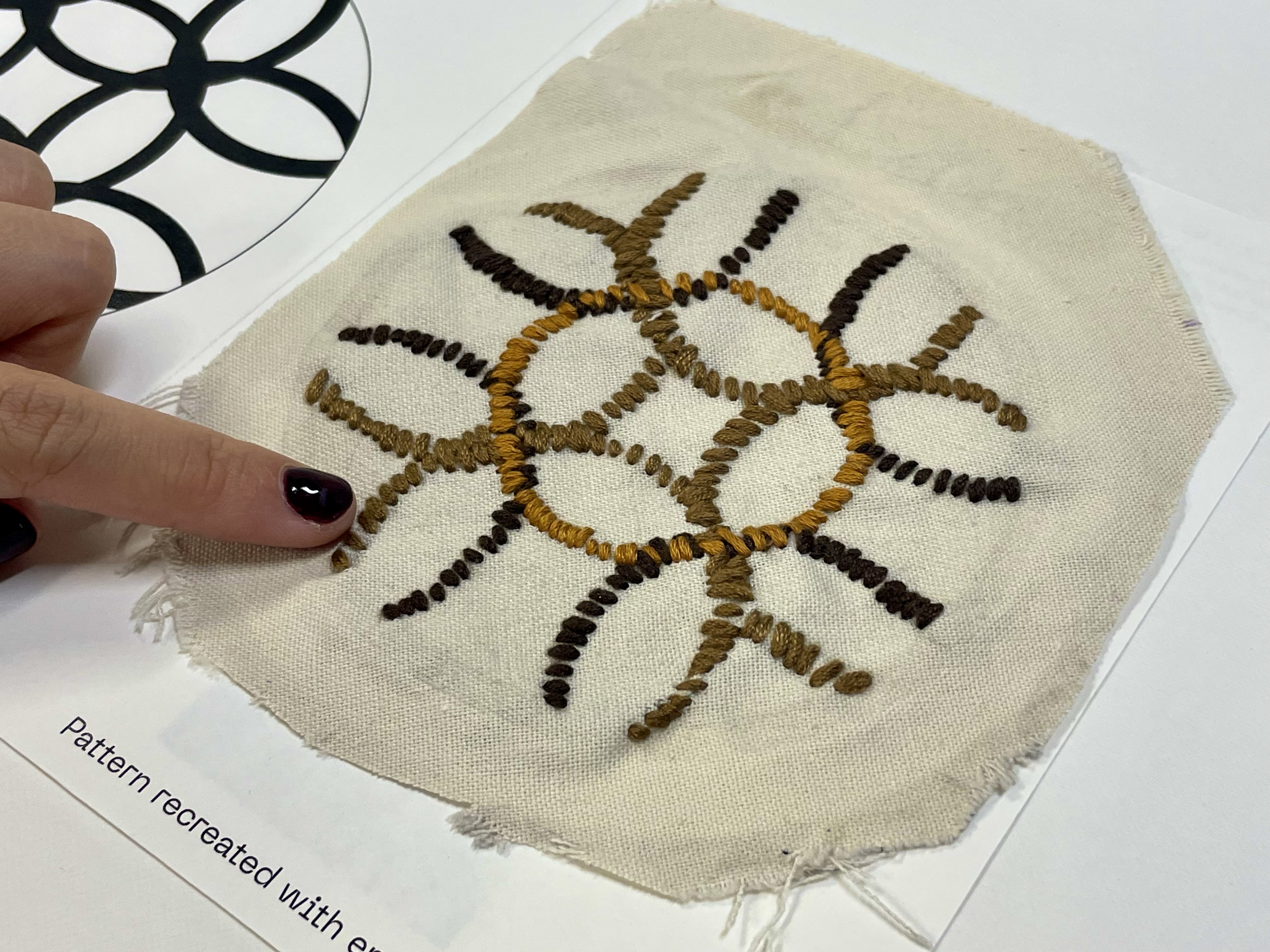
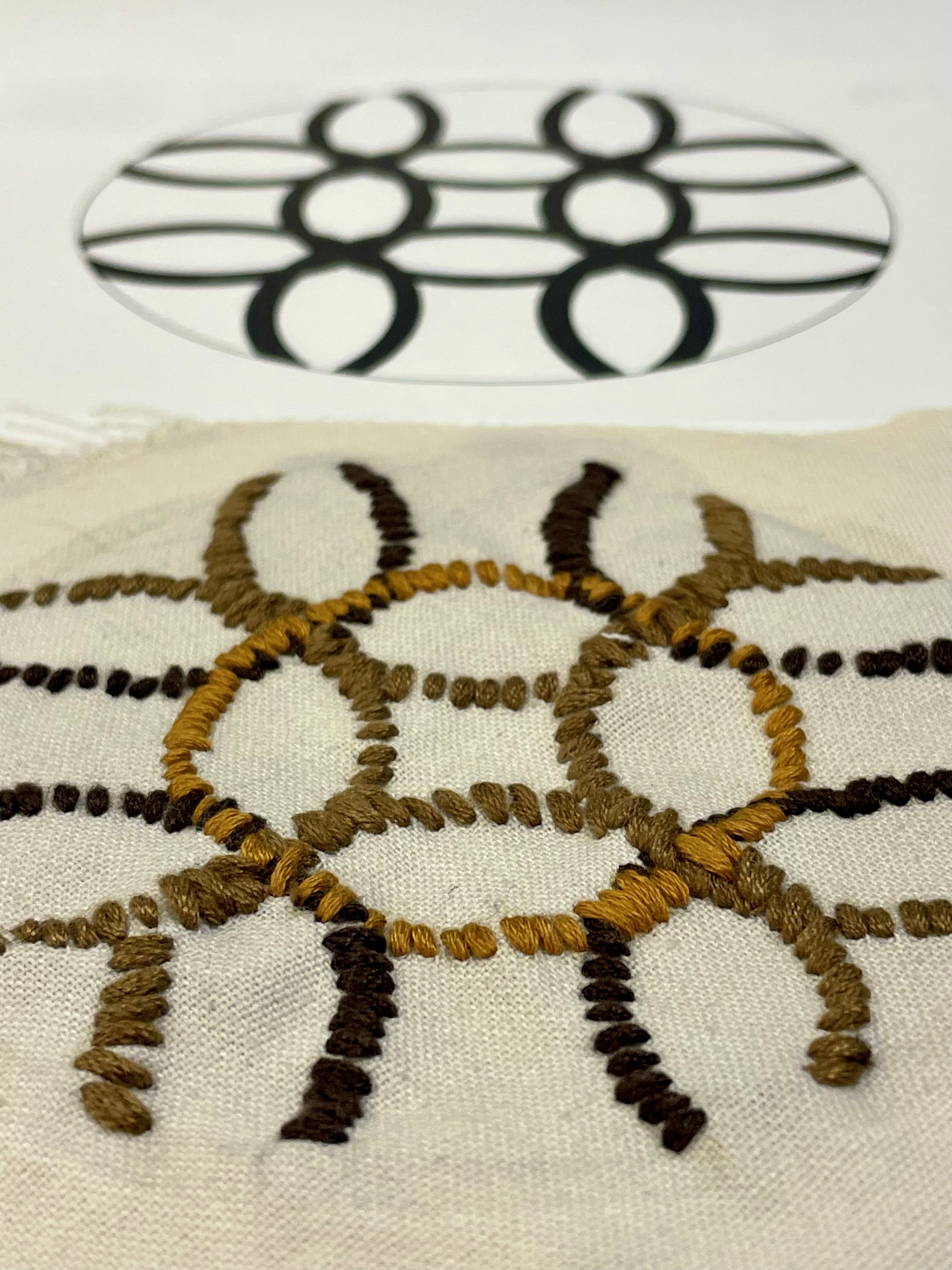
In this study I translated a clean, grid-based p5.js pattern into embroidery. The code gives me a perfectly repeatable structure, but the moment it enters fabric it has to pass through my hands, my timing and my mistakes. Every stitch becomes a tiny record of where the digital logic holds, and where it starts to fray into something more tactile and unruly.
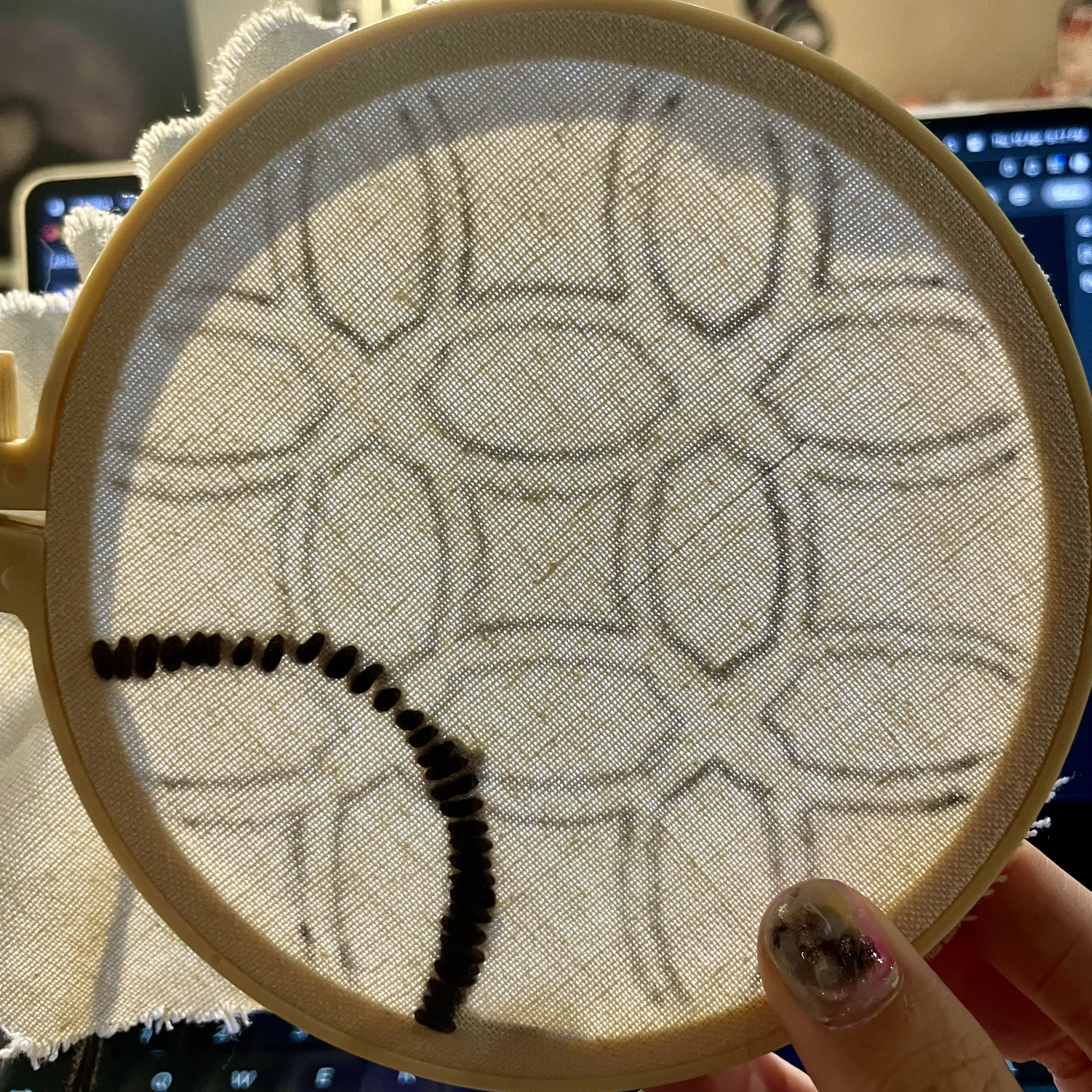
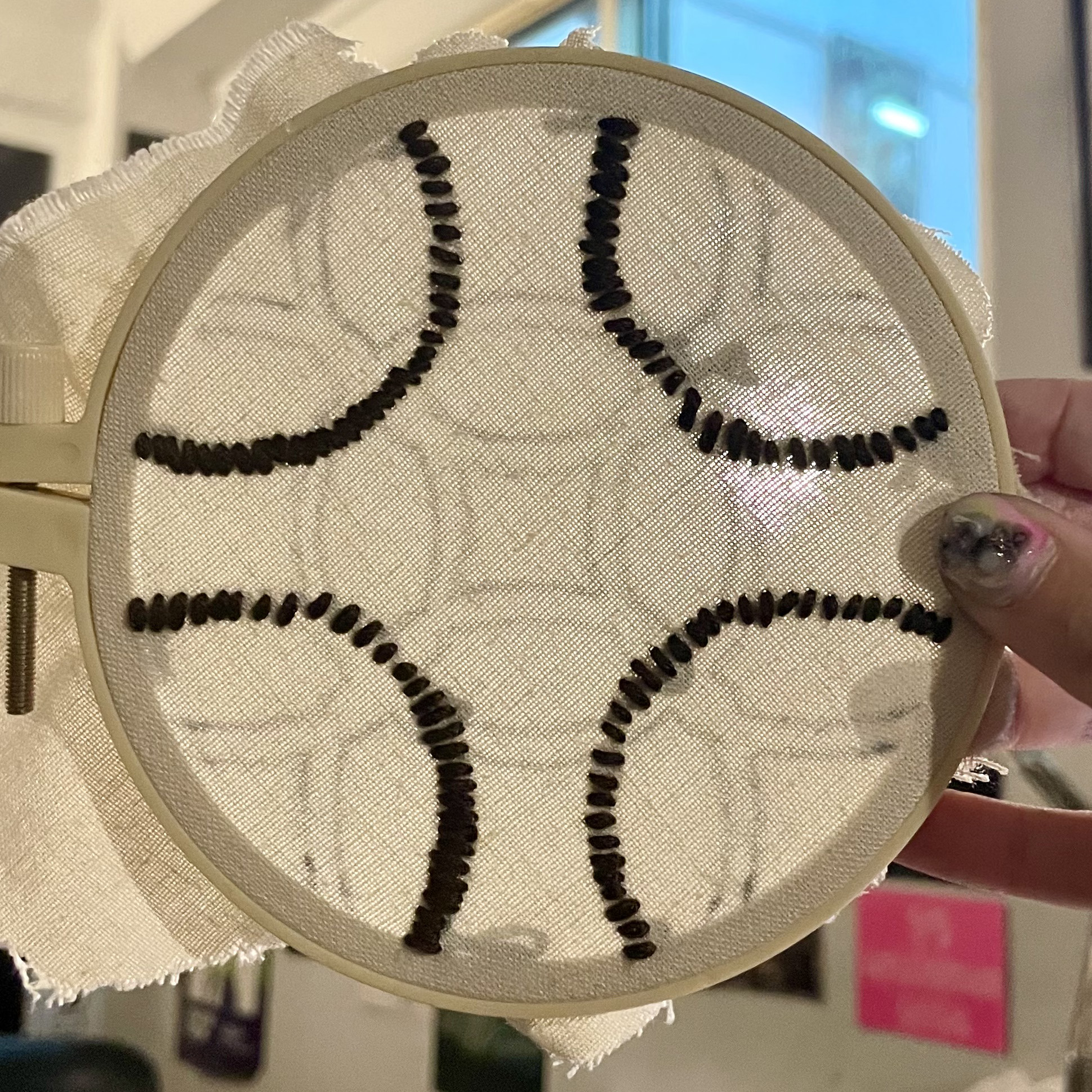
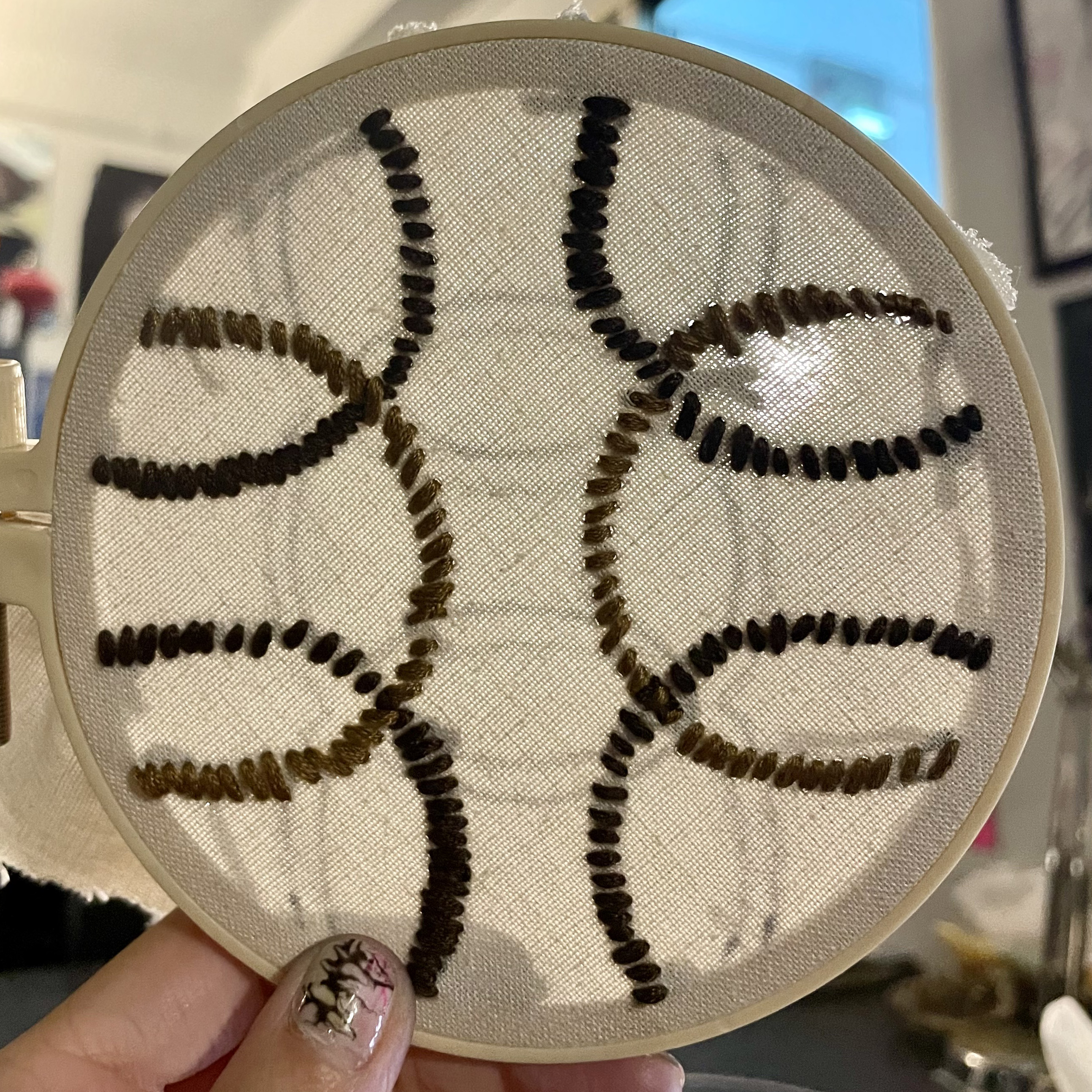
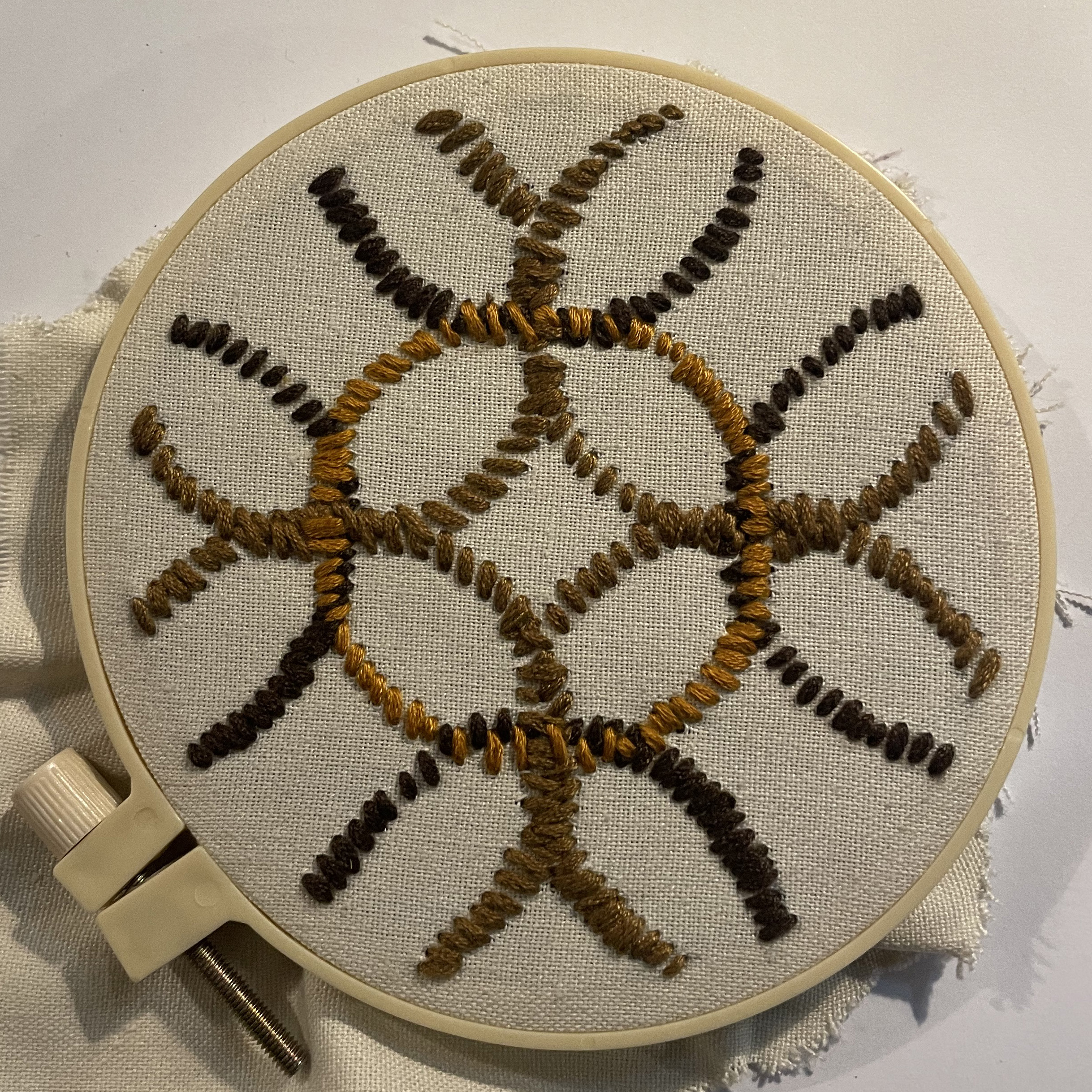

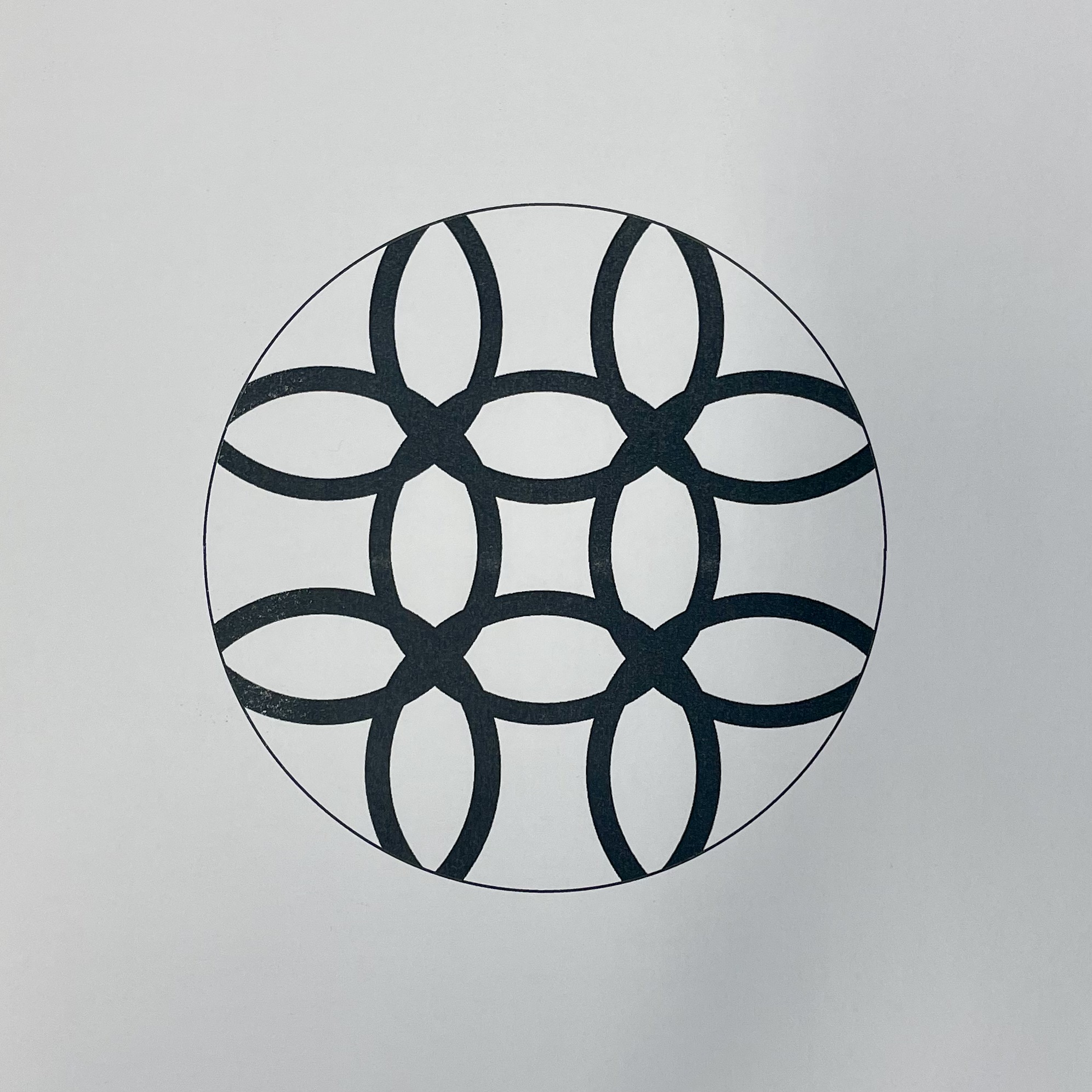
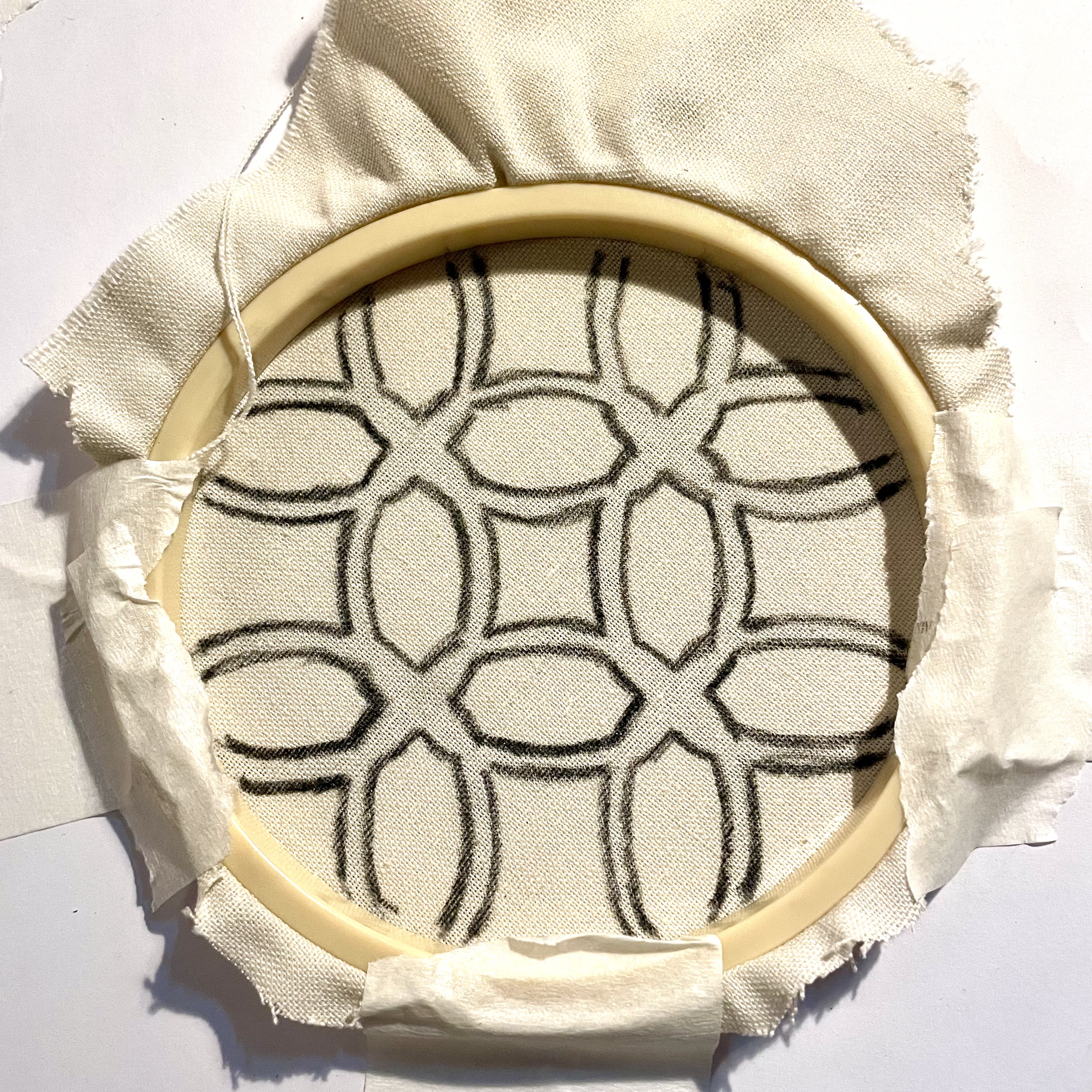
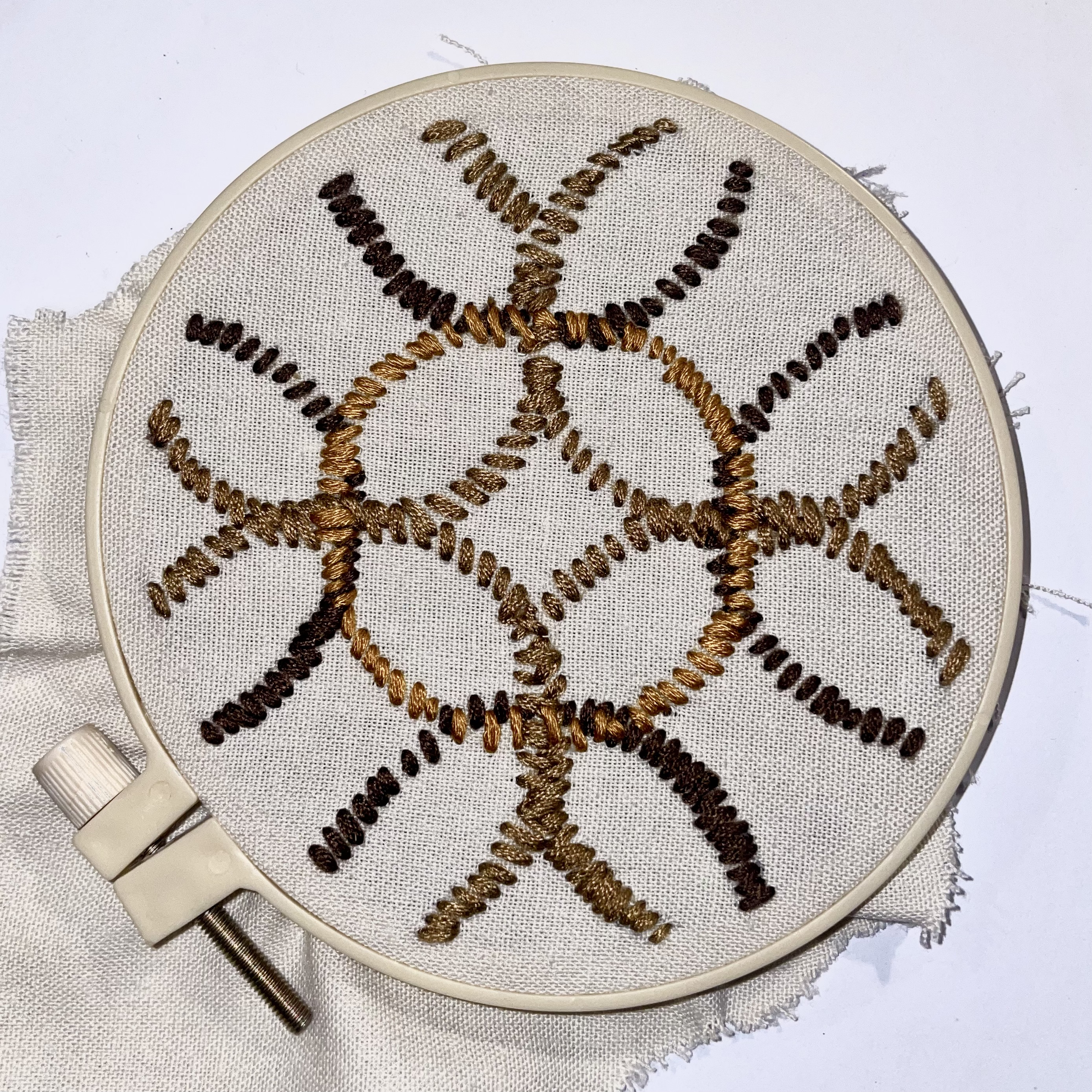
Working from the same coded pattern, I stitched each square as accurately as I could, line by line. The grid tries to keep everything in order, but the thread pulls, the fabric stretches, and my hand drifts when I get tired or impatient. The mistakes are small, but once they repeat, they start to bend the whole pattern.
Seeing the code and the embroidery side by side helps me read the sewn piece as more than decoration. It becomes a trace of labour, attention and tiny negotiations with the material. The pattern is still recognisable as “the same” design, but it carries a different rhythm and density than the screen version, which is what I am interested in holding on to.