WEEK 8
PROJECT WEEK
Research on precedents and type systems
This week focused on researching existing typographic tools and generative systems to understand how interaction, transformation, and output are structured in more developed digital experiences.
Expressive typographic systems
Studying how typography can carry emotion, gesture, and interpretation beyond neutral letterform.
Interactive design tools
Studying how digital tools structure user input, controls, and output in intentional, engaging ways.
Translation-based visual frameworks
Studying how one type of input can be transformed into another coherent visual system.
[ 1. Expressive typographic systems ]
Work 1
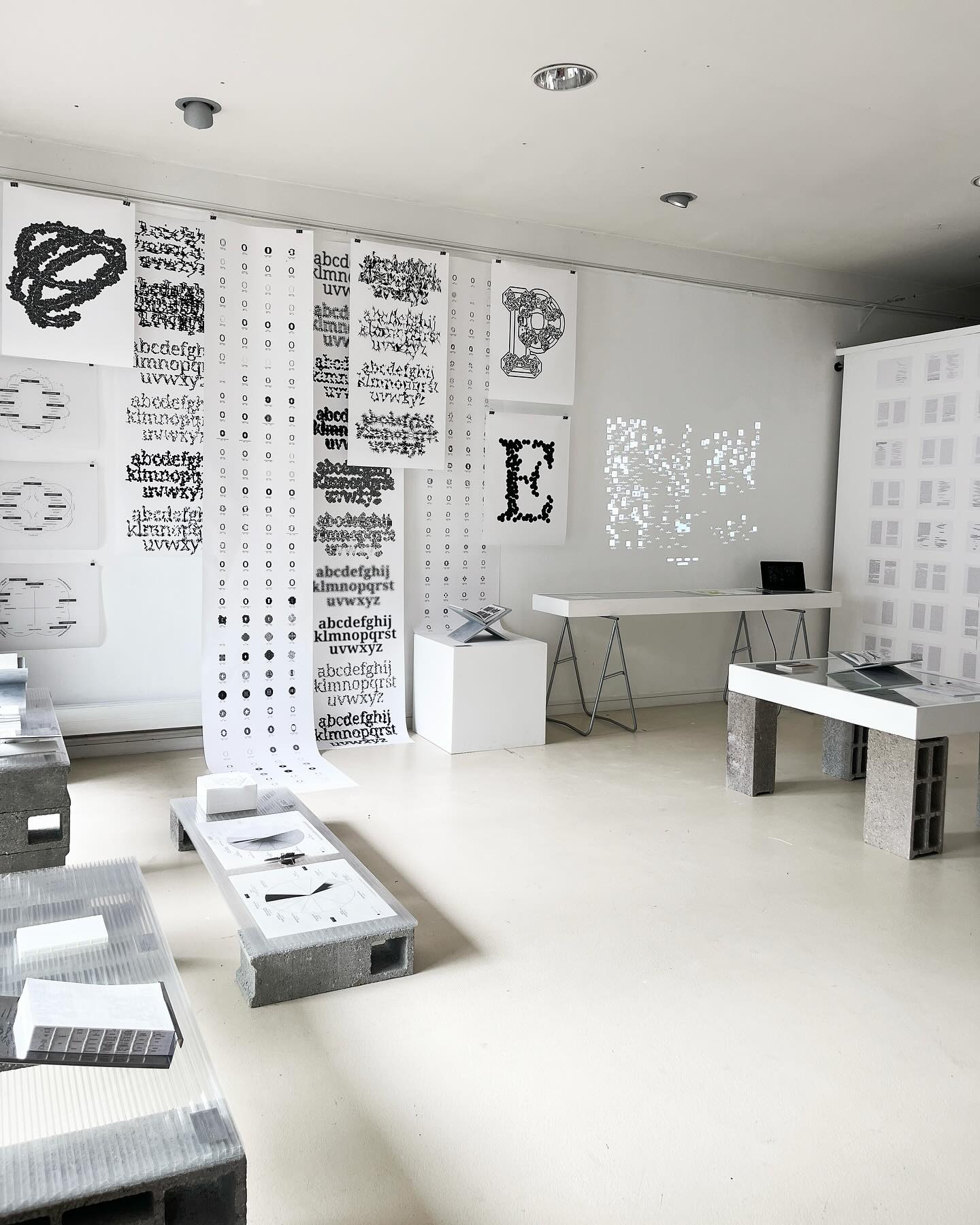
BLIZZARD — Marie Chevalier
This project explores typography as an expressive reading experience, where letters no longer stay neutral but begin to carry emotional tone, hesitation, and tension. This precedent is useful because it shows how text can be transformed into something more felt and interpretive, not just read.
-
Typography as interpretation
This project does not treat type as a neutral container. It uses typographic change to make reading more emotional and embodied. -
A system, not a one-off effect
What is strong here is the consistency of the setup. It is not one expressive poster, but a repeatable system applied across text. -
Letters can carry more than language
The project suggests that letterforms can hold tone, hesitation, and intensity, which aligns with my own interest in writing beyond static trace. -
Useful for my direction
This helps me think about how behavioural glyphs could move beyond isolated outputs and begin functioning as a broader interpretive system.
Work 2
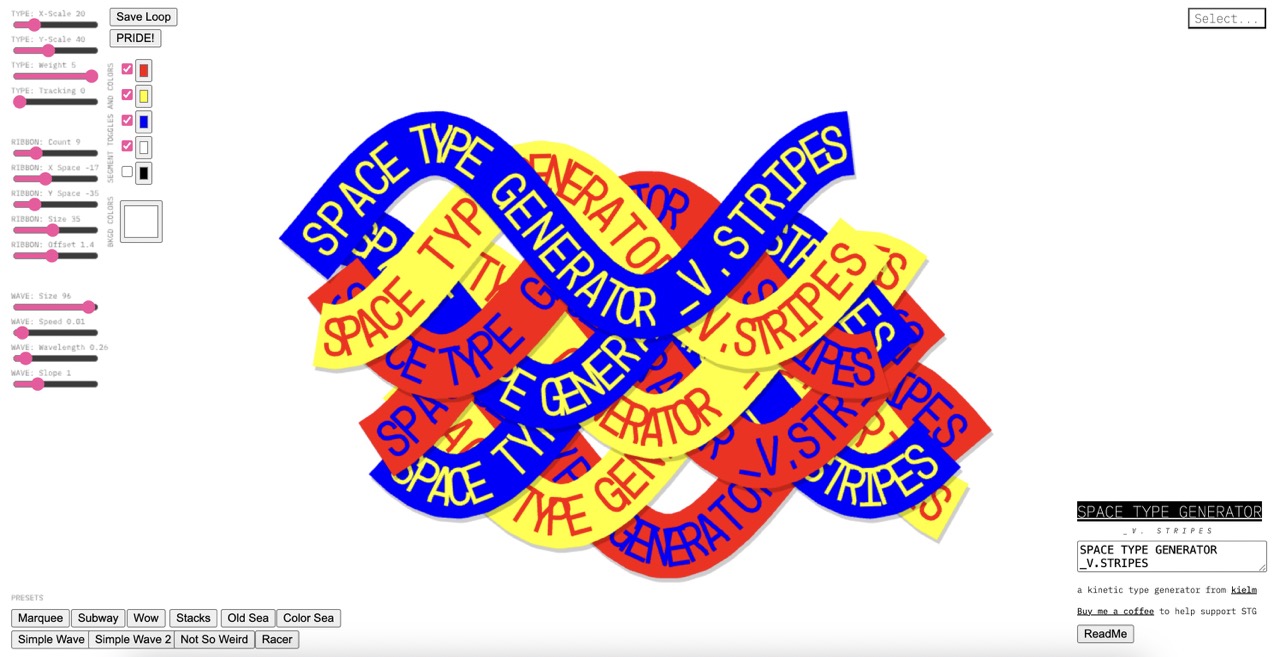
Space Type Generator — Stripes
This is a kinetic type generator that transforms text through a preset visual logic. It is useful for studying how one system can offer multiple typographic outputs through structured customisation.
-
Preset-based transformation
The generator works through predefined modes, which makes the system easy to understand. This reminds me that too many free variables can weaken clarity. -
One tool, many output families
The site offers many distinct visual modes such as Cylinder, Field, Stripes, Coil, Ribbon, and Construct. This shows how one generator can support variety while still feeling system-led. -
Customisation needs boundaries
Even though the results vary, the outputs remain visually coherent because the system has clear constraints. This is useful for thinking about how much freedom my own glyph tool should allow. -
Useful for my direction
This precedent helps me think about what kinds of customisation features I should include, and what should remain fixed by the system.
[ 2. Interactive design tools ]
Work 1
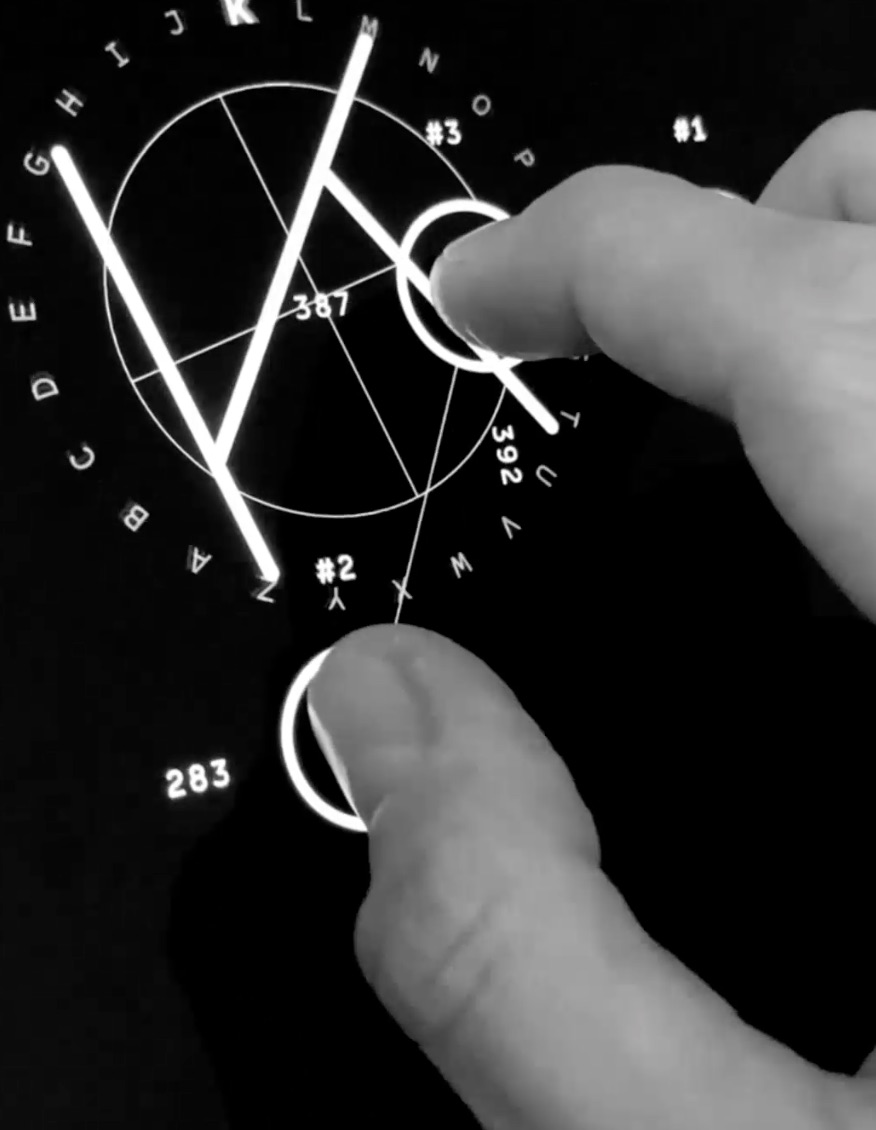
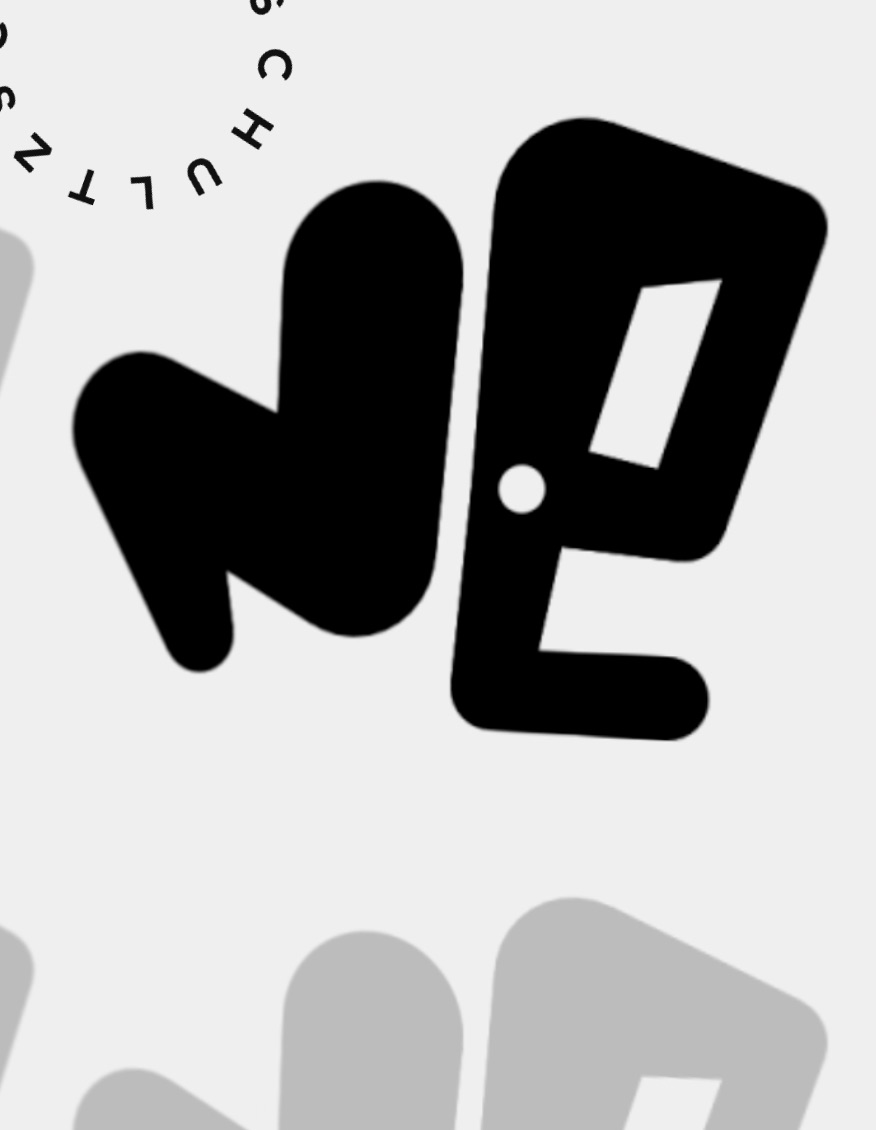
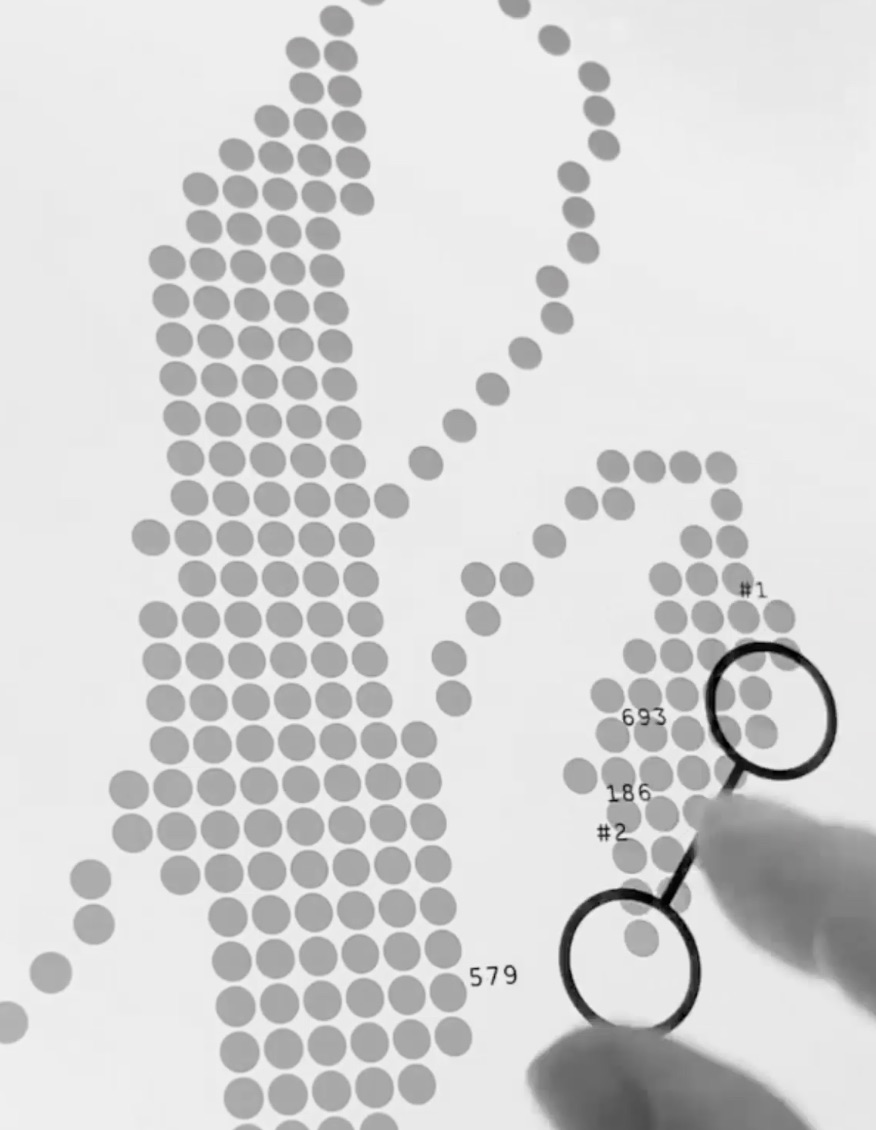
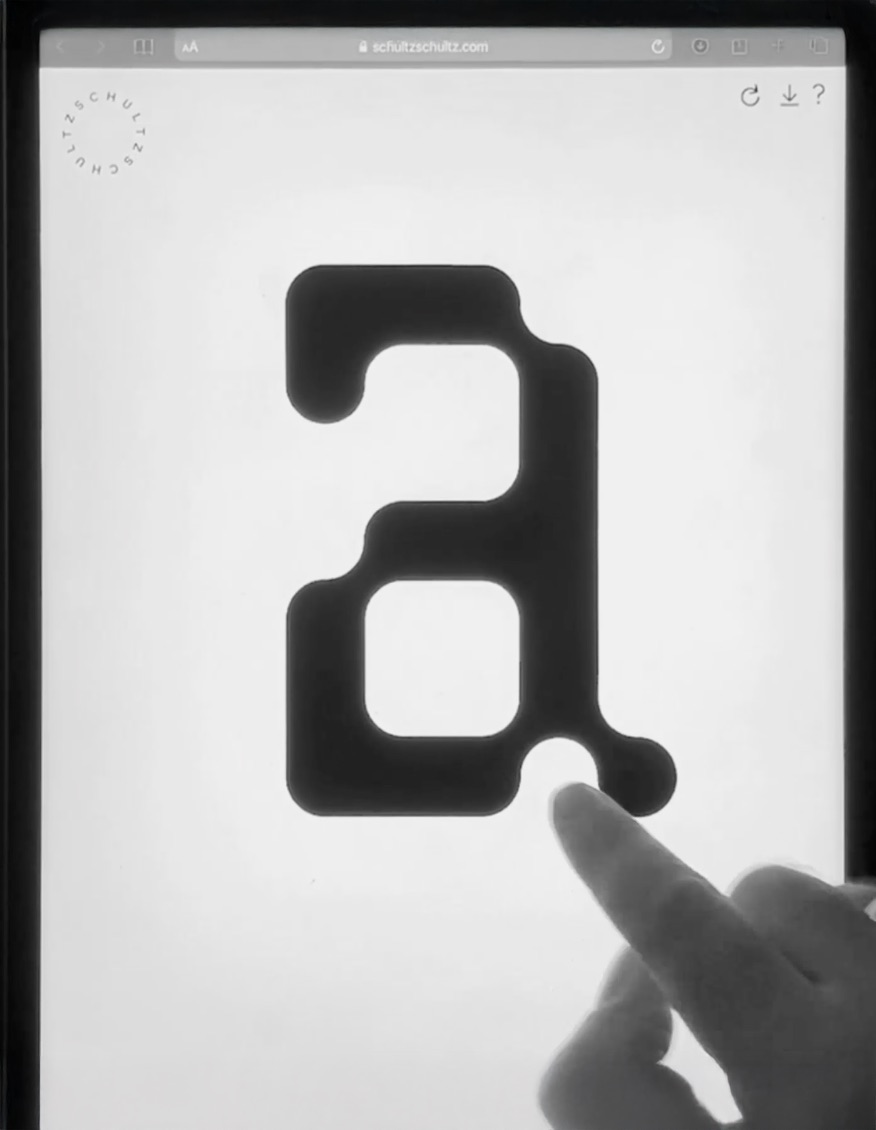
Schultzschultz — TouchType / Tangents / Calligraphy / GridPaint
Schultzschultz is a design studio that builds custom digital tools when existing methods are not enough. Their tools are especially relevant because they show how interaction itself can become part of the design outcome.
-
Tool shapes the process
They explicitly say that sometimes a concept demands a specific custom tool, and that the process moves back and forth between making and using the tool. This is very close to how my own project is developing. -
The process can become the output
They describe “live graphic design” where watching the tool in use can be as meaningful as the final result. This is useful for my archive and replay mode. -
Constraints are part of design
They explain that any tool narrows what can be created, and that interface and settings shape the final design space. This helps me think more carefully about what my own system should permit or limit. -
Useful for my direction
This precedent supports framing my project as a designed tool rather than only an experiment. It also helps me think about modes, controls, and interaction flow.
Work 2
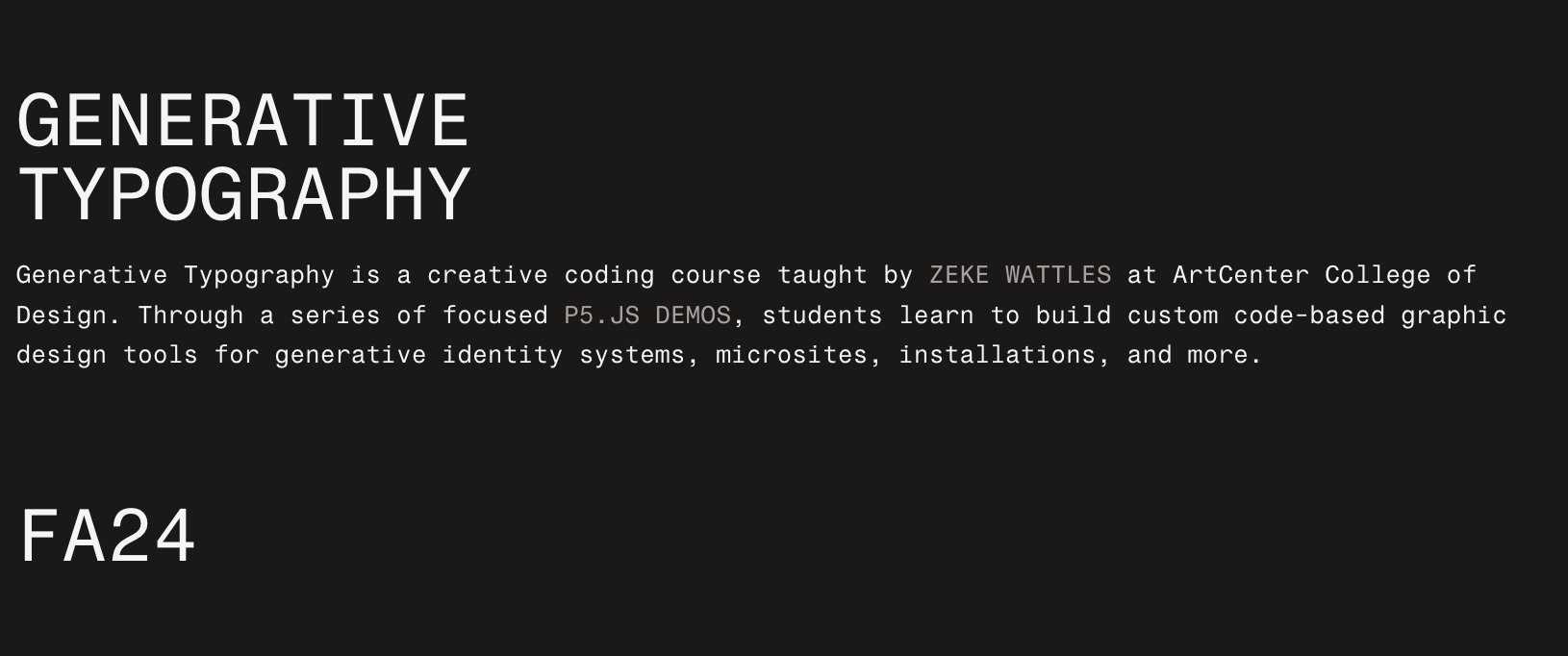
Generative Typography — Zeke Wattles
This is a creative coding course and project archive focused on building custom graphic design tools through p5.js. It is useful because it shows how generative type systems can become identities, experiences, and interactive outputs.
-
Tools can support real applications
The site frames generative typography as a way to build tools for identity systems, microsites, and installations. This is helpful because it connects experimentation to actual design outcomes. -
Interactive outputs can become part of branding
Projects like the Duomo module-type generator show how users can interact with a system and receive personalised output. This is useful for thinking about behavioural glyphs as something users could generate and keep. -
Customisation can be intentional
Some examples let users adjust shape, size, density, rotation, and colour. This makes me consider what kinds of controls would meaningfully support my own system without weakening it. -
Useful for my direction
This precedent helps me think about the behavioural glyph system as a tool with a clearer user-facing application, not just a technical study.
[ 3. Translation-based visual frameworks ]
Work 1
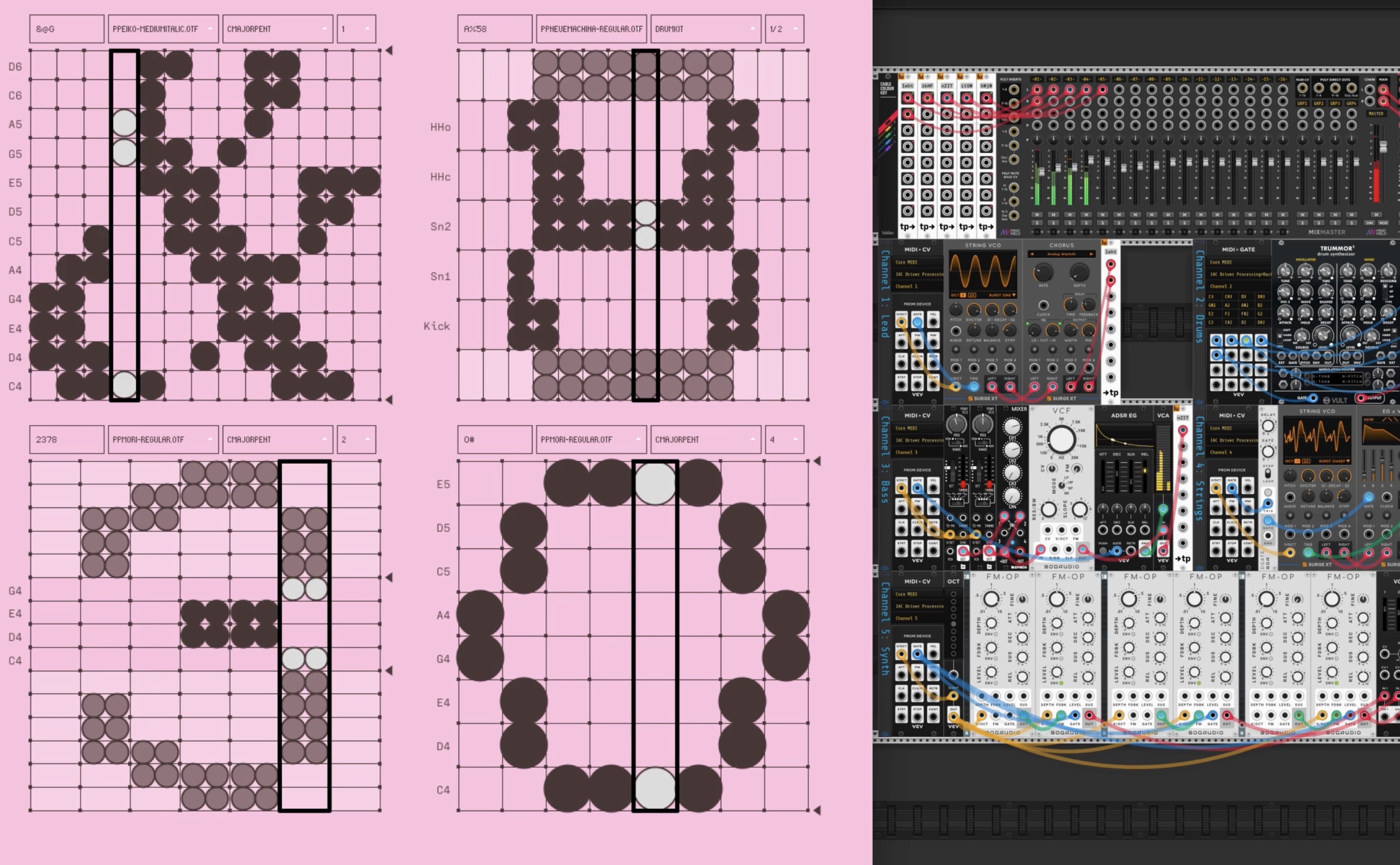
Type Sound — Mike van der Sanden
This project asks what melodies can be found in typography, and translates typographic input into sound-based logic. It is a strong precedent because it shows how one kind of structured input can be reinterpreted into a completely different system.
-
A strong question drives the system
The project begins with a very clear question rather than a style. This reminds me that my own project becomes stronger when it is led by a clear translation question. -
Translation, not imitation
It does not try to preserve typography visually. Instead, it reinterprets it into a new medium. This supports my own interest in reconstruction rather than direct copying. -
Proof of concept can grow through iteration
He describes building the system over several weeks, adding features after the proof of concept. This makes it a useful precedent for my own prototype development. -
Useful for my direction
This work helps me think about behavioural glyphs as part of a broader translation framework, where behavioural data could be extended beyond static form.
Work 2
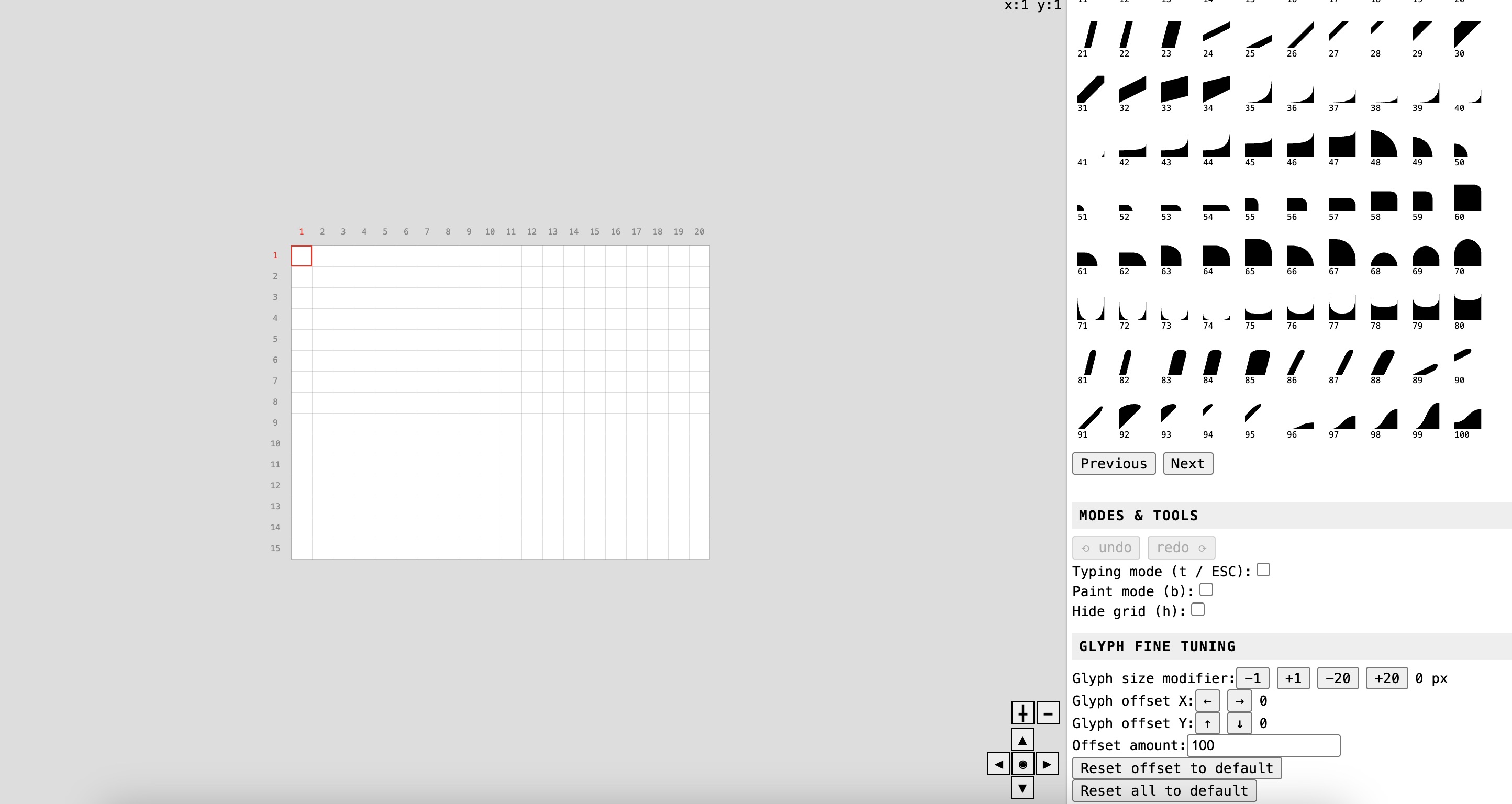
MoebiusXBIN — Glyph Drawing Club
MoebiusXBIN is an ASCII and text-mode art editor with custom font support. It is useful because it shows how glyph systems can be modular, editable, and reusable within a larger visual environment.
-
Glyph systems can be tool-based
The editor is not just about one output. It supports making, modifying, and reusing glyph structures. This is useful for thinking beyond a single behavioural glyph result. -
Custom font support expands possibilities
The tool supports custom fonts, font browsing, and PNG import/export. This suggests ways that glyph systems can become editable assets rather than only generated images. -
Shape systems need an ecosystem
What makes this interesting is not only the glyph shapes, but the infrastructure around them: editing, importing, exporting, and reuse. This makes me think more seriously about archive and output handling. -
Useful for my direction
This precedent helps me think about how my glyphs might eventually operate as a usable symbolic set rather than isolated visual experiments.
[ Takeaway ]
Strong systems make transformation legible
The best precedents clearly structure input, transformation, and output. Their systems feel intentional because users can understand what the tool is doing.
[ Takeaway ]
A tool becomes stronger when it has a clear role
The most useful precedents are not only visually interesting. They also know what they are for, whether that is expression, interaction, identity, or translation.
[ Next step ]
Add customisation and personalisation to my sketch
The next phase is to introduce customisation and personalisation into my behavioural glyph sketch so users can shape outputs while the system still retains clear behavioural logic.