WEEK 6
BEHAVIOURAL GLYPH USER TESTING
Legibility, recognition, and early validation
Week 6 focused on testing the Behavioural Glyph System with users. The aim was to understand whether participants could see their movement reflected in the reconstructed glyph, and whether the system felt meaningful to them.
Participants
User testing with 9 participants, writing the full alphabet.
Method
Survey + qualitative feedback (4 participants gave detailed written notes).
Framing
Exploratory validation, not a formal statistical study.
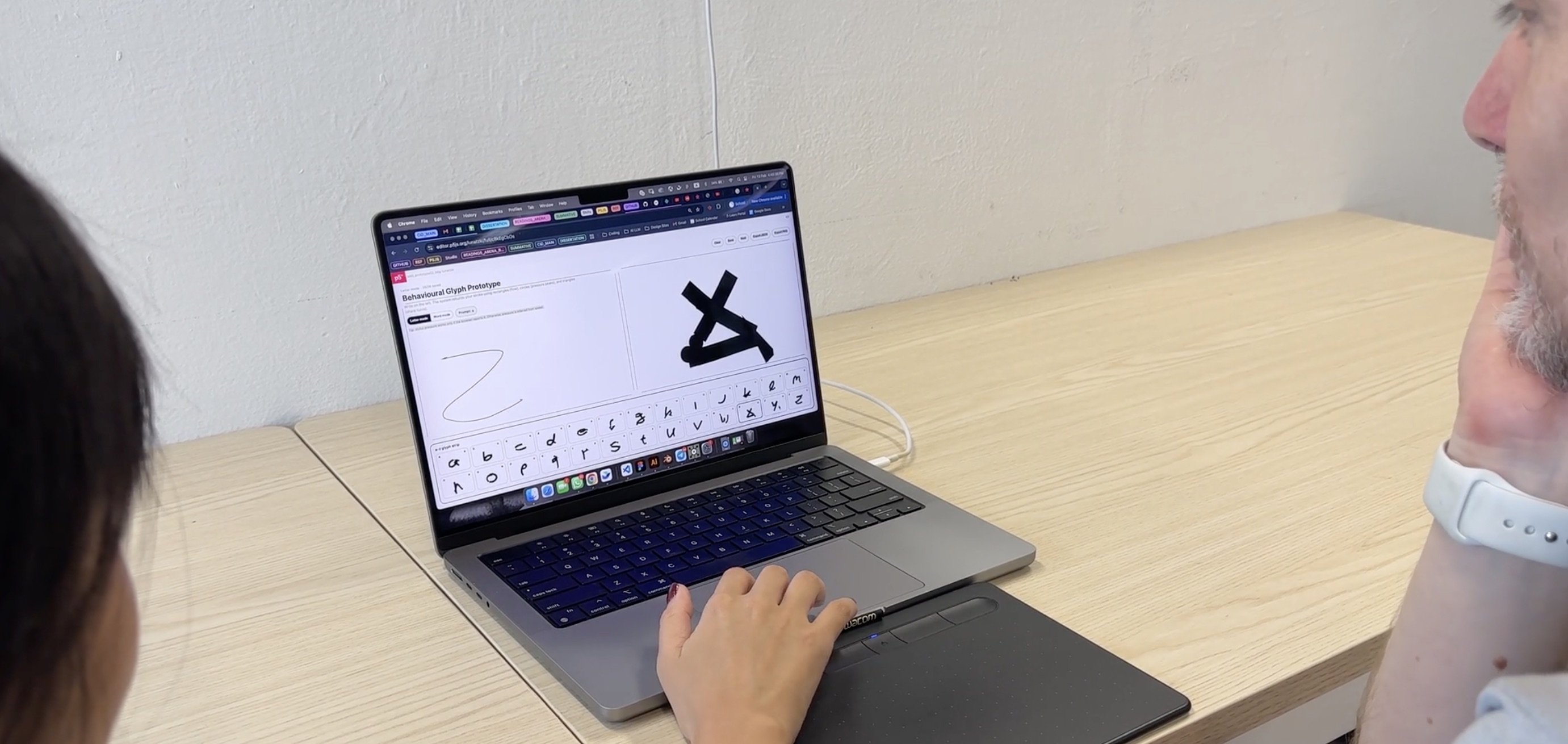
[ Participants interacting with my prototype ]
User Testing
What each session produced
Nine participants wrote the full alphabet using the interface. Each session was documented through:
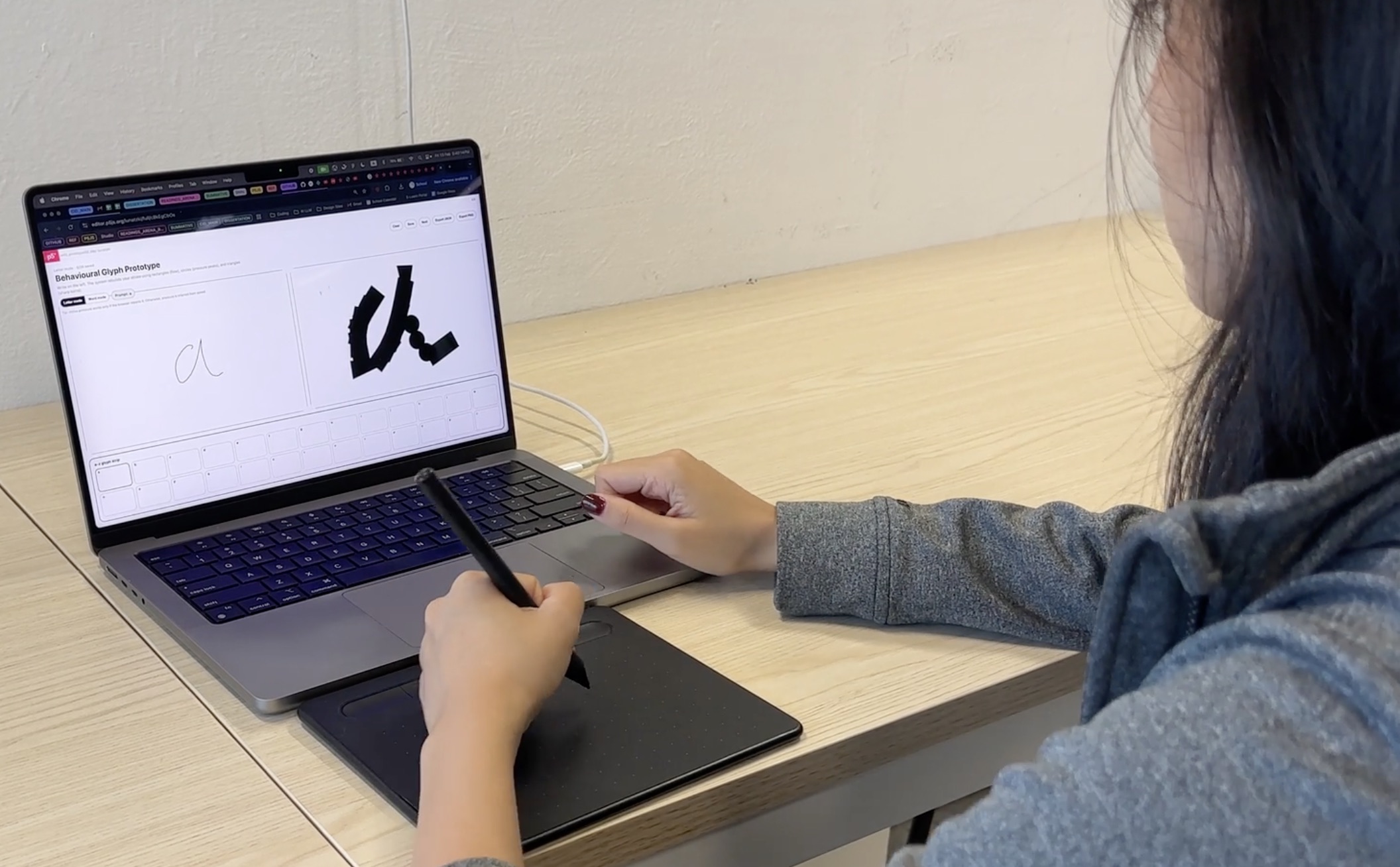
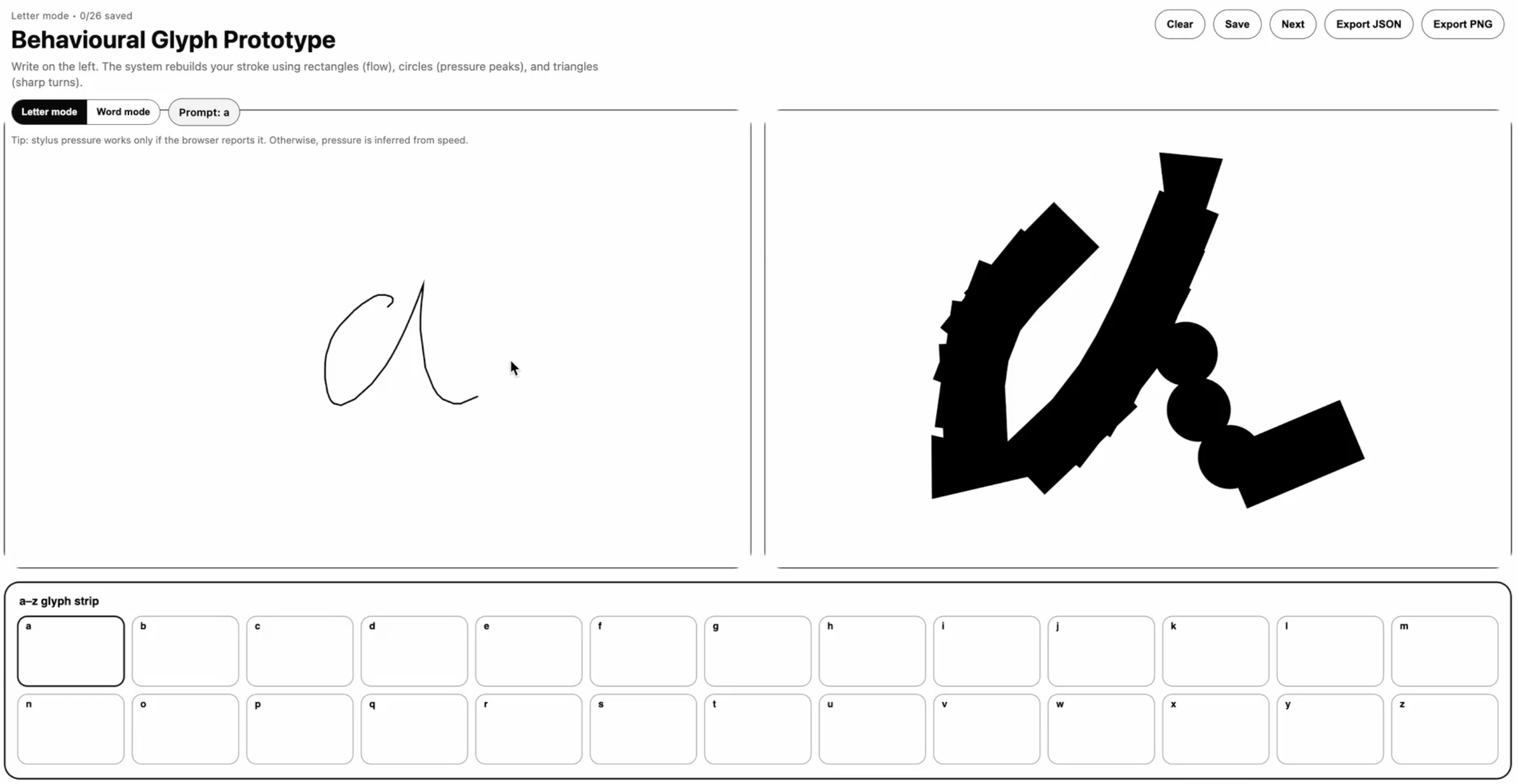
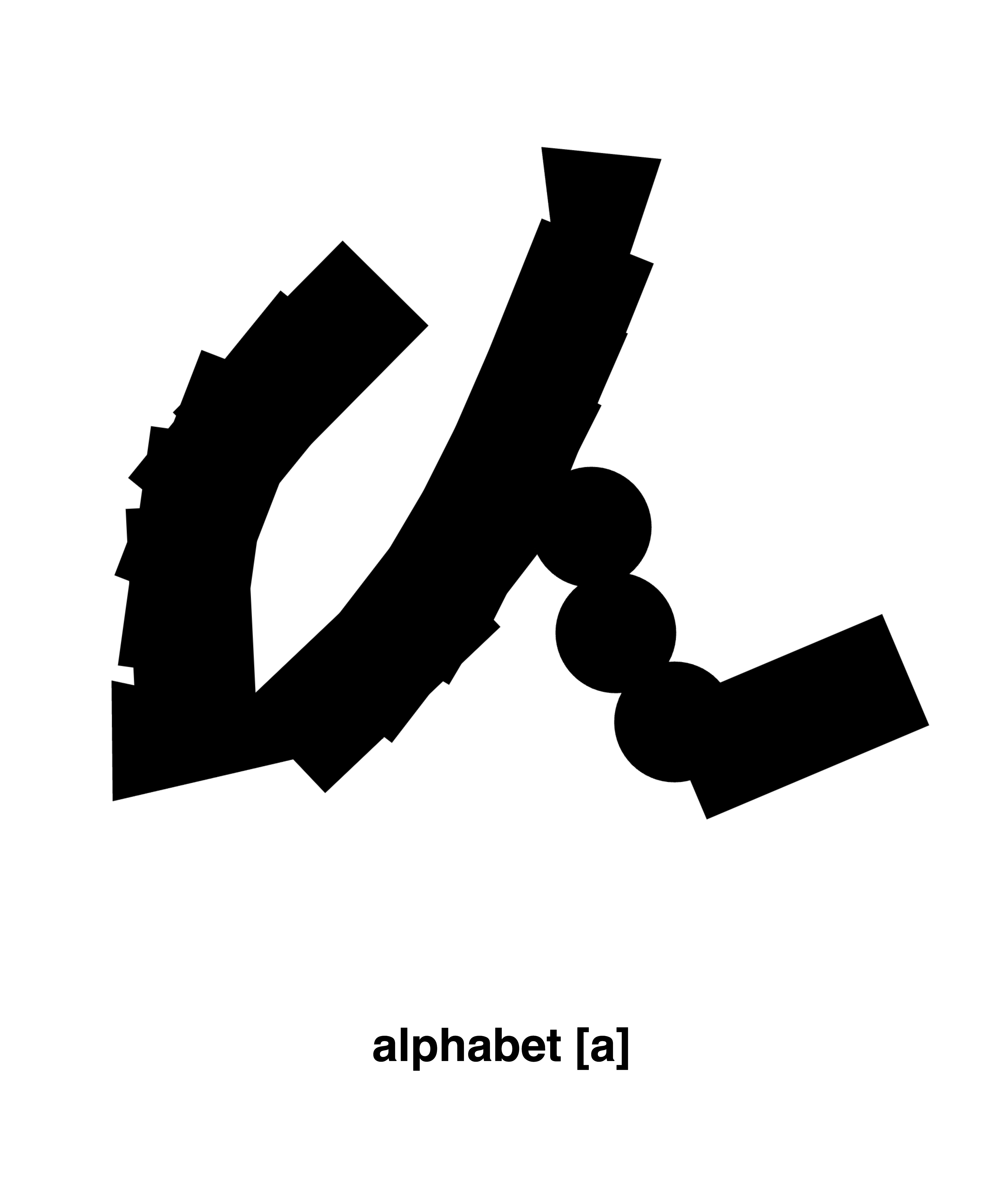
[ Emotional recognition ]
How participants described it
Reinterpretation of movement, not handwriting mimicry
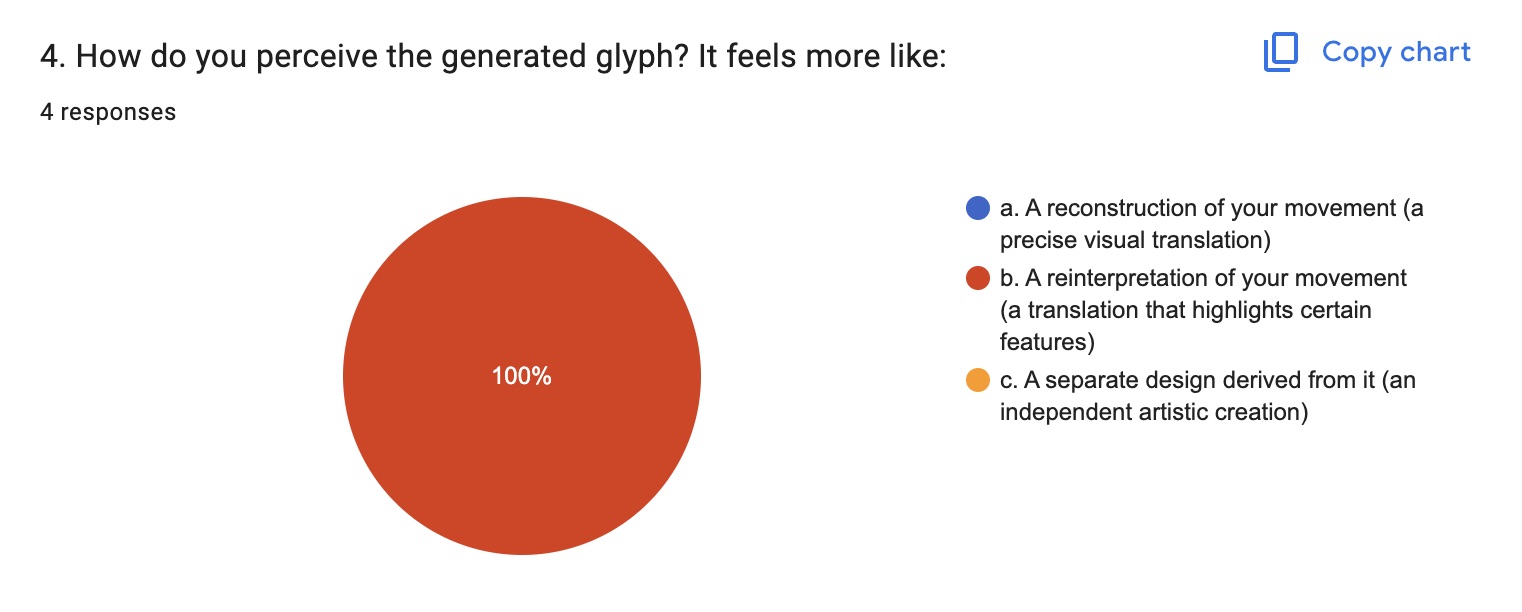
Across responses, participants consistently described the glyphs as reinterpretations of their movement rather than reconstructions of their handwriting. Several expressed surprise and curiosity. The strongest moment was recognition: the sense that the system was reflecting something personal.
-
“It is not trying to copy my handwriting exactly. Instead, it takes parts of my movement and turns them
into a new geometric form.”
-
“My handwriting was being abstracted into data and then rebuilt into another visual system based on a set
of rules.”
This confirms that the system is being read as a translation of embodied action rather than as stylised typography. This aligns precisely with the system’s intention: behavioural abstraction governed by authored rules.
[ Behavioural legibility ]
A hierarchy emerged
User feedback revealed a hierarchy of signal clarity.
- Most legible:
Triangles (directional pivots) - Moderately legible:
Rectangle breaks (hesitation) - Weakest:
Circles (pressure peaks)
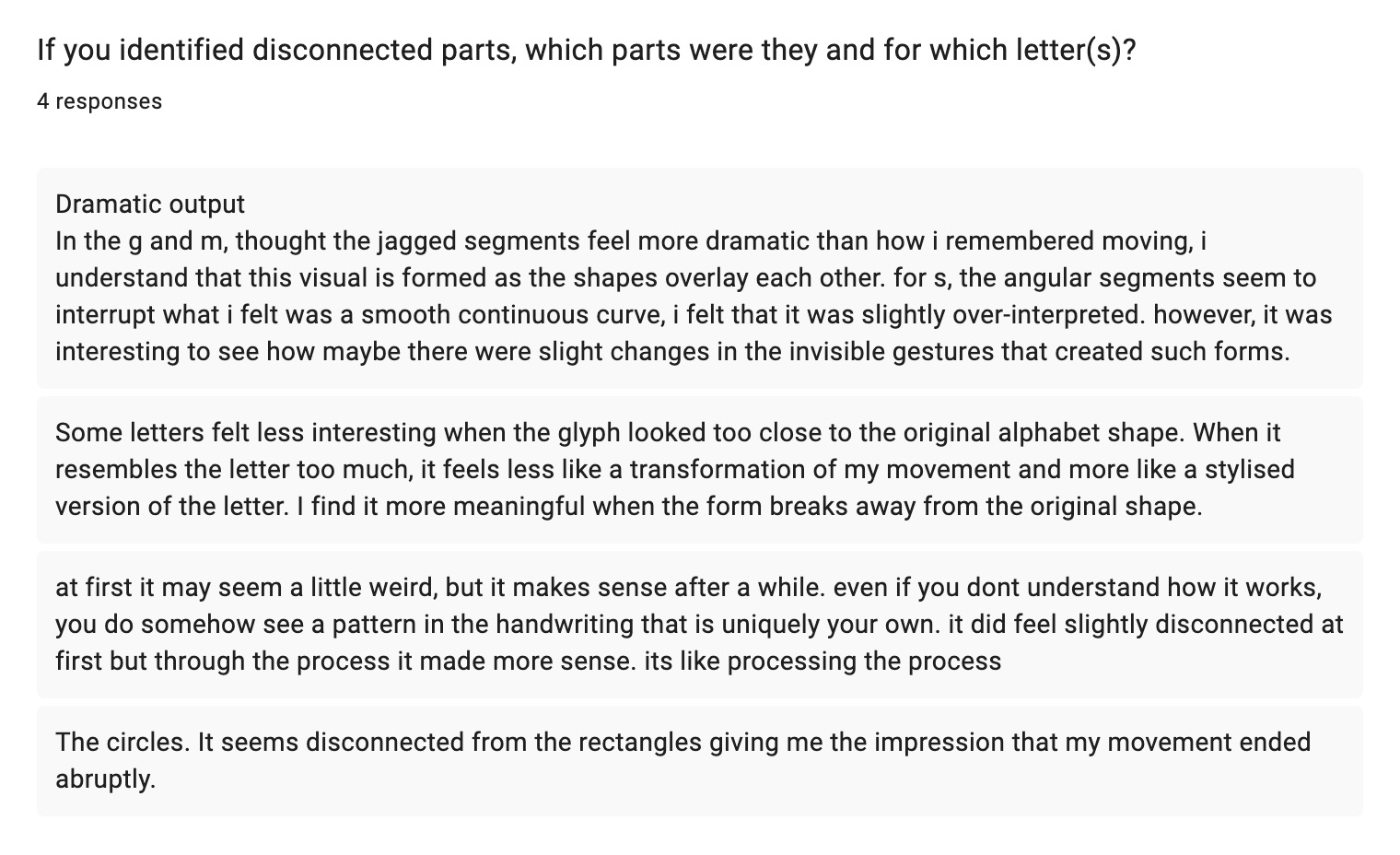
Participants clearly recognised triangles at sharp turns. These moments were consistently identified as linked to specific directional changes. Rectangle breaks were generally understood as moments of interruption or slowdown, but were sometimes visually subtle. Circles, however, occasionally felt disconnected from the backbone structure.
-
“The circles. It seems disconnected from the rectangles giving me the impression that my movement ended
abruptly.”
- This indicates a scaling and integration issue rather than a conceptual flaw. Pressure detection works, but its geometric translation needs refinement.
[ Comparative variation ]
Same letter, different signatures
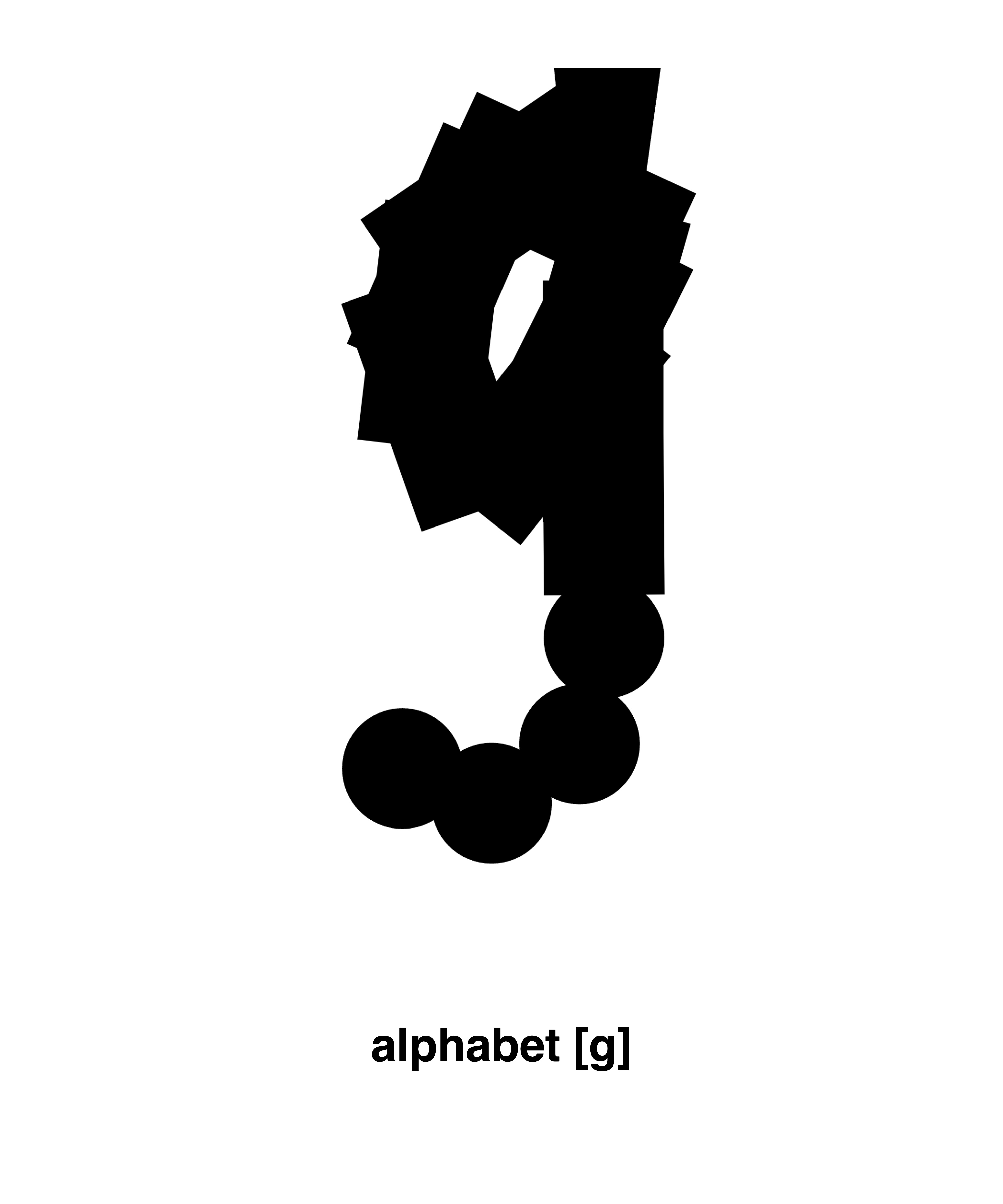
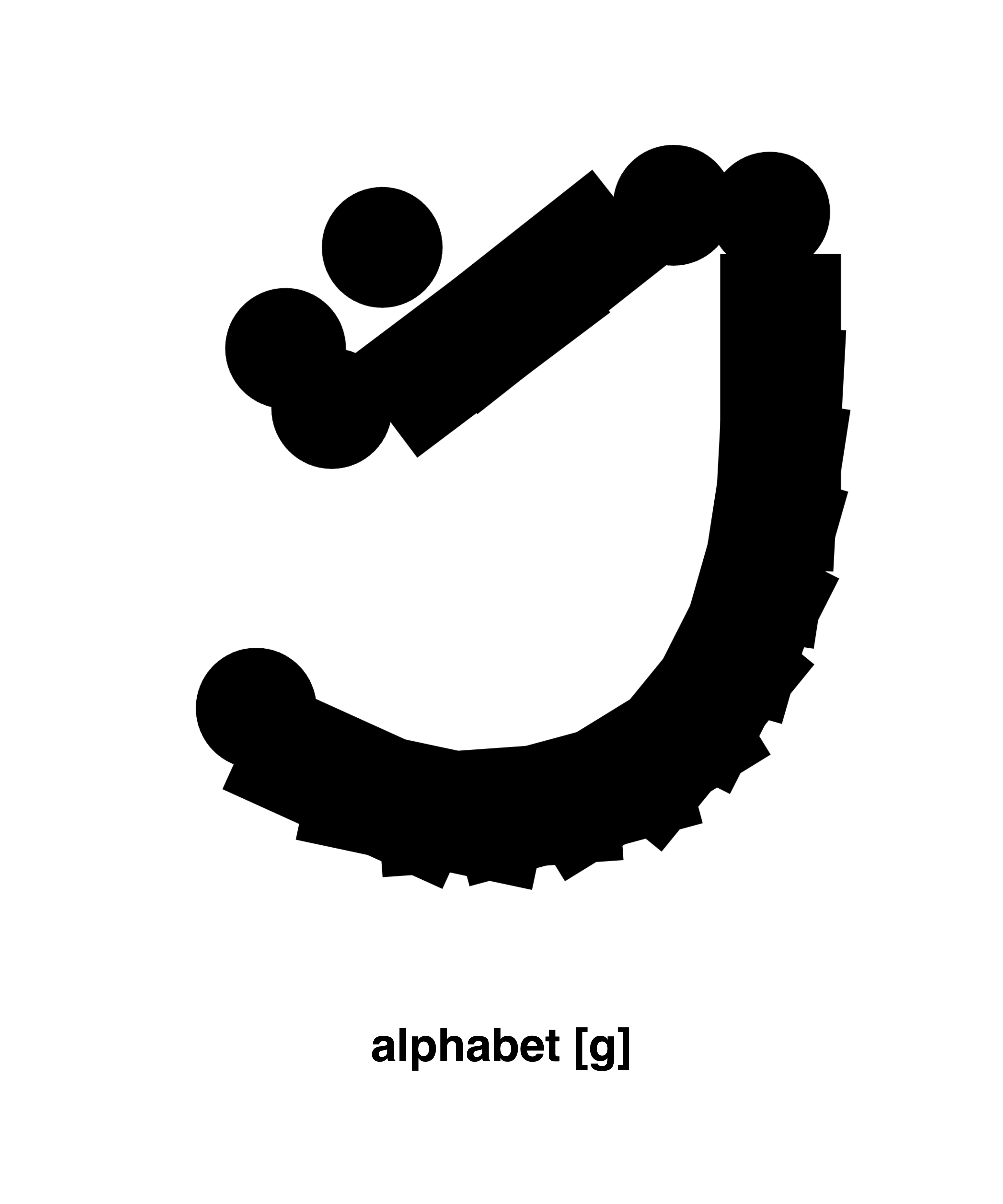
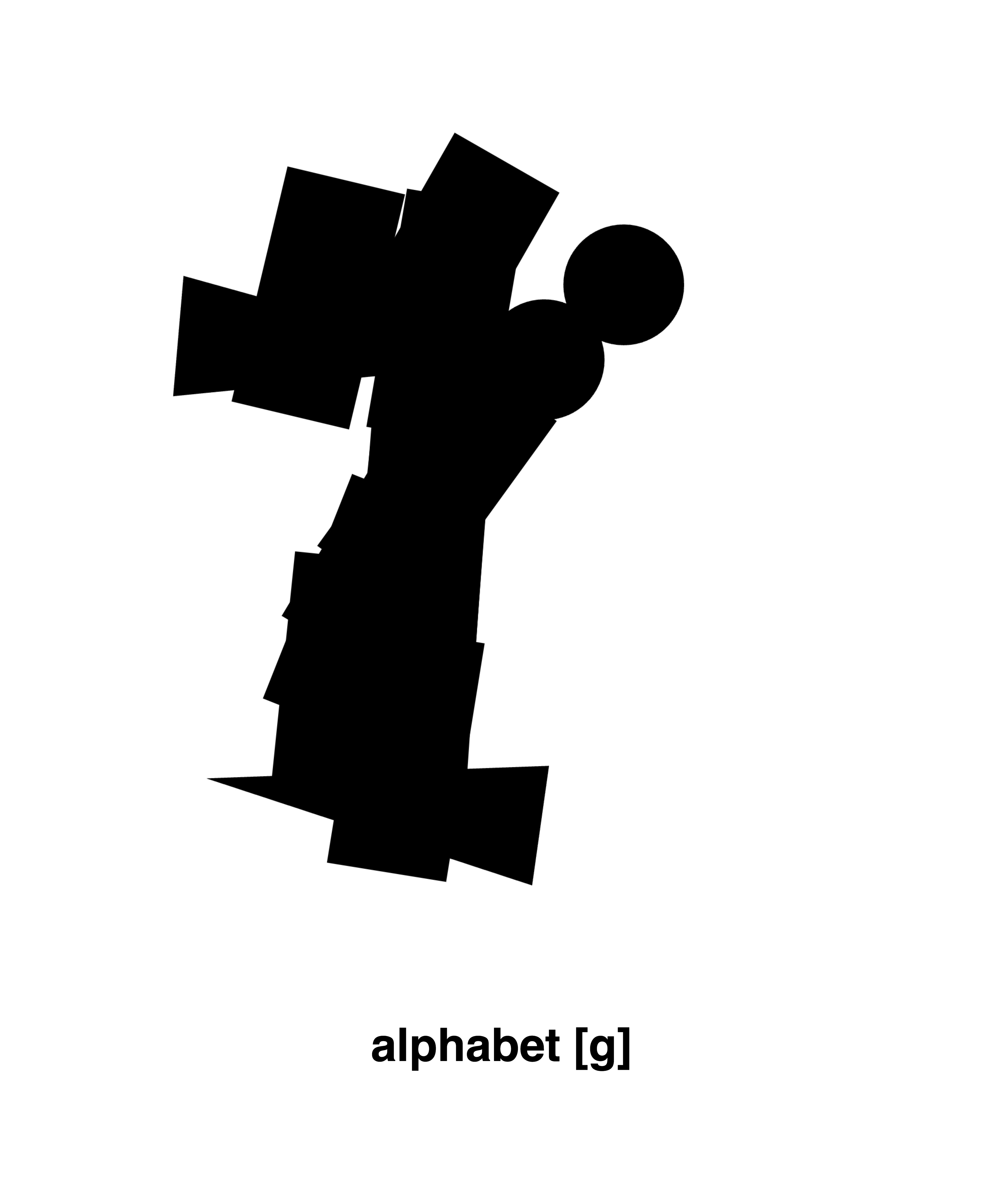
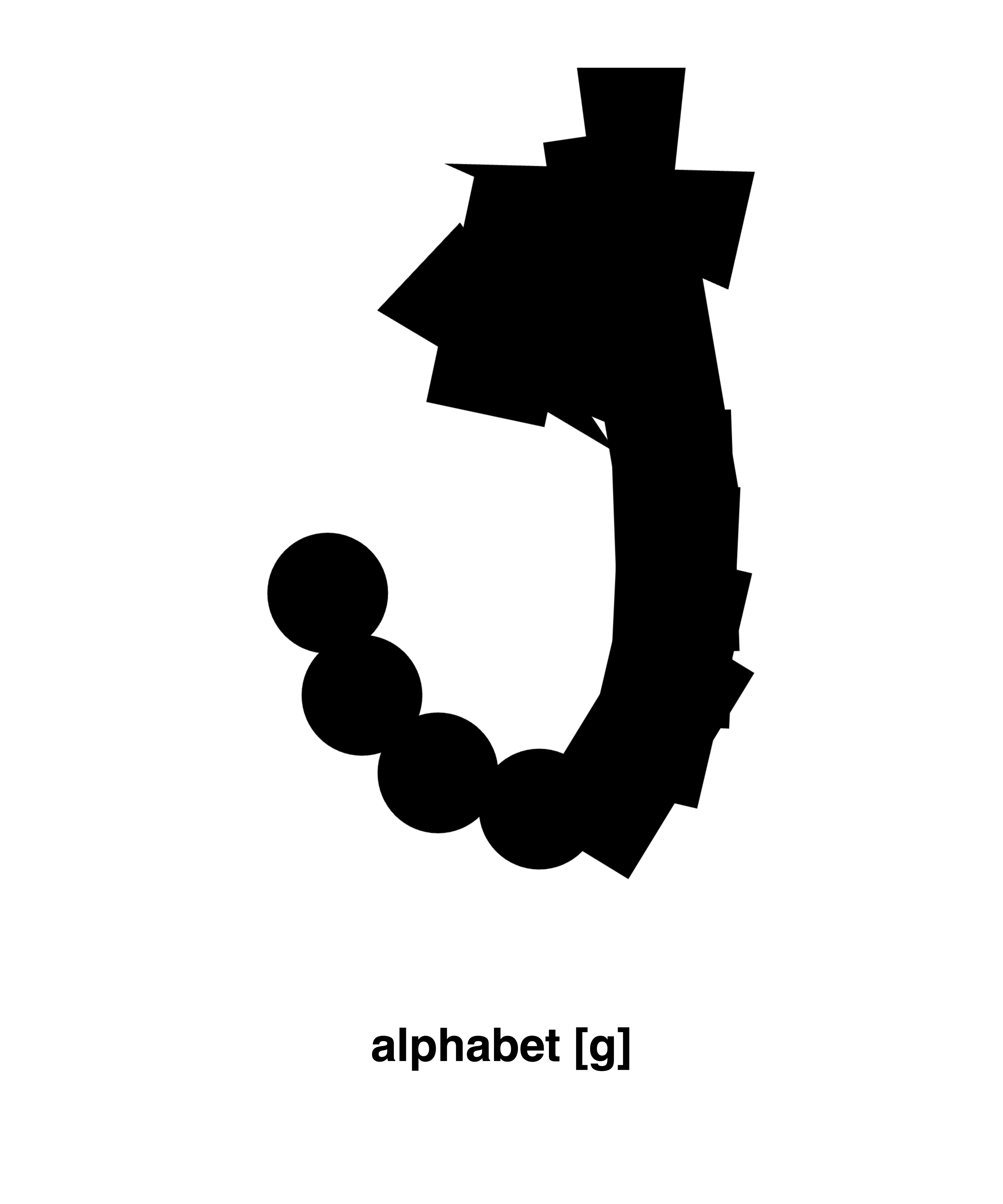
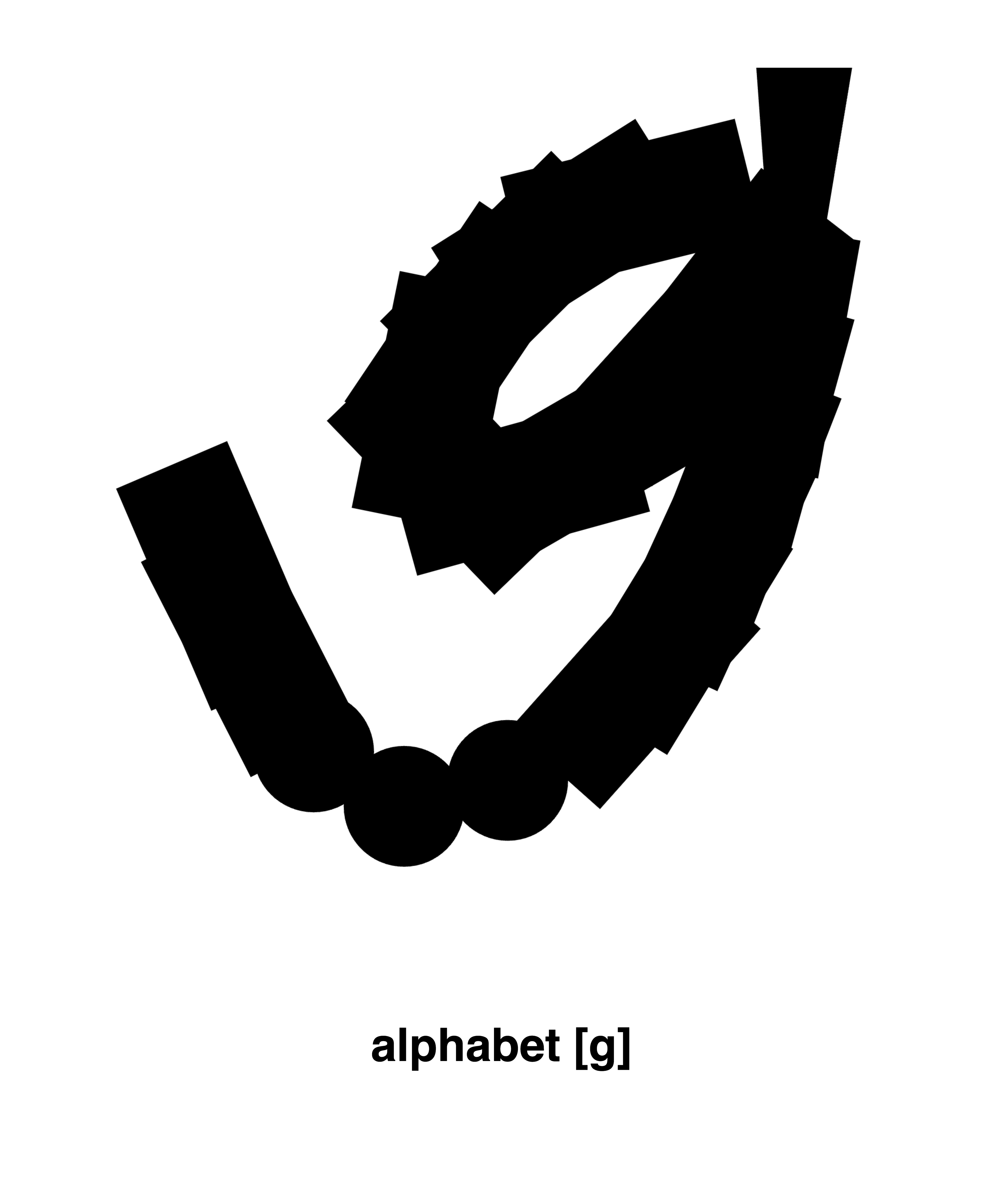
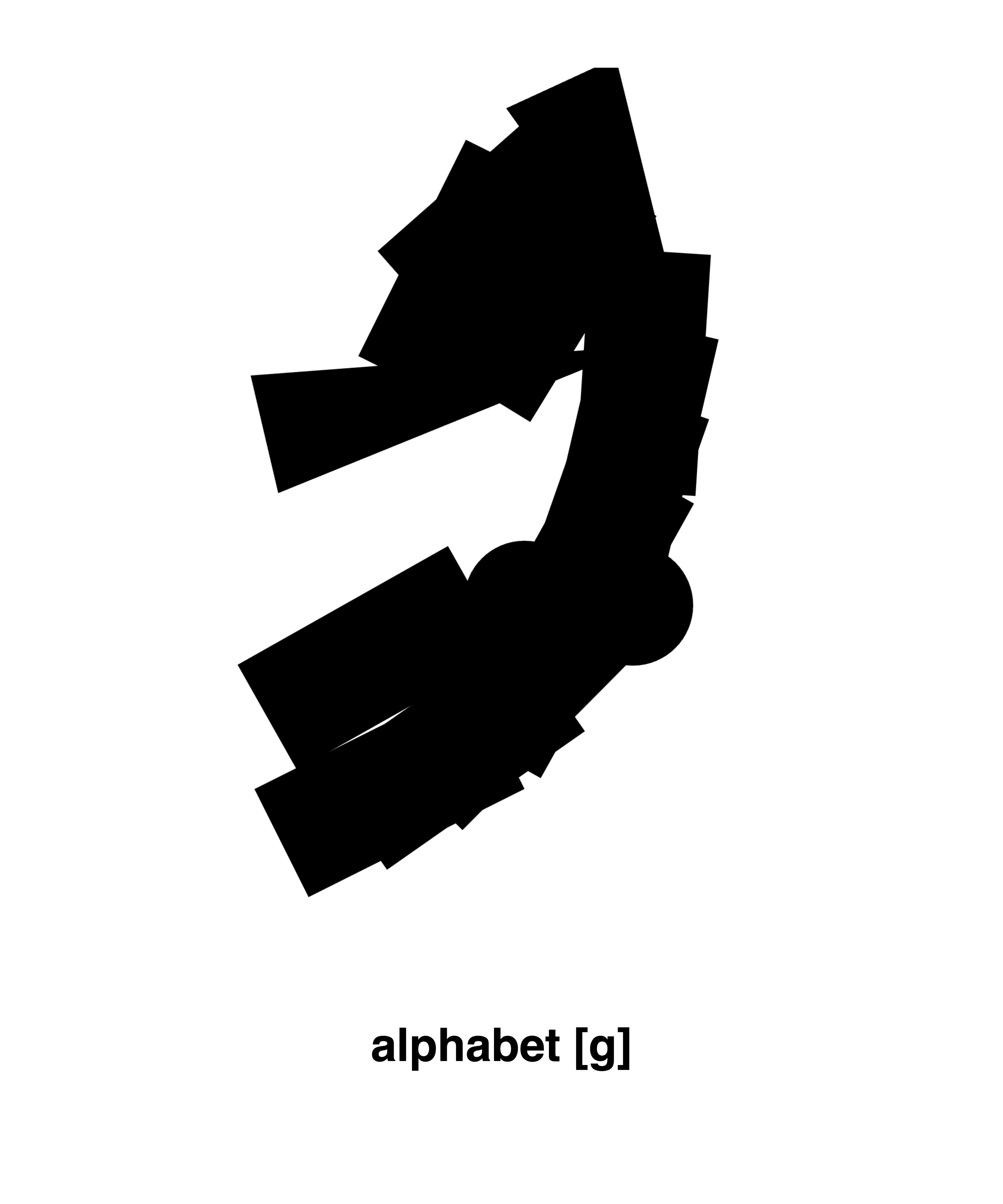
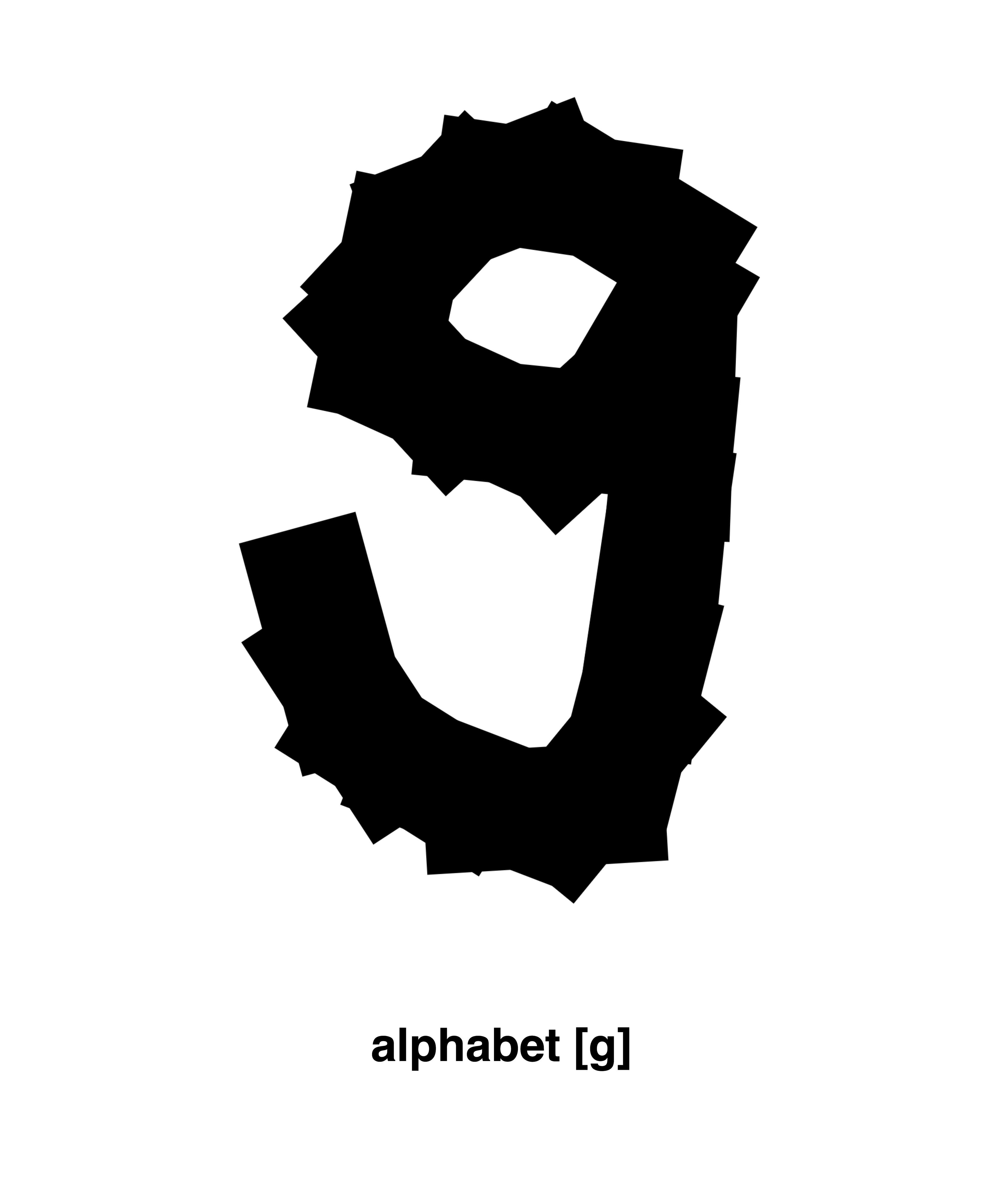
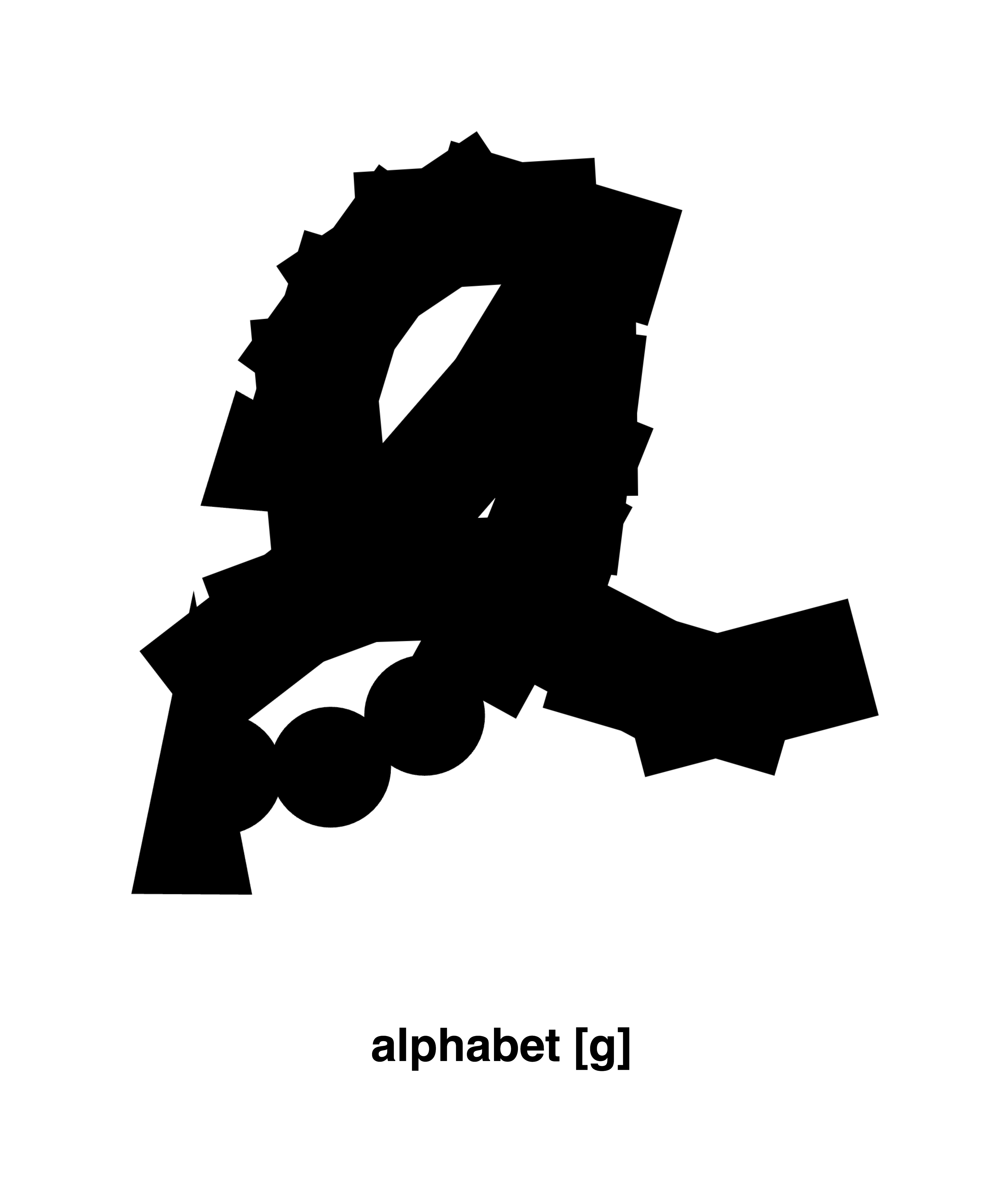
Nine versions of “g”
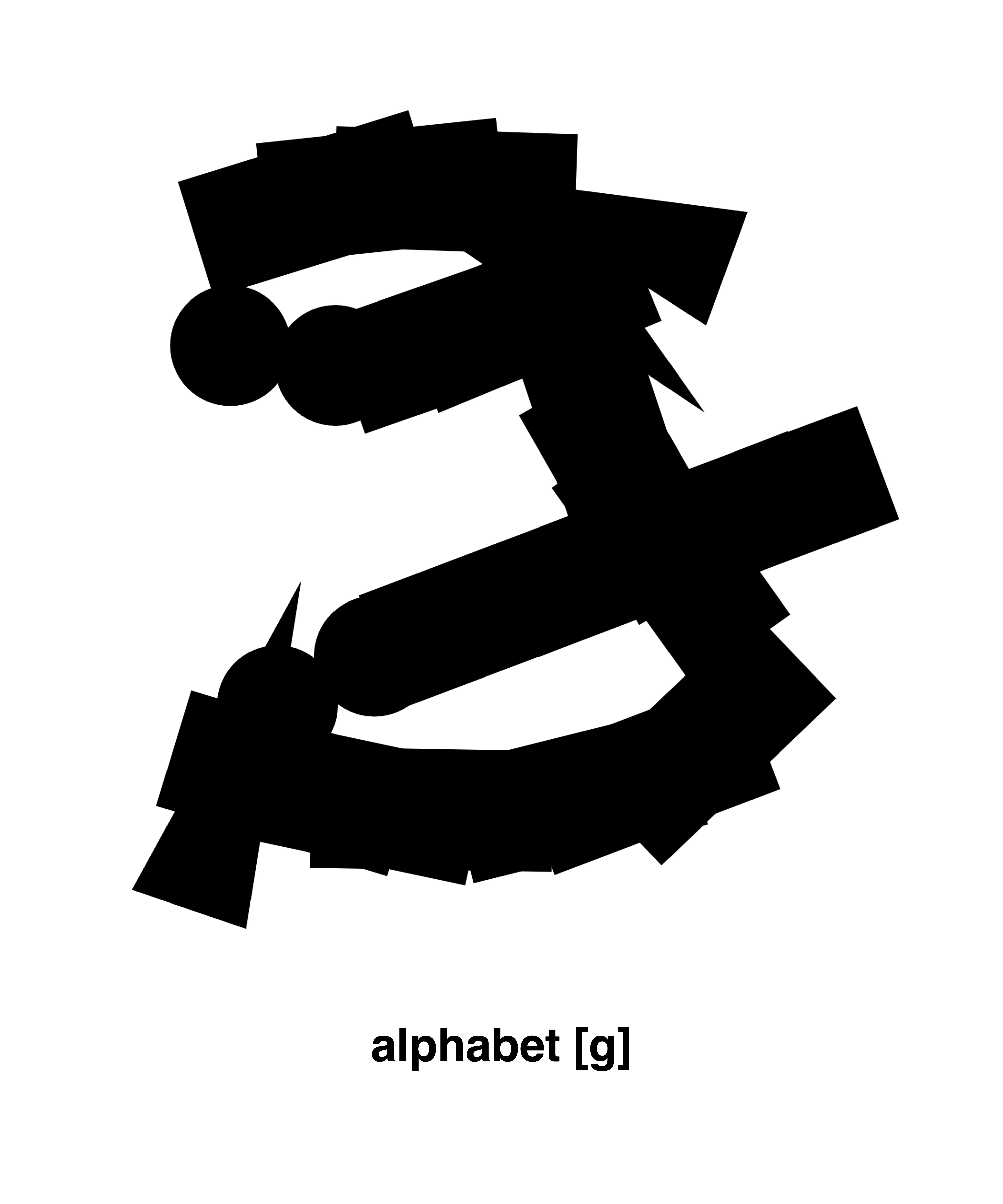
To evaluate consistency, I compared nine versions of the same letter “g” across participants. Although the letterform was identical in name, the behavioural glyphs varied significantly: different pivot points, different hesitation locations, and different pressure anchors. The variation reflected individual writing tendencies. This comparison visually validates the system’s ability to differentiate behavioural signatures across writers.
[ Tool behaviour emerges ]
Participants wanted to test the system on purpose
Several participants expressed curiosity about how the glyph would change if they altered their writing style. Slower strokes, sharper turns, or heavier pressure were expected to produce visible differences. The presence of export functionality and the desire to experiment indicate that the system is functioning as a tool, not just a visual artefact. It invites iteration.
[ Identified weakness ]
When the backbone starts to look like stylised typography
The most significant issue revealed in Week 6 was scaling imbalance. Rectangular backbones sometimes became visually dominant, causing glyphs to resemble stylised alphabets rather than behavioural reconstructions. When this happened, behavioural signals were less legible. This highlights a need to:
- Recalibrate base
width proportions - Refine circles
integration further - Maintain behavioural priority
over letter resemblance
[ Reflection ]
Validation of behavioural translation
Week 6 confirmed that participants perceive the glyph as a reinterpretation of movement rather than a reproduction of handwriting. Recognition and surprise indicate that behavioural abstraction is legible and meaningful.
[ Reflection ]
Signal hierarchy and calibration
User feedback revealed a clear hierarchy in signal clarity. Directional pivots are strongest. Pressure anchors are weakest. This provides a concrete path for refinement rather than speculation.
[ Reflection ]
Beginning of iterative refinement
Week 6 shifts the project from proof of concept to calibration. The system works. It differentiates behavioural signatures and generates coherent forms. The next phase focuses on improving signal balance and structural clarity. The Behavioural Glyph System is no longer speculative. It is now being tuned.