WEEK 8
PROJECT WEEK
Breaking down my RPO diagram and precedents
This week I unpacked my RPO diagram to understand how my project actually moves. I also revisited two precedents that helped me think about systems, instructions and how human variation shapes computational work.
Project week
Since there were no lessons this week, I spent my time refining my RPO diagram in preparation for the dissertation, and looking up precedents to support it.
Diagram as process map
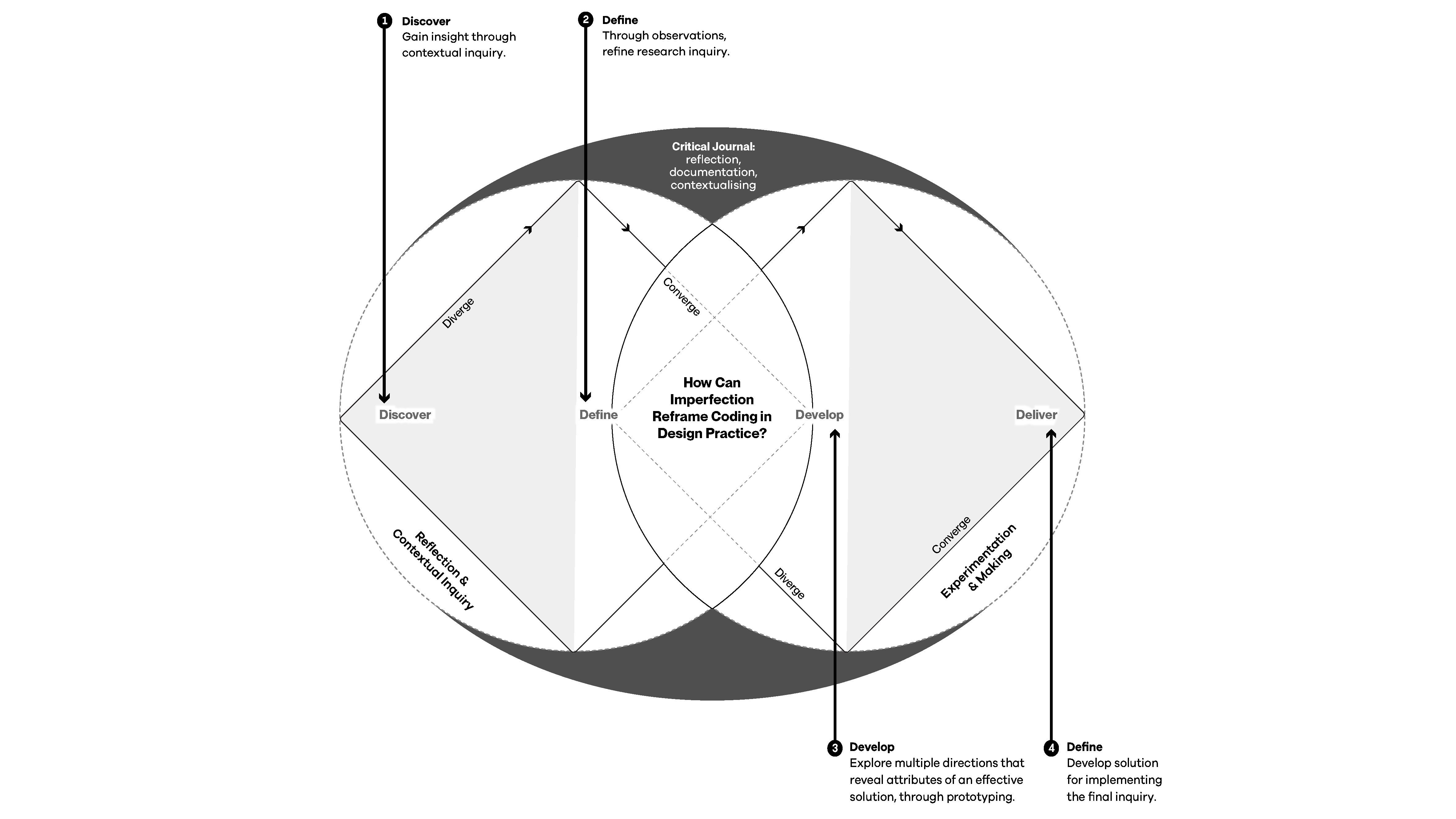
The Double Diamond, my Critical Journal and the research question sit together inside one continuous loop.
Precedents I want to share
Leah Buechley and Sol LeWitt gave me language for craft, code and instruction as form.
[ Double Diamond as base ]
Structure underneath everything
How the project moves
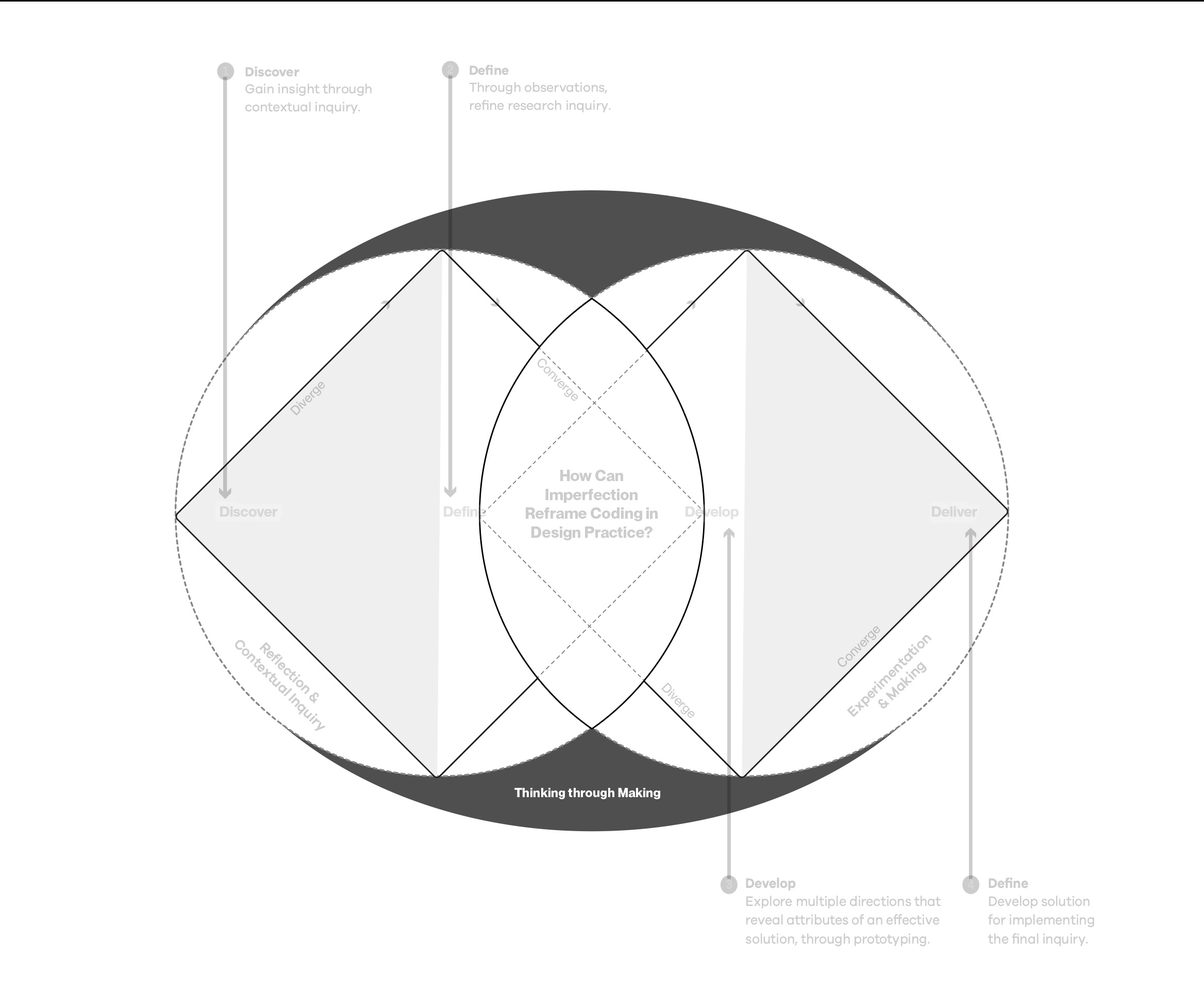
The RPO diagram rests on the Double Diamond. The first diamond carries me from discover to define. The second moves from develop to deliver. The circular boundary around them reminds me the project is not linear. I keep looping through making, testing and refining.
[ Critical Journal arc ]
Reflection across the whole timeline
The arc that sits on top
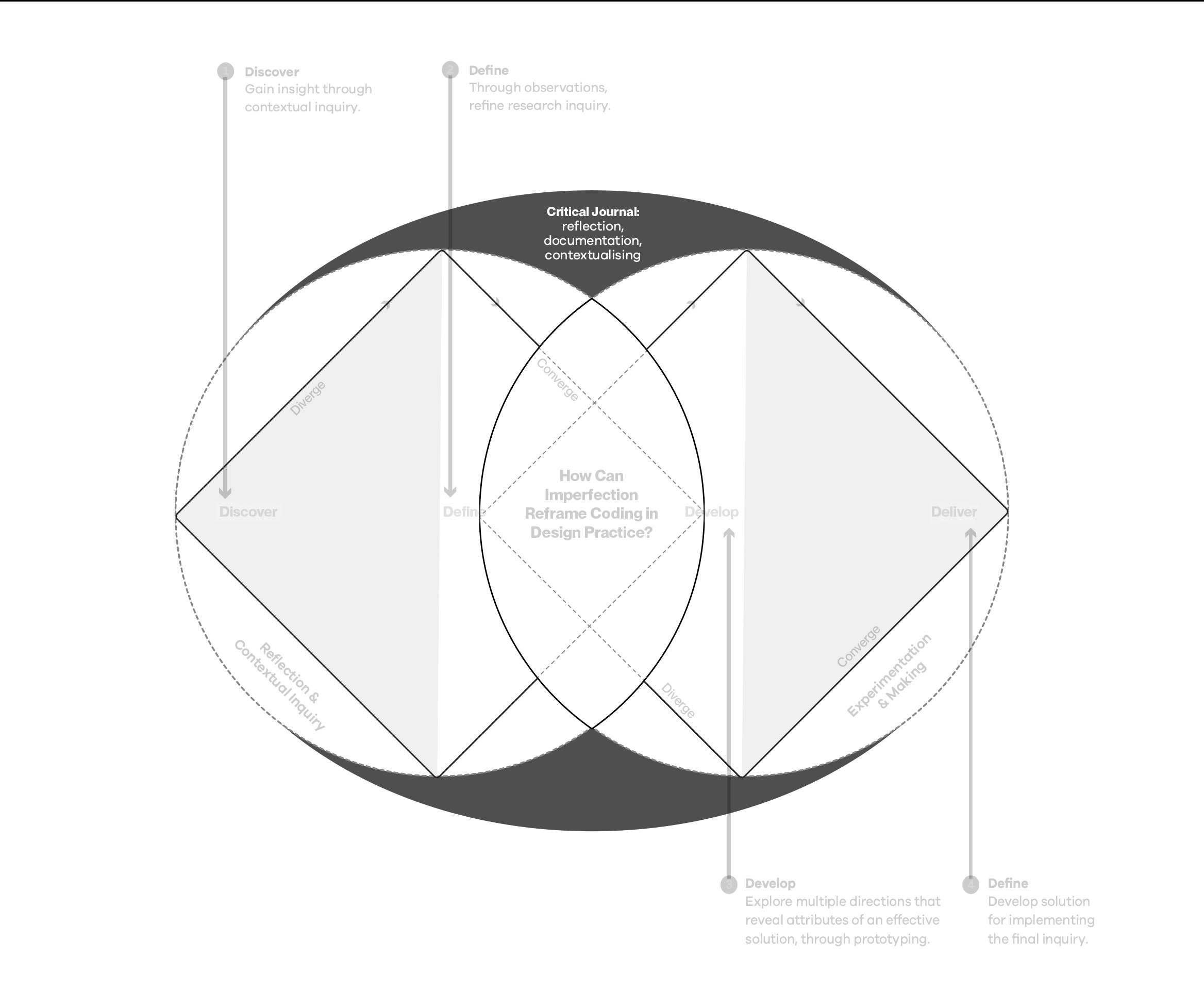
The dark curve across the top represents my Critical Journal. It overlaps both diamonds, which shows that reflection does not wait until after I finish making. I document, question and contextualise while the work is in motion. That running commentary keeps the project grounded and helps me recognise patterns.
[ Central zone ]
Where the question lives
Mixing craft, code and gesture
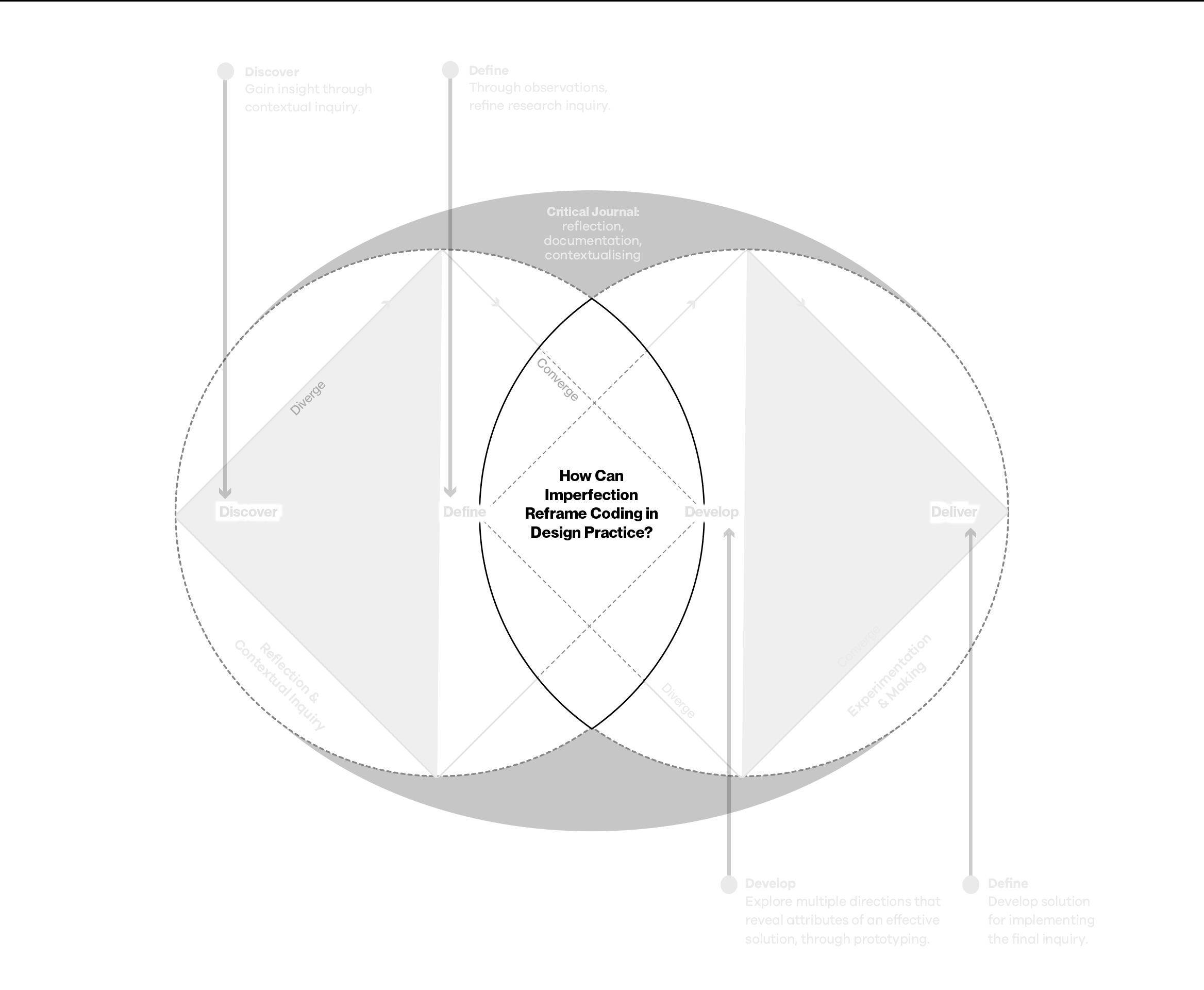
In the middle of the diagram there is an oval that overlaps both diamonds. This is where my research question sits. The position is intentional. The question is not answered once. It is something I return to as I discover, define, prototype and test. This centre zone is where craft, code, gesture, material and reflection overlap, and where imperfection becomes a method instead of a flaw.
[ Divergence and convergence ]
Opening and closing the field
Where variation appears
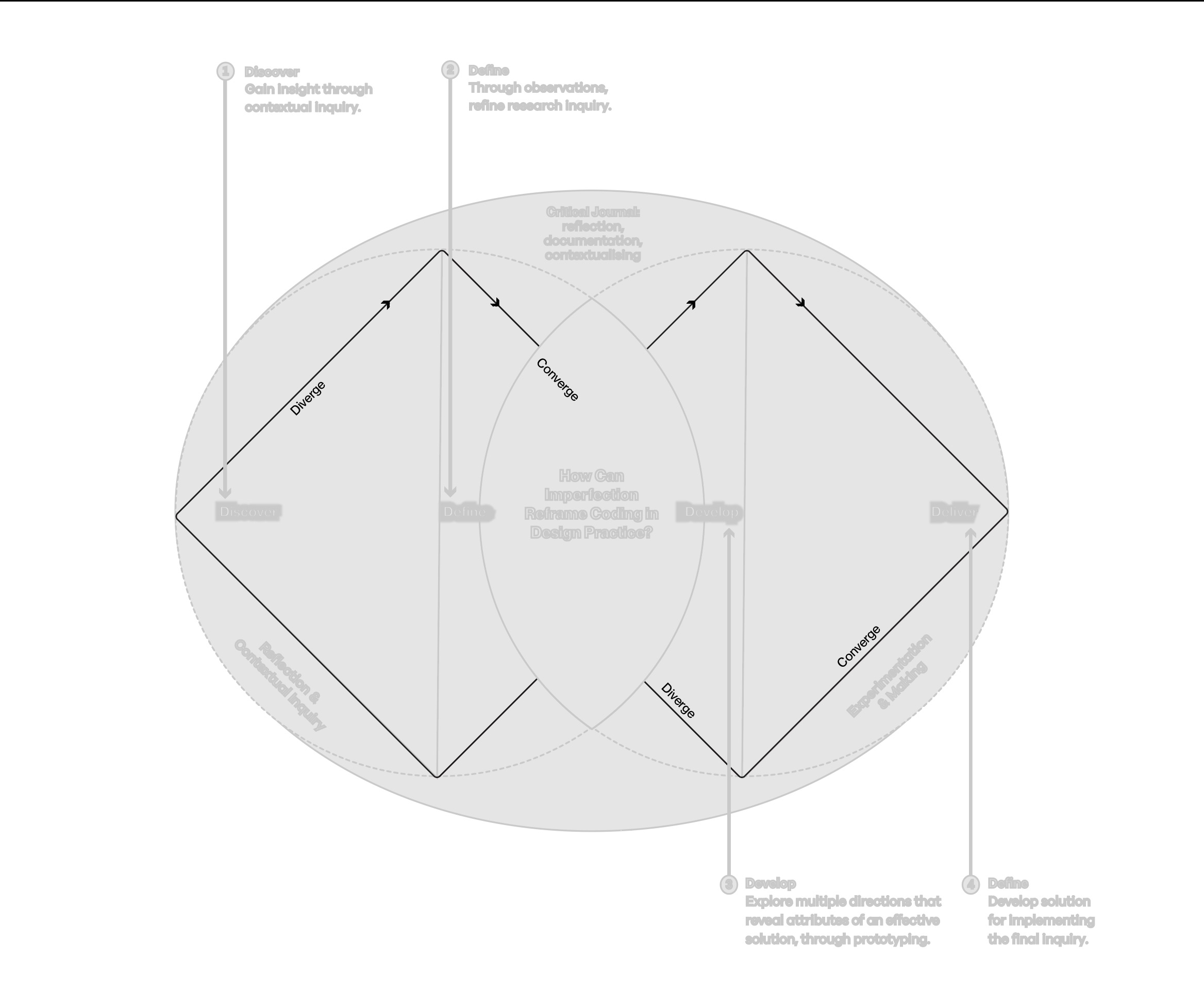
The arrows inside each diamond show diverging and converging motion. Divergence describes the messy stage where I try different techniques, stretch patterns and let things break. Convergence happens when I reflect on what stood out and decide what to carry forward.
This rhythm is exactly how imperfection emerges in my work. Diverging makes variation visible. Converging helps me recognise what matters in that variation.
[ Reflection through making ]
Reflection in action
The lower curve
A second dark curve sits at the bottom of the diagram. It mirrors the Critical Journal arc but represents reflection through making, not writing. This is where the hand learns through resistance, mistakes, hesitation and timing. It shows that reflection does not only happen at the desk. It happens when I am stitching, coding, tracing or embossing.
[ Anchor points ]
Discover, define, develop, deliver
Four markers across the diagram
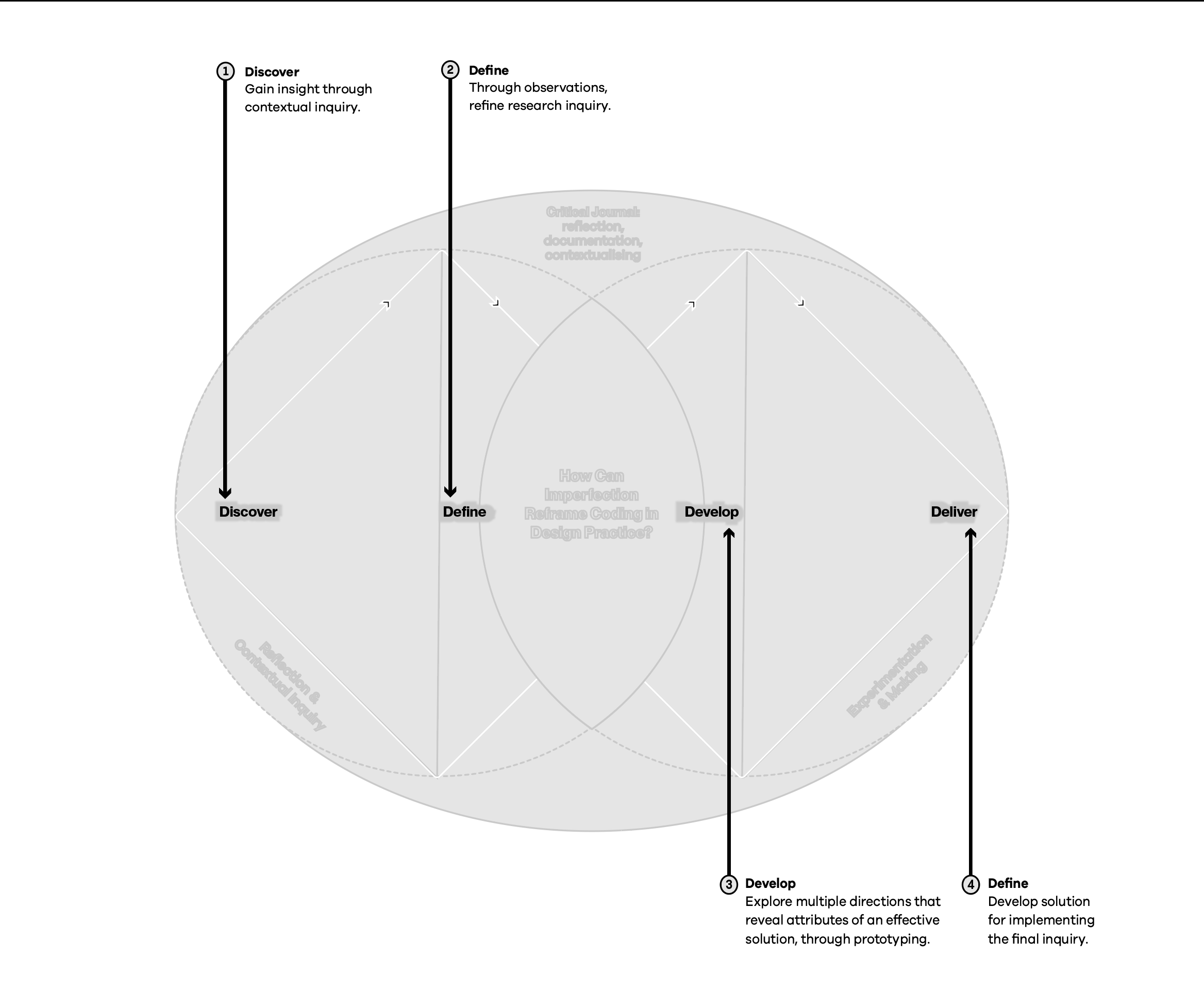
The numbered labels (1–4) punctuate the diagram. They are not checkboxes. They are anchors that help me see where each experiment sits in the wider journey.
[ Layers together ]
Diagram as system
Imperfection as method
Read together, the diamonds hold the structure, the arcs hold reflection, and the central oval holds the question. The arrows show motion and the numbered points show pacing. It becomes a reminder that my research grows through cycles of experimenting and reflecting, with imperfection showing up as a source of insight rather than something to fix.
[ Precedent study: craft, code and instruction ]
Why these artists
Understanding systems through material outcomes
I wanted to find artists who already work between craft and computation. Leah Buechley and Sol LeWitt both translate rules and instructions into material outcomes, and their work depends on human variation to complete the system.
[ Precedent 01 — Leah Buechley ]
Craft as computational process
Stitching, circuits and learning through making
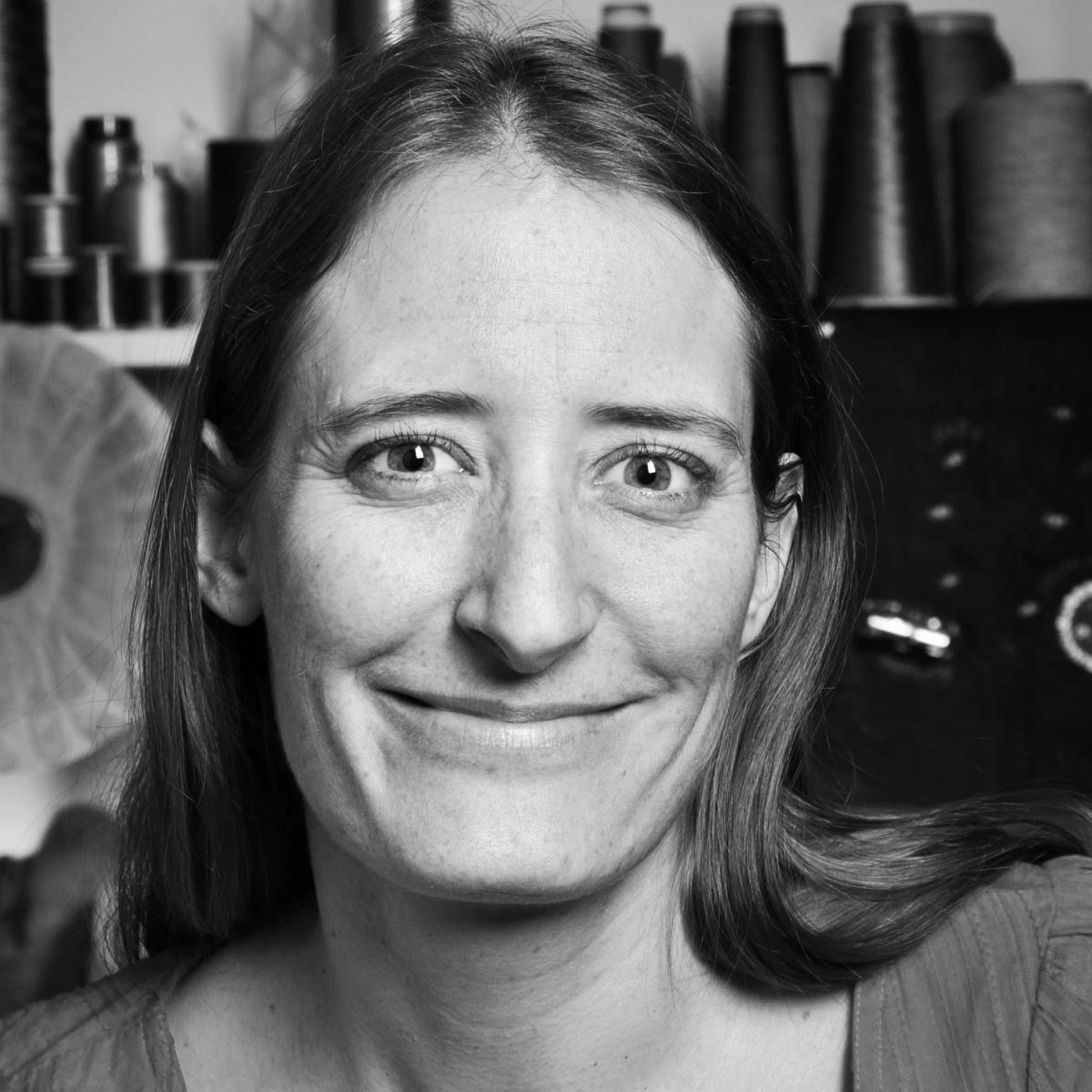
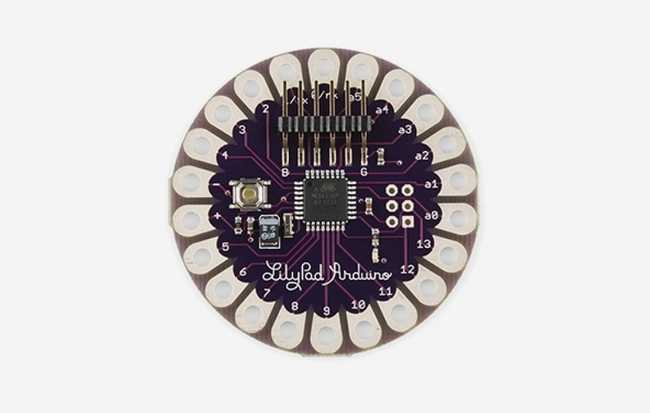
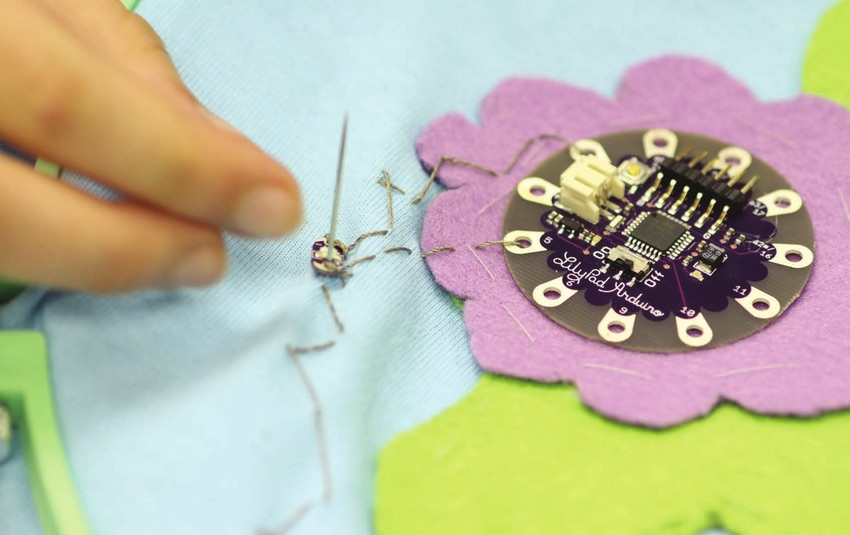
Buechley is a designer and researcher known for LilyPad Arduino and High Low Tech. She treats sewing and stitching as ways of encoding logic. Circuits become part of textiles. Learning happens through making, and technology stays accessible and expressive.
Her work shows that computation does not have to erase craft. It can sit inside it. When I think about my own loop travelling through code and into material, I can read it like a stitched circuit, where each translation is part of the logic, not a loss.
LilyPad Arduino
[ Precedent 02 — Sol LeWitt ]
Instructions as a system
Where rules meet human variation
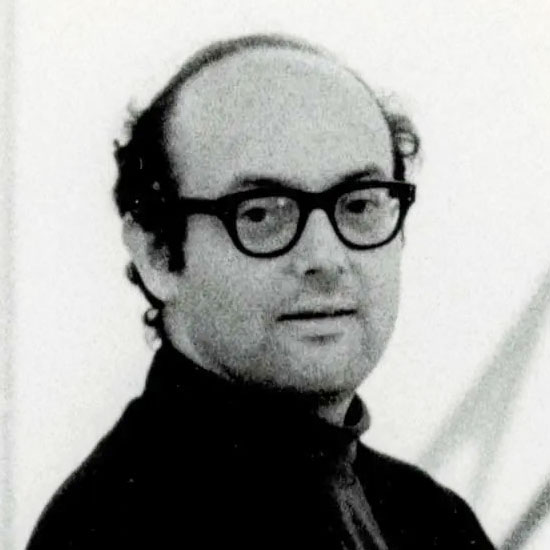
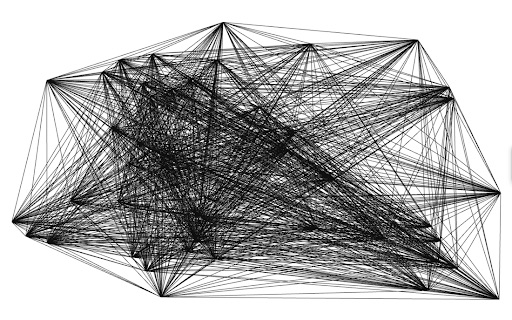
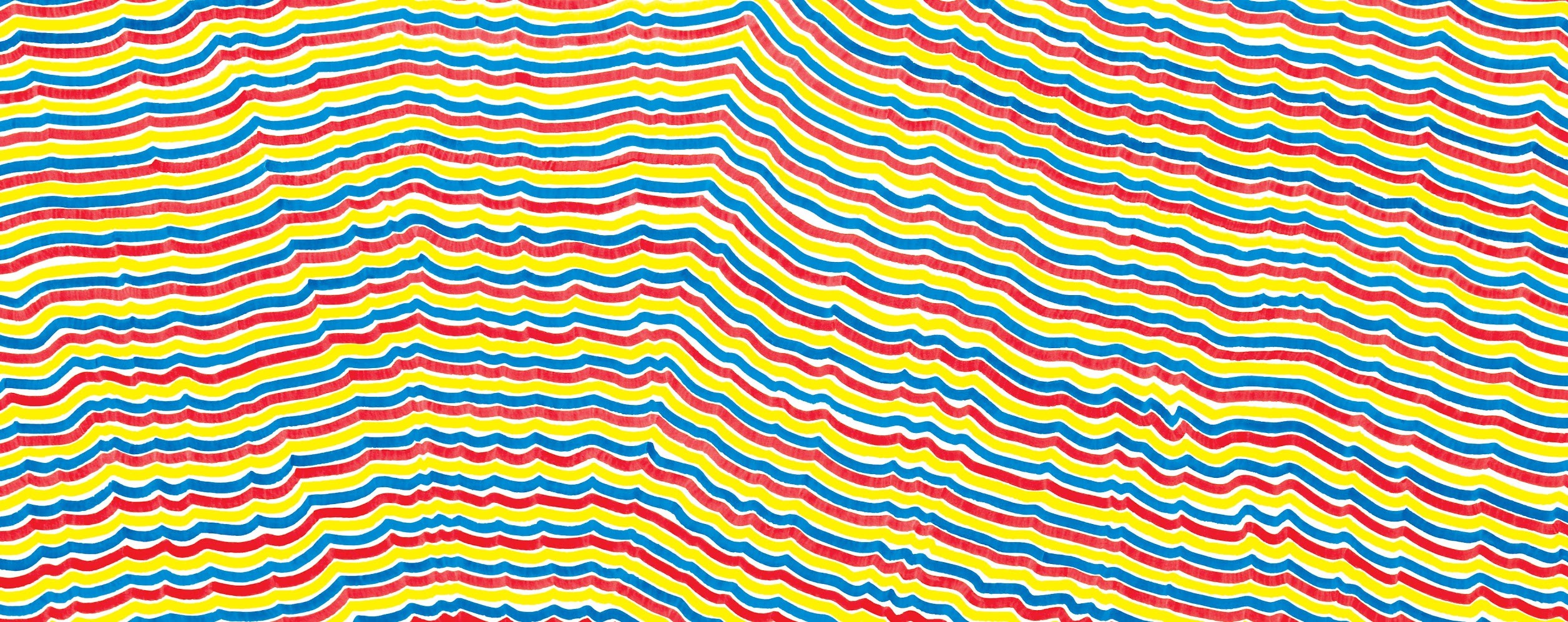
LeWitt is a conceptual artist known for instruction based wall drawings. He writes a rule set and others execute it. Even with strict instructions, each drawing looks slightly different because different bodies interpret the same task.
His work sits close to my loop experiments. The code behaves like an instruction. The gesture becomes a rule that produces a pattern. The material outcome always carries traces of human interpretation.
Wall Drawing #118
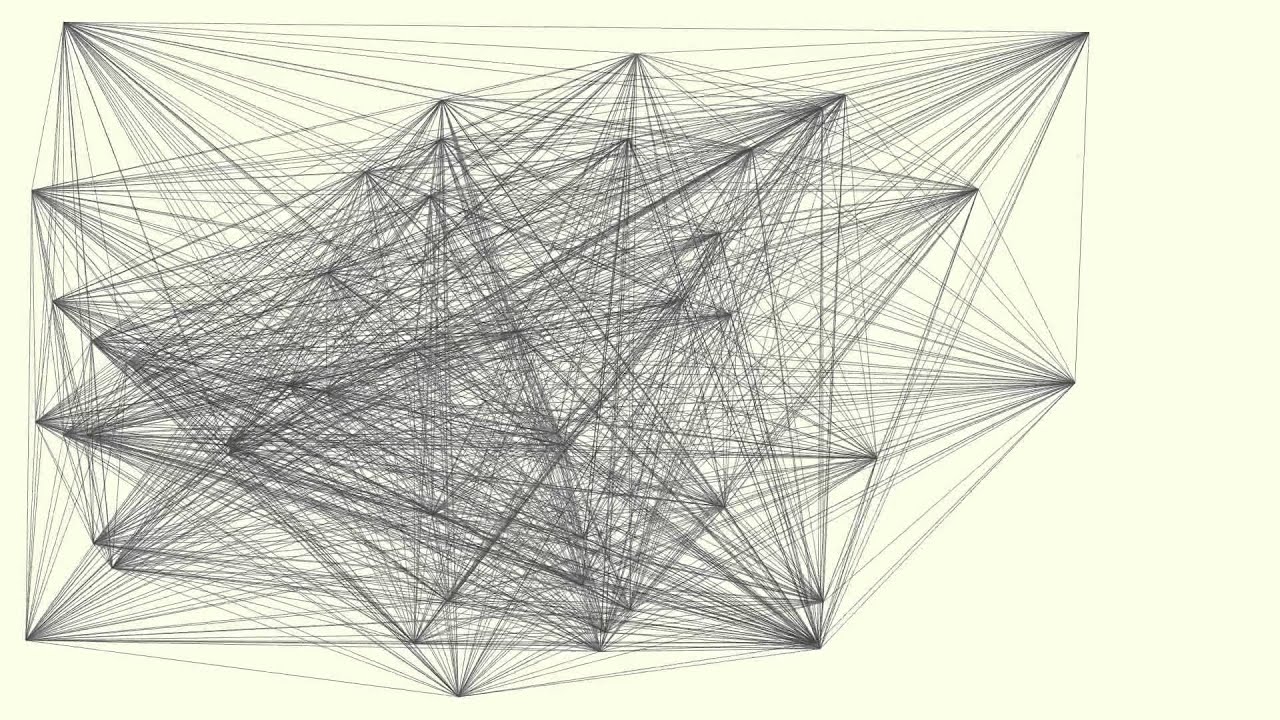
Wall Drawing #797
[ Reflection ]
What I am taking forward
Hands inside systems
Buechley and LeWitt both rely on systems, but neither treat them as neutral. The hand always slips through. Buechley shows that physical craft can hold computation without losing warmth, and that gesture can form part of the logic. LeWitt shows that instructions behave like code and variation is not an error but a natural result of translation.
Together, they support what I am trying to study: how gesture shifts as it moves from hand to data to pattern to material, and how each stage adds, loses or emphasises different parts of the original movement.