WEEK 9
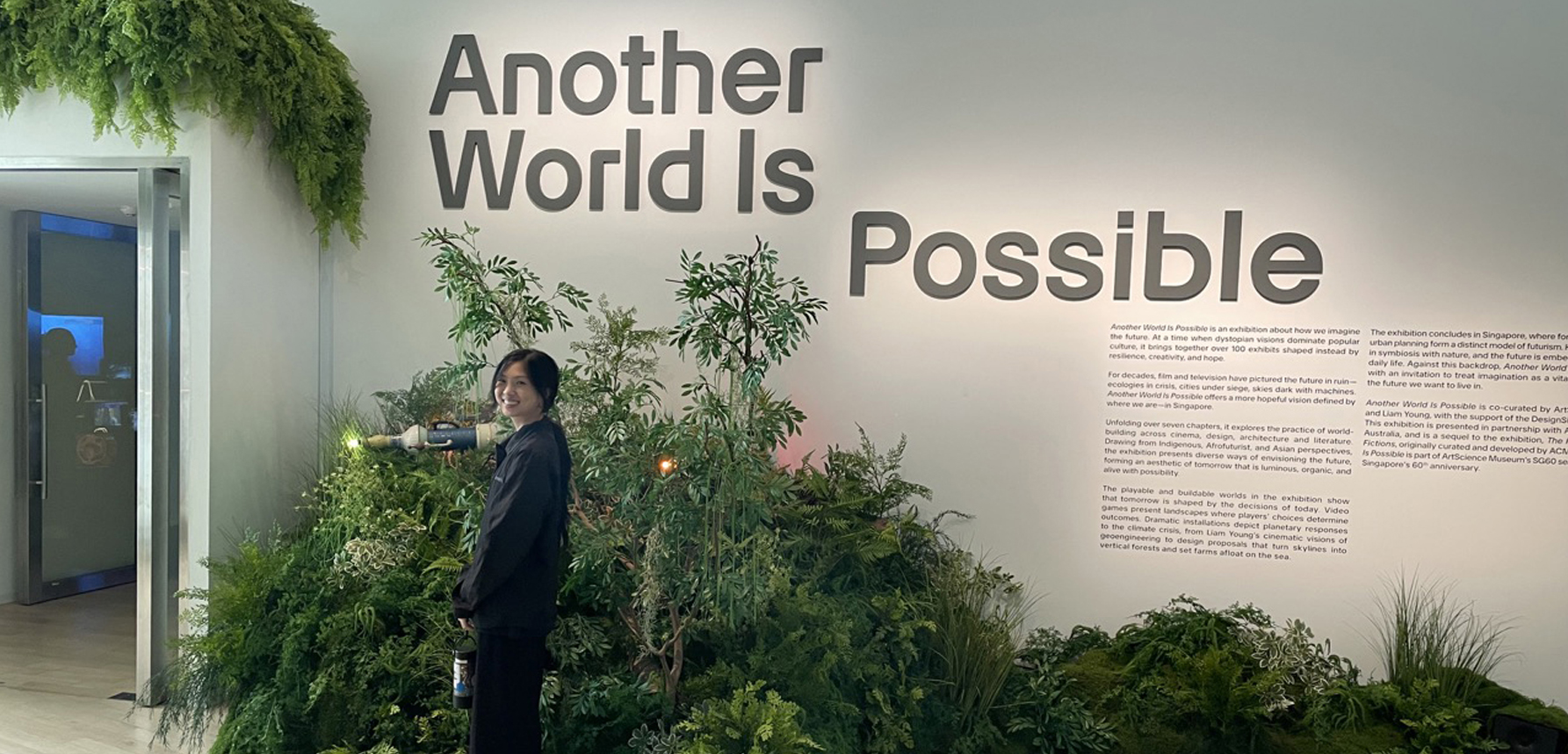
PART 1: EXHIBITION VISIT
Another World Is Possible
This week began with an exhibition visit that quietly reset how I think about worldbuilding, tone and futures. The show framed speculation around care and possibility instead of disaster, which felt close to the direction I want for my own work.
First impressions
Each room carried a distinct mood. Light, sound and texture were paced so visitors could stay with each space without feeling rushed.
Hope as direction
The curators leaned into hopeful futures, which reminded me that optimism can be a design stance, not just a tone.
Narrative as entry
Storytelling quietly guided what to pay attention to, so the speculative worlds felt intentional instead of random.
[ First impressions ]
Walking in
Immersive, paced, and careful
Walking into the exhibition felt immersive. Each room had a different mood, and the pacing helped me take in each space without feeling rushed. Light, sound and texture were used carefully. It felt clear that the curators wanted visitors to imagine futures that were not catastrophic.
It reminded me that hope can be a design direction, not just a tone layered on top. The feeling of the rooms did the work before any written explanation.
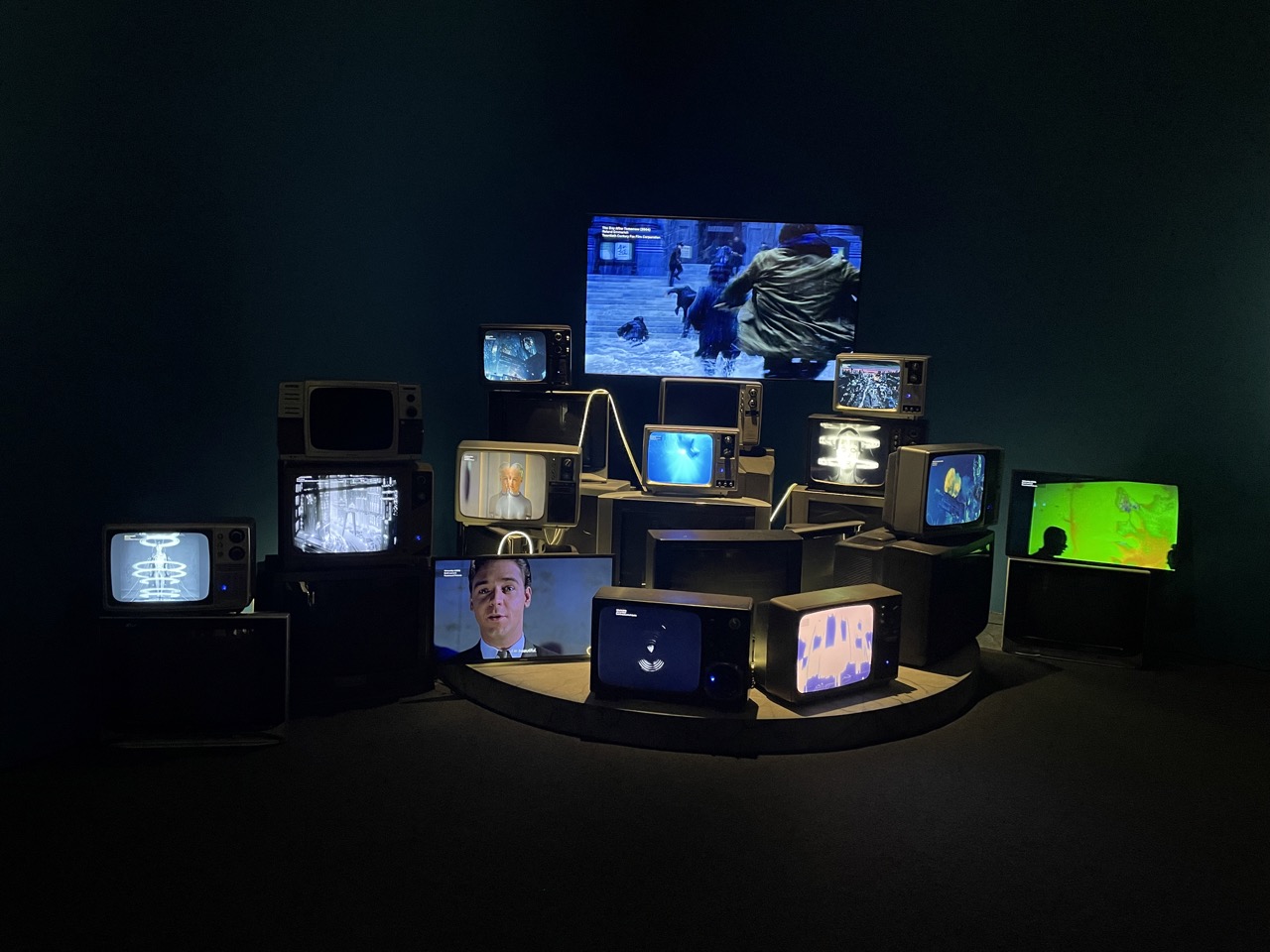
[ How the exhibition was designed ]
Rhythm and zoning
Rooms as chapters of a future
The exhibition moved room by room, each with its own focus on alternative futures. It felt organised. I always understood what I was supposed to pay attention to.
Design choices I noticed:
- Clear zoning between thematic rooms.
- Consistent pacing that gave space to each installation.
- Soundscapes that supported mood without overwhelming it.
- Interactive pieces that made the future feel participatory.
- A mix of digital screens, projections and physical objects.
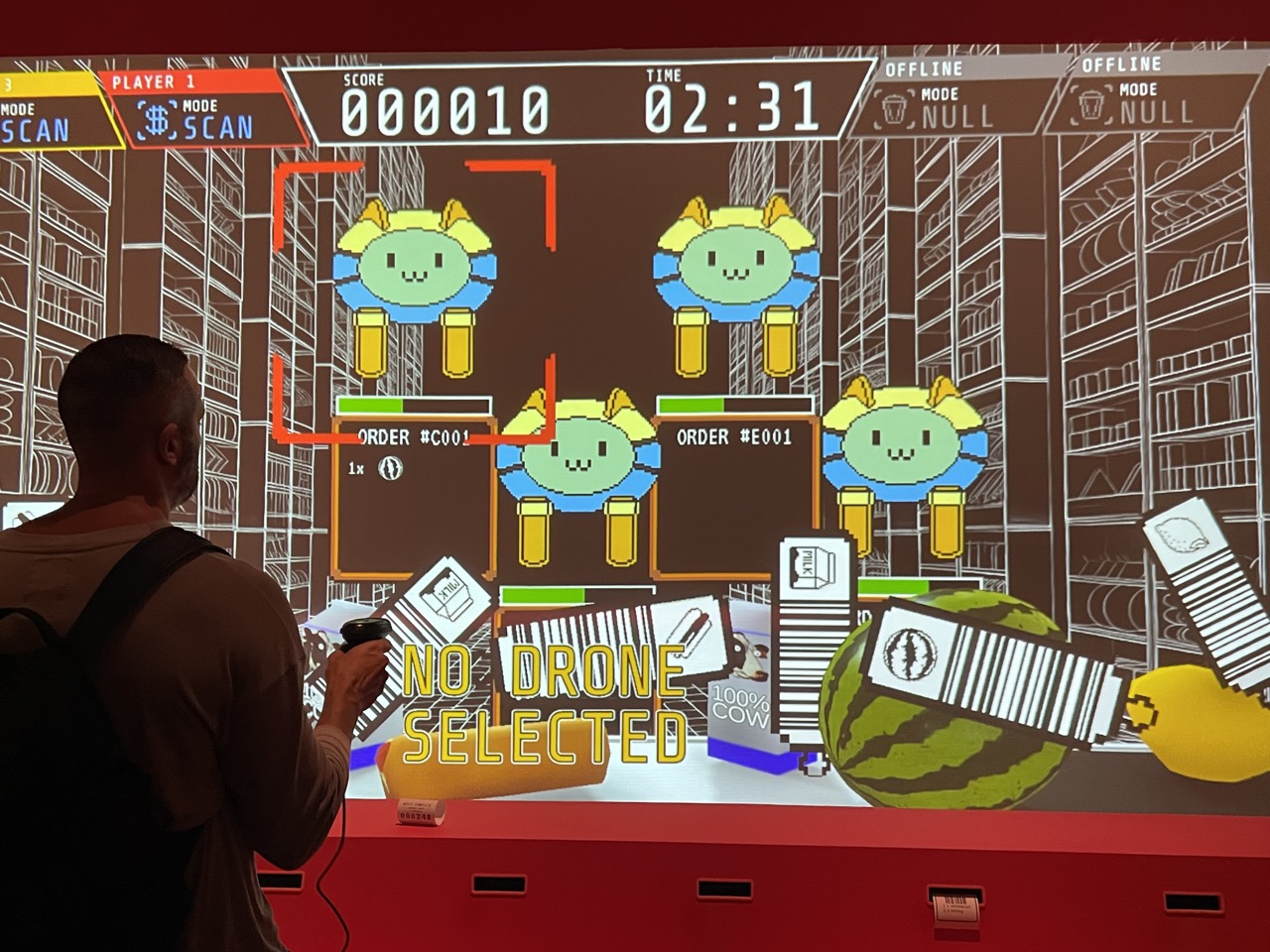
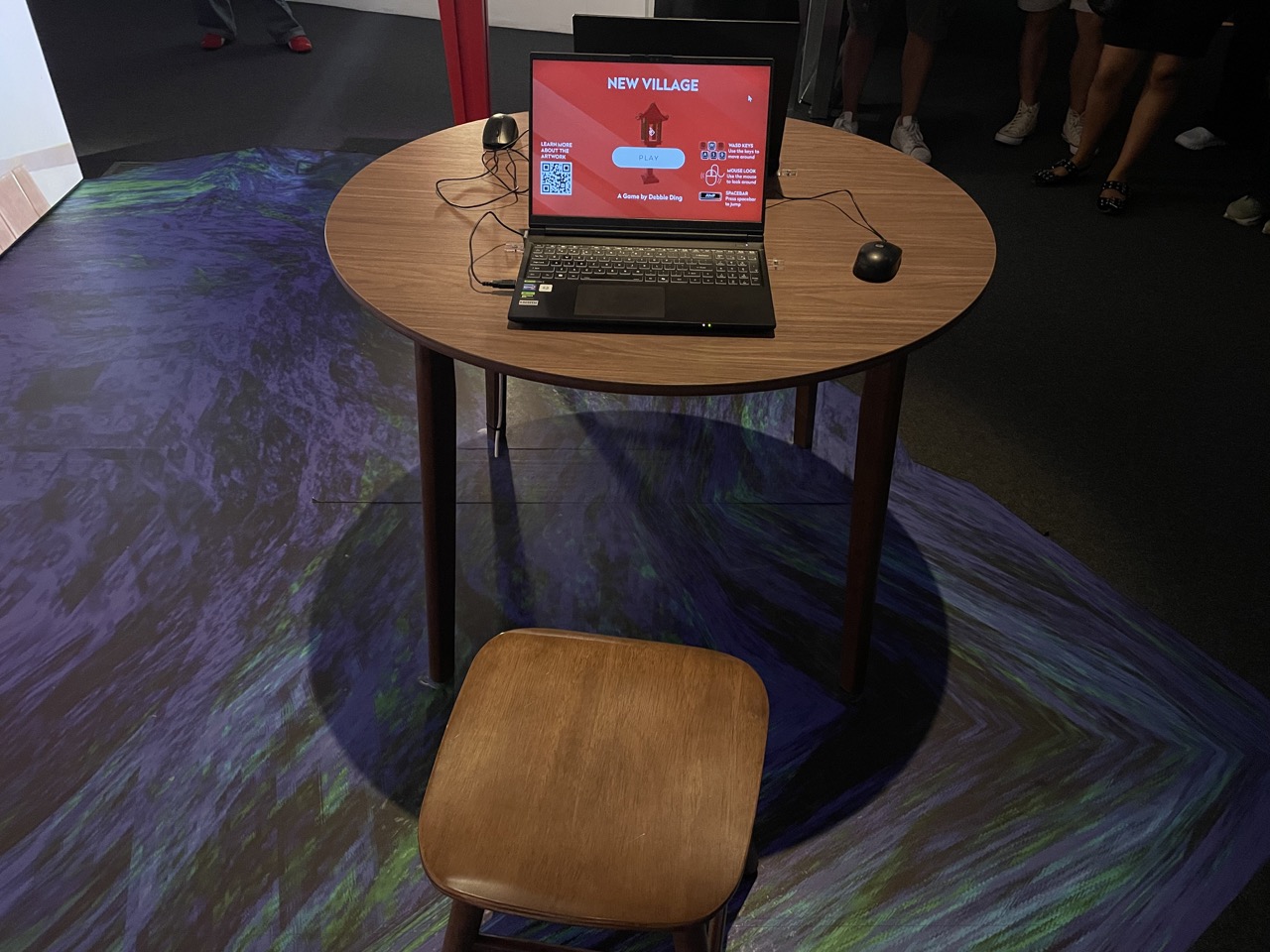
There was also an interactive game where visitors joined through a QR code. One room featured a worldbuilding game based on a designer’s grandparents' kampung, which no longer exists. It was playful but also emotional. It showed how designed futures can be grounded in memory, not only speculation.
[ Outstanding artefact ]
WOHA’s habitat totems
Architectural care for nonhuman life
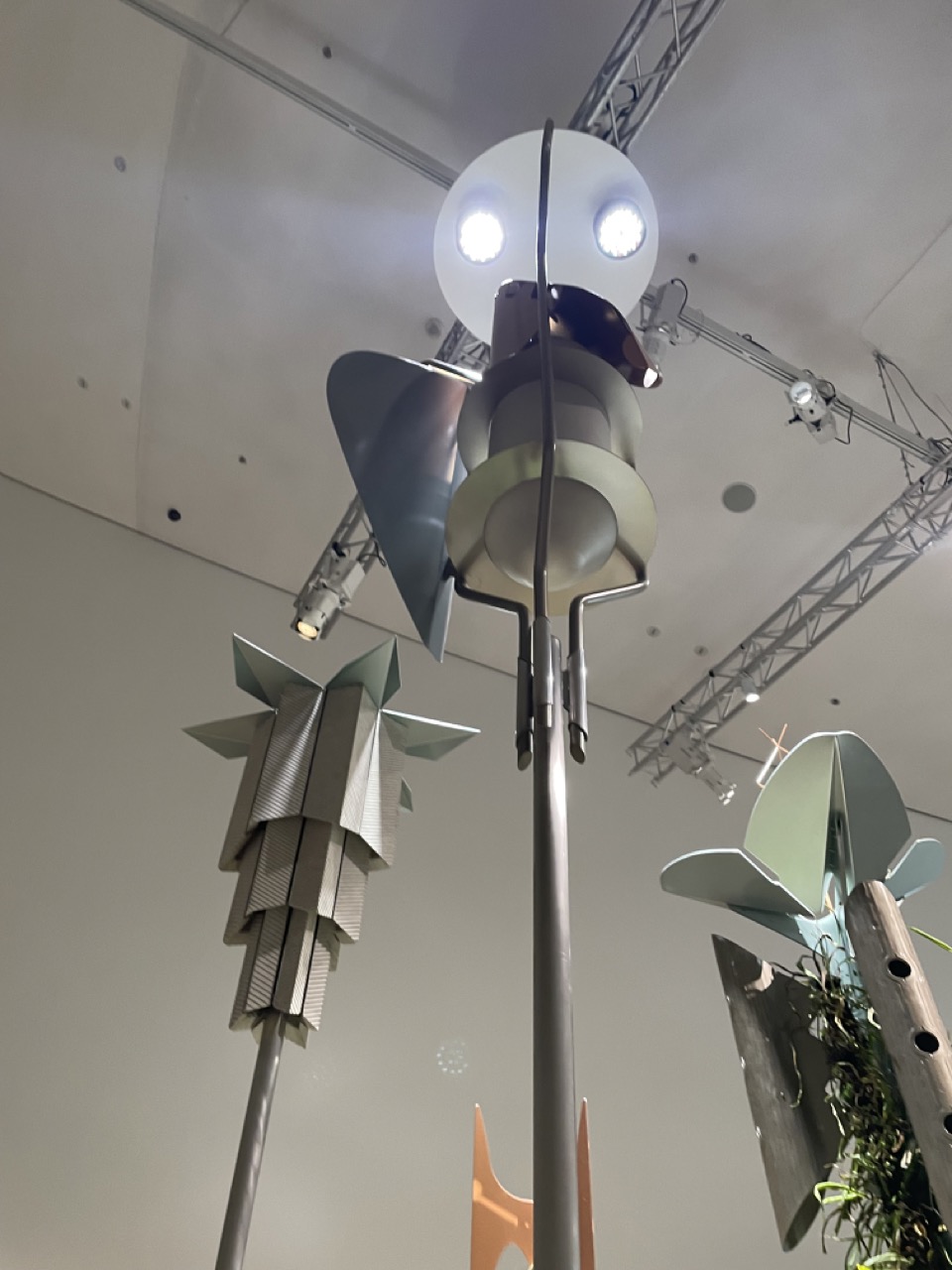
The room that stayed with me the longest featured WOHA’s habitat totems. Each totem was designed to support a specific species in dense urban environments. Microbat, eagle, parrot, burrowing bee and zebra finch habitats were reimagined as architectural structures that coexist with city life.
What stood out:
Architectural and ecological
The totems were architectural yet ecological, designed as spatial structures that still centred animal needs rather than just human circulation.
Atmosphere and coexistence
The soundscape brought wildlife into the room and framed the totems as shared habitats, proposing coexistence instead of separation.
Speculative but grounded
The forms felt speculative but grounded in reality. They addressed habitat loss without framing it as tragedy, which made the proposal feel hopeful rather than fatalistic.
This room made me think more deeply about how human expansion affects nonhuman life, and how design can create space instead of only taking it away.
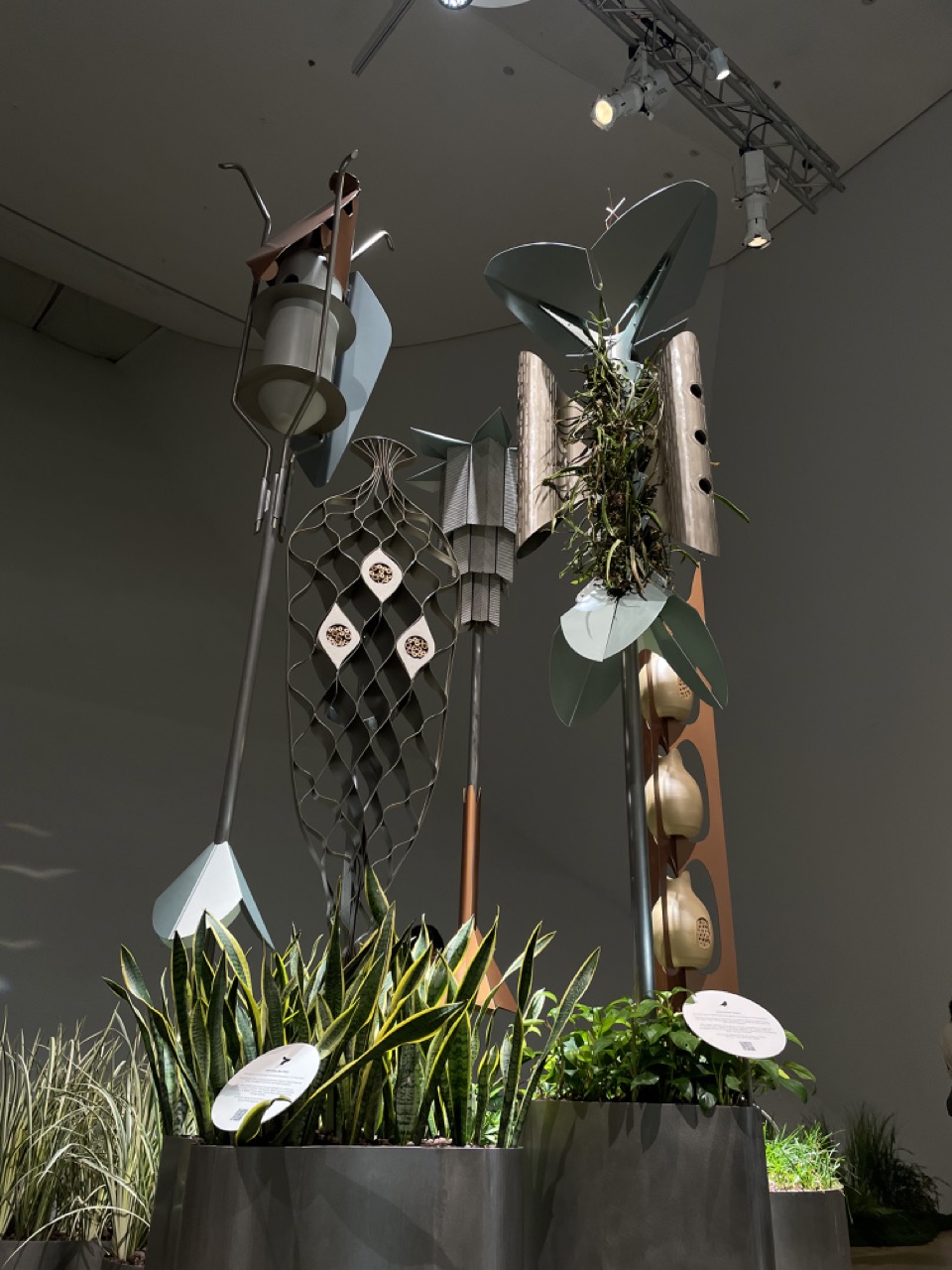
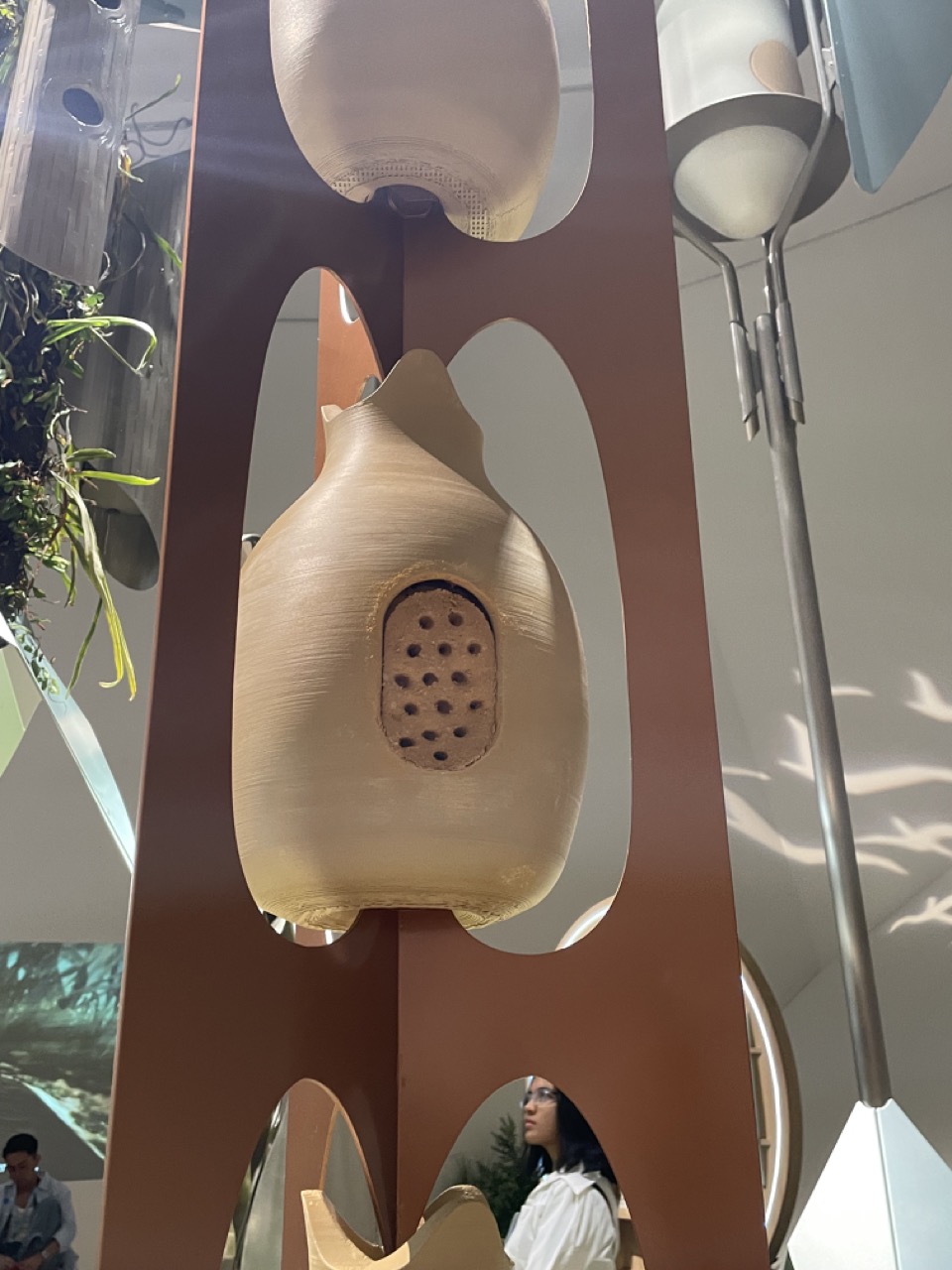
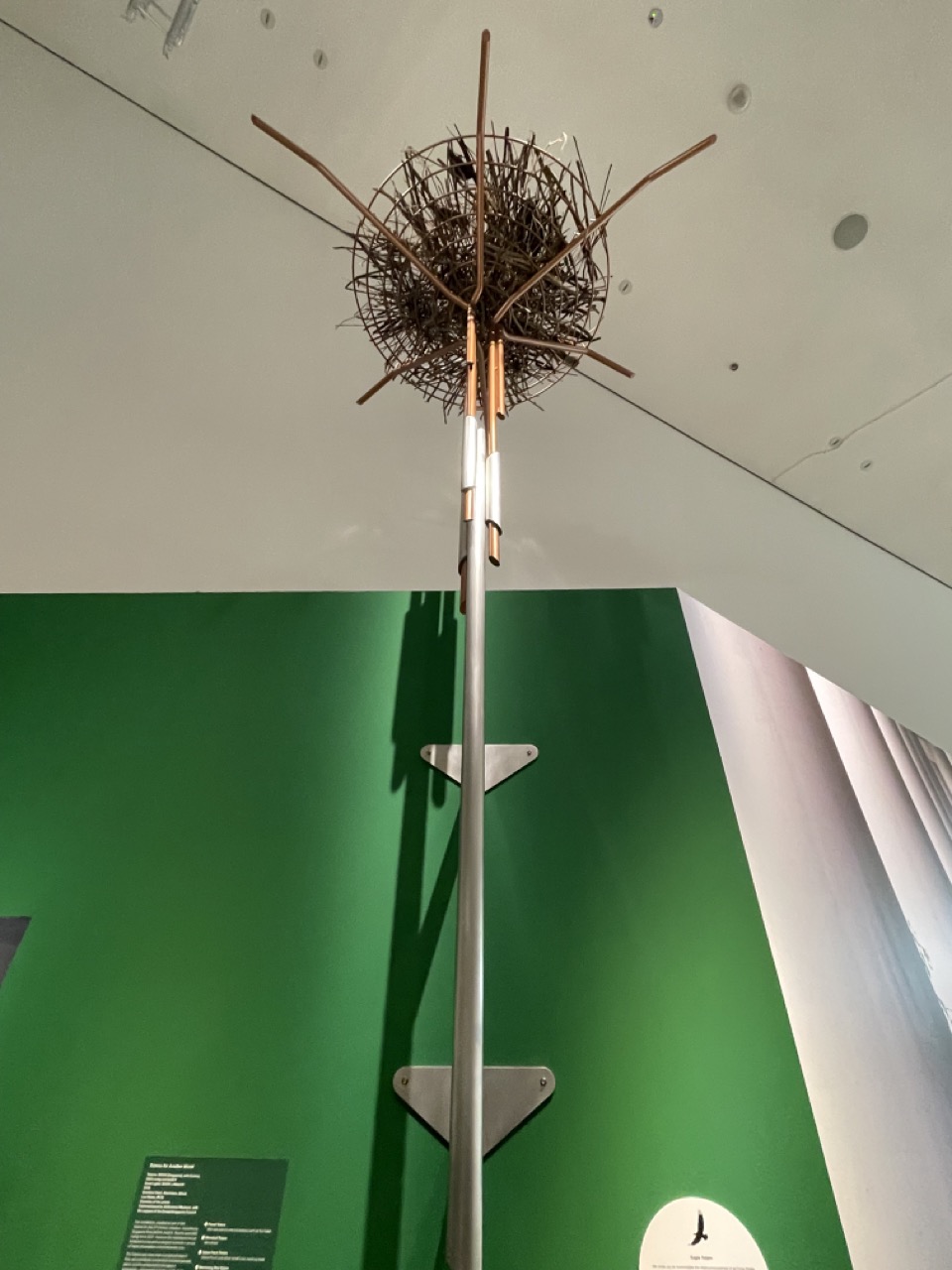
WOHA’s habitat totems imagining shared spaces for urban wildlife.
[ Liam Young ]
Seeing the work in person
Liam Young
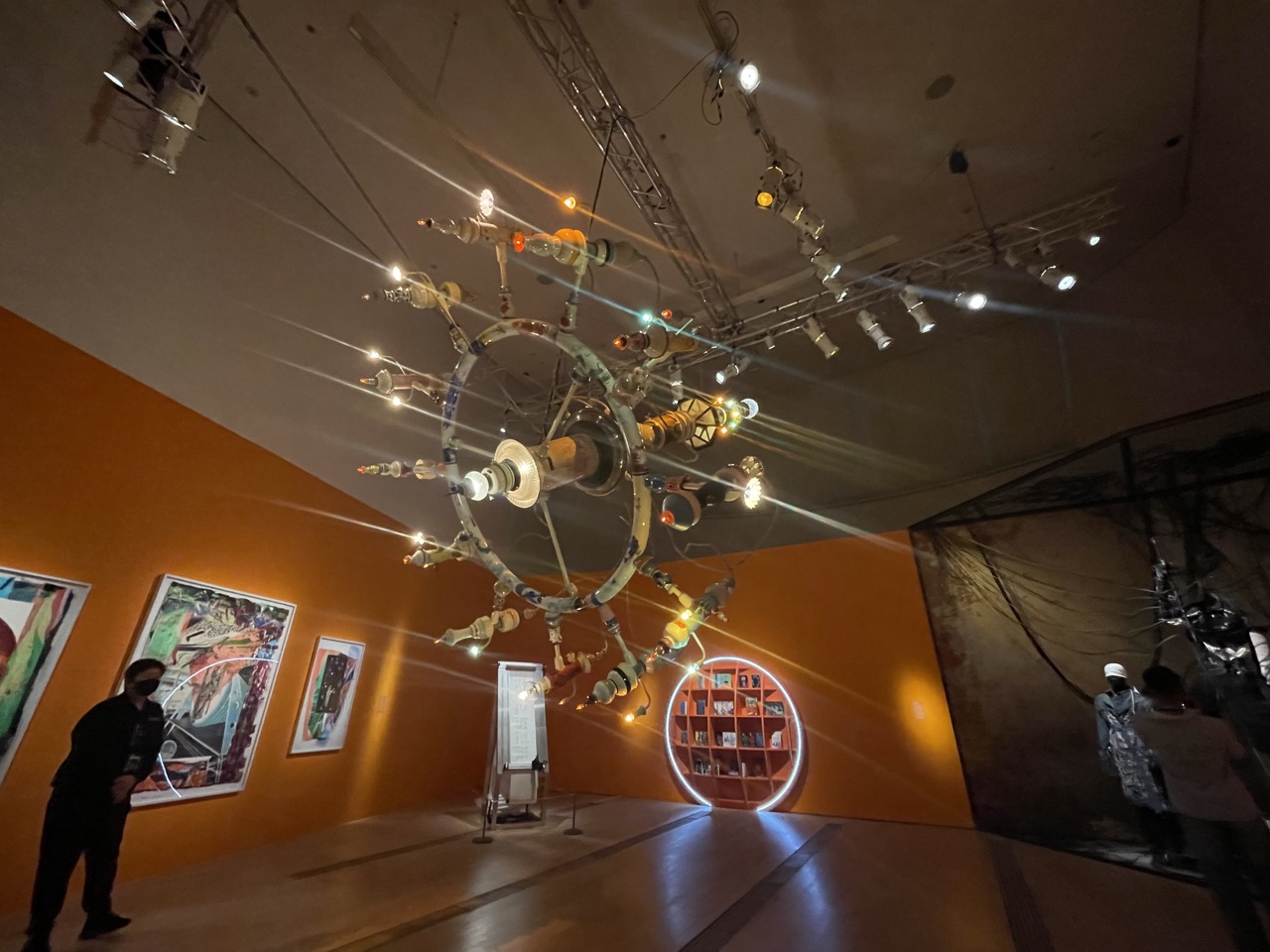
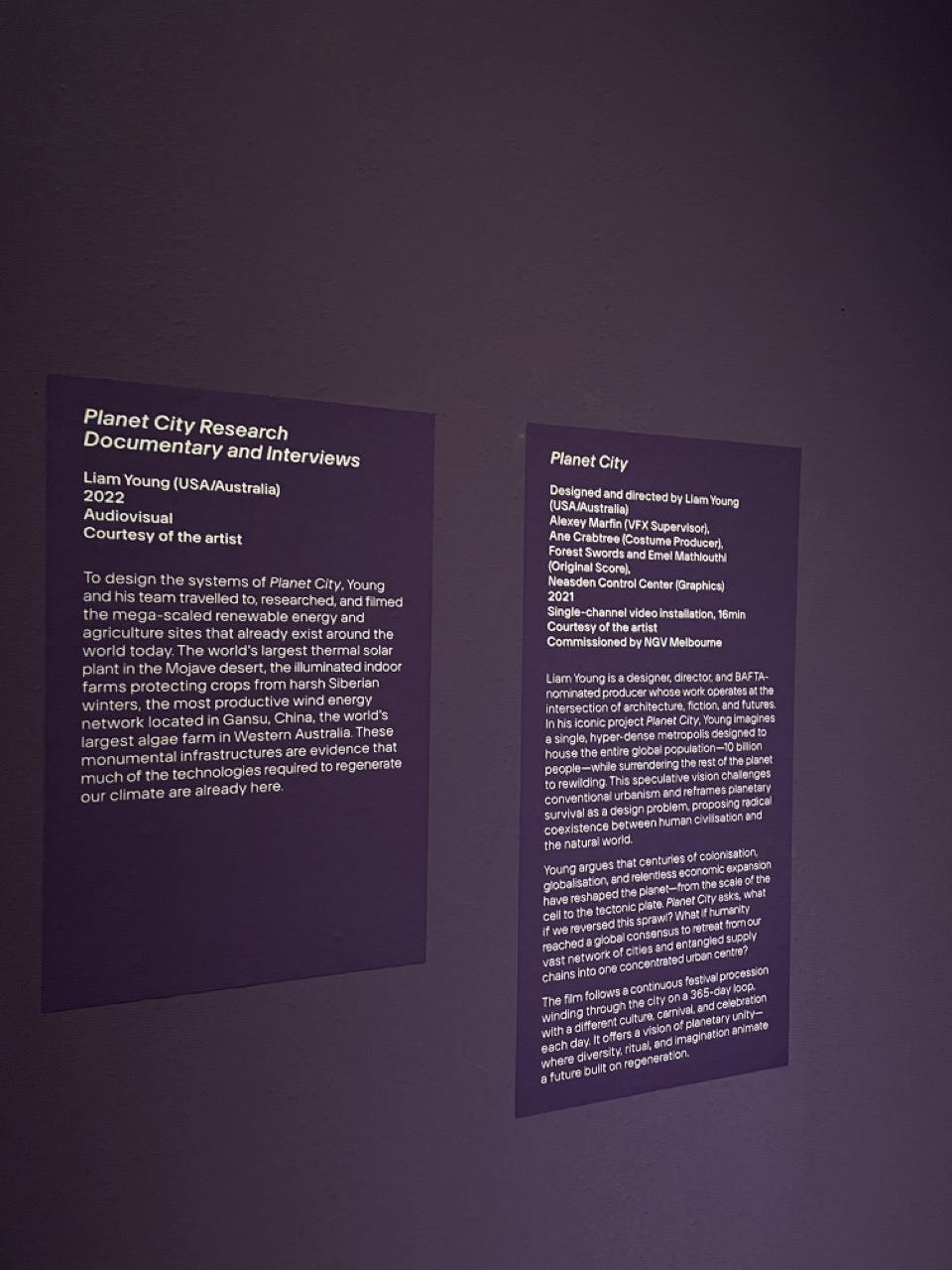
I have followed Liam Young’s work for a while, especially loved his project where the city is seen entirely through fleets of autonomous vehicles. The cameras and algorithms become the city’s eyes, and people camouflage themselves to slip outside what the system can recognise.
Seeing his installation in person changed the scale for me. The moving images and sound carried a strong atmosphere and made the whole space feel watched. It reminded me that worldbuilding is not just visual. It is emotional and spatial, and the feeling of being inside the system reaches you before any explanation does.
[ What the exhibition taught me ]
Tone, storytelling and futures
Soft futures with weight
The exhibition showed me that storytelling shapes how people enter a speculative world. Without narrative, the visuals feel disconnected. With narrative, everything lines up around a shared intention.
It also showed that speculative futures can be soft. They can be strange, gentle and still critical. Not every future needs to be dystopian to have impact. That tone aligns with how I want my own work to feel. Imperfection does not need to be violent. It can be quiet and intentional.
[ Reflection ]
Personal and critical response
Worldbuilding as constructed narrative
The habitat totems made me think about how design can return care to things we usually overlook. It connected back to my interest in gesture and trace. Small movements can build or damage systems. Small actions can create space or take it away.
The exhibition also reminded me that I need to guide people into my project with a clear narrative. I tend to jump straight into explanation, but the entry point should be emotional. It should set the tone before I ask people to understand the technical side.
The show made me rethink what a future actually is. Not a prediction, but a constructed narrative. It is built through choices in materials, sound, form and timing.
Intentional worldbuilding
A future feels believable when the worldbuilding is consistent. The details, tone and pacing work together to hold the narrative in place.
Hope as direction
Hope can be a design stance. It does not dilute the critique. It shifts the focus toward care, possibility and repair.
Softness as strength
Soft, quiet futures can hold as much power as disruptive ones. People respond emotionally before they rationalise, so tone shapes understanding.
This pushed me to see my FYP not only as a system, but as a small world I am constructing. The way I frame that world will shape how people read my experiments.
[ Connection to my FYP ]
Speculation at a smaller scale
Gesture, code and material as worldbuilding
The exhibition reminded me that my project also builds a small speculative system. I am shaping how gesture moves, how code interprets and how materials respond. That is a form of worldbuilding. It is slower and smaller in scale, but still about creating a new way of seeing.
Narrative as entry point
I need a clearer narrative when presenting experiments. The story guides people into the system before the technical details appear.
Softness and care
Softness is a valid speculative direction. Care can shape mood, pacing and how people read gesture in my work.
Framing the system
How I frame an experiment matters as much as the outcome. The frame sets expectations and helps people understand what to look for.
This visit helped me see how to guide people into my project with intention, and how to communicate the tone behind my system.
PART 2: AXIDRAW WORKSHOP
Testing translation with a drawing machine
Later in the week we worked with the AxiDraw. It became a way to watch how digital instructions travel through a mechanical system and return as physical marks, carrying their own small imperfections.
RPO diagram test
I started by plotting my RPO diagram to see how the machine handled line density and contrast.
Live p5.js connection
We linked a p5.js sketch to the AxiDraw so on screen drawing turned into pen movement on paper.
Bitmap and patience
A halftone cat test showed how ink, time and small dots turn into a very slow drawing process.
[ AxiDraw test 01 ]
Using my RPO diagram
Seeing how the machine reads lines
We got the AxiDraw running and I decided to test it with my RPO diagram. I wanted to see how the machine handled lines, contrast and density in something I already knew well.
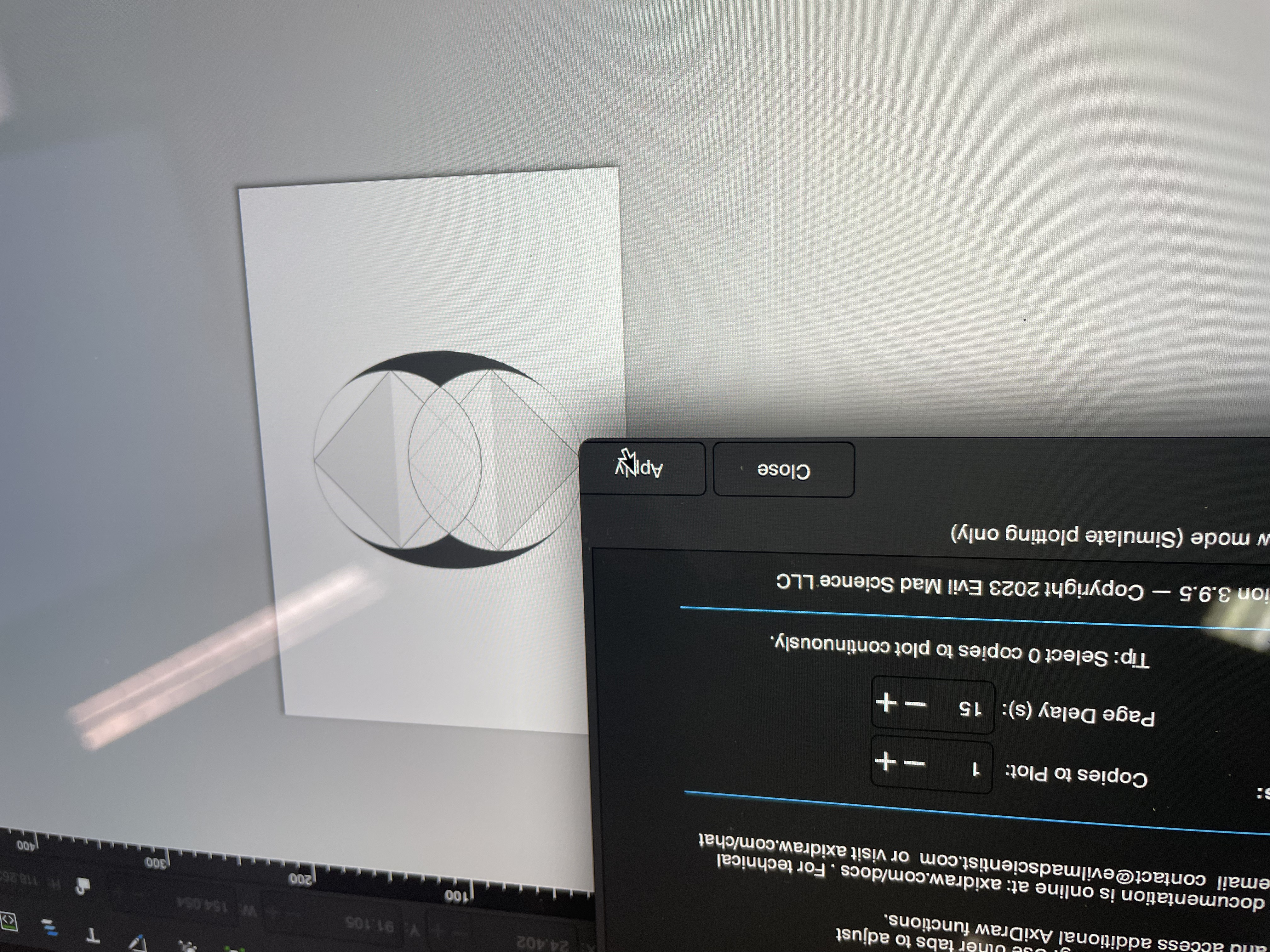
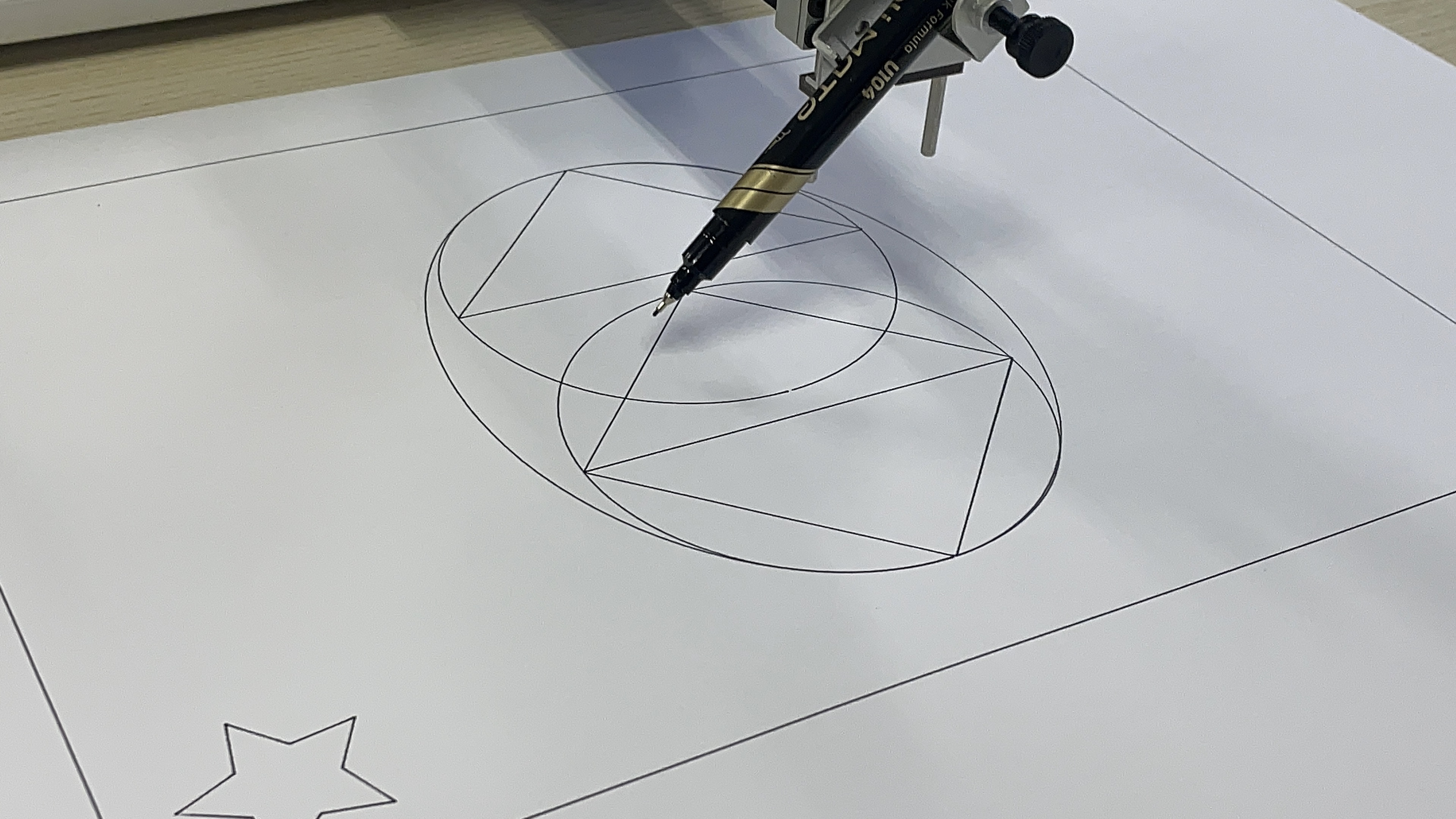
What I noticed was that the AxiDraw only followed outlines. It ignored filled or shaded regions and treated them as white space. The output felt mechanical, but still carried small shakes from the machine itself.
[ AxiDraw test 02 ]
Connecting to p5.js
From on screen gesture to pen stroke
We wanted to see if the AxiDraw could draw something created live in p5.js. We wrote a quick sketch where the mouse draws on screen and the AxiDraw replicates the stroke on paper. We tested it with a simple hello world.
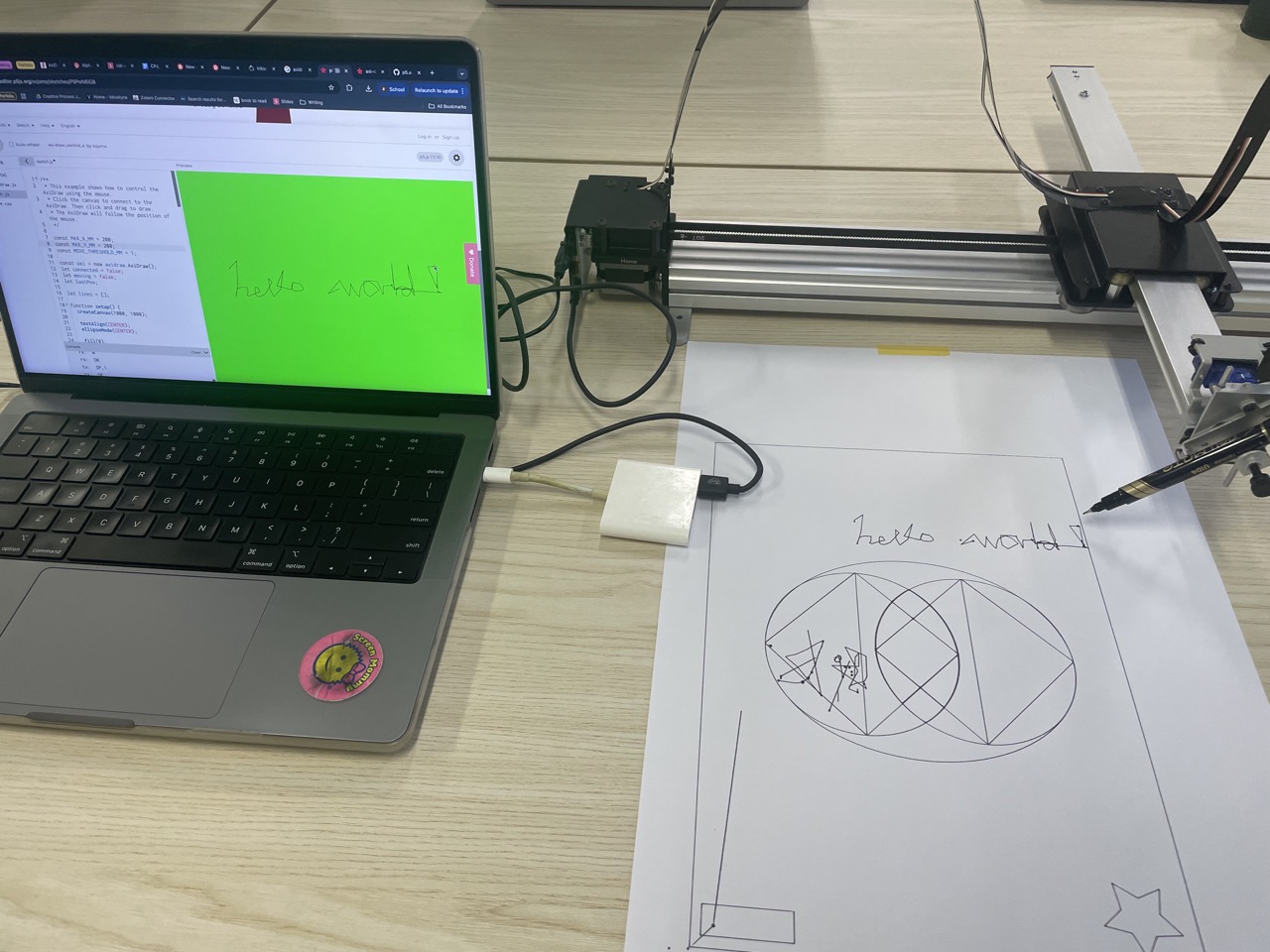
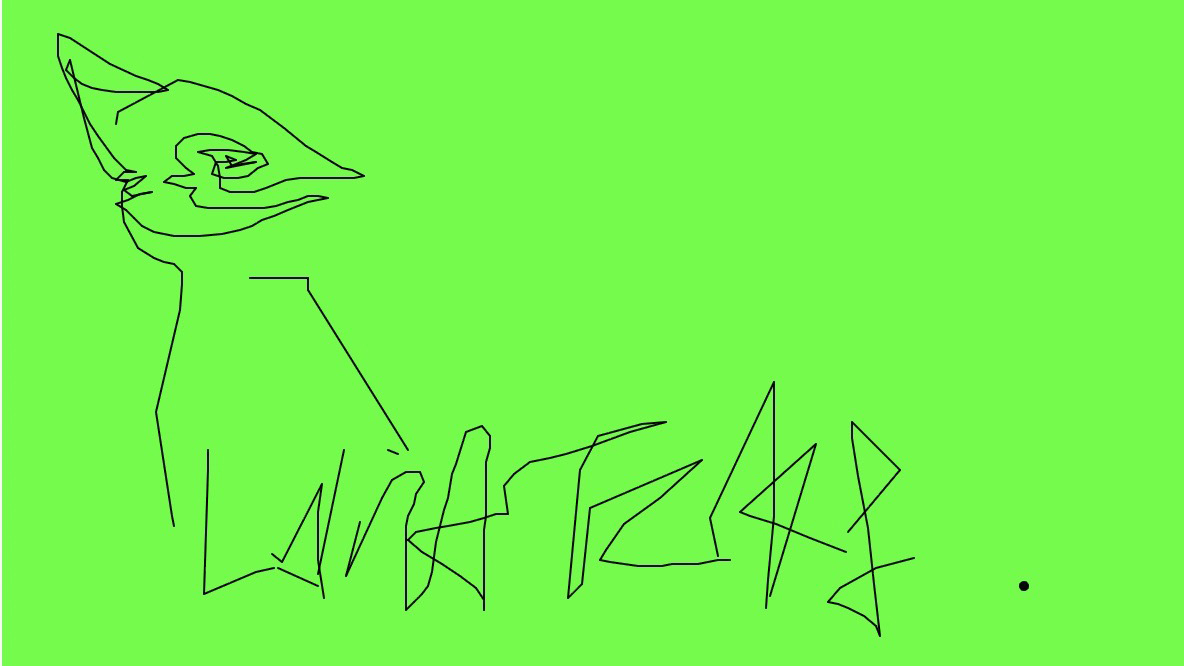
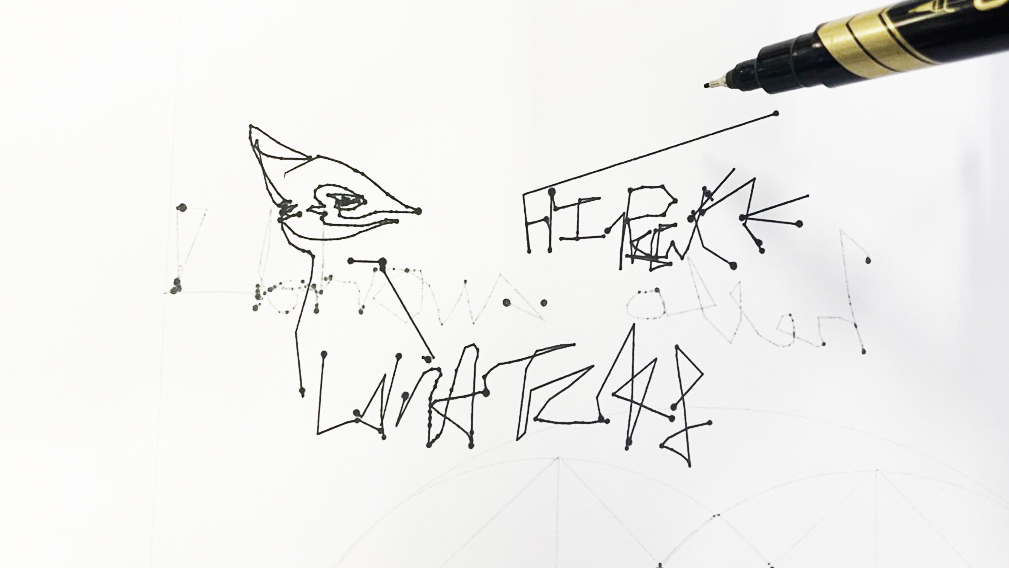
After that each of us drew something personal. The AxiDraw struggled with some curves, which made the drawing slightly distorted. That distortion was the interesting part.
[ AxiDraw test 03 ]
Bitmap input
My cat as a halftone field
I converted a photo of my cat into a halftone bitmap to see how the pen would respond to dense dot fields.
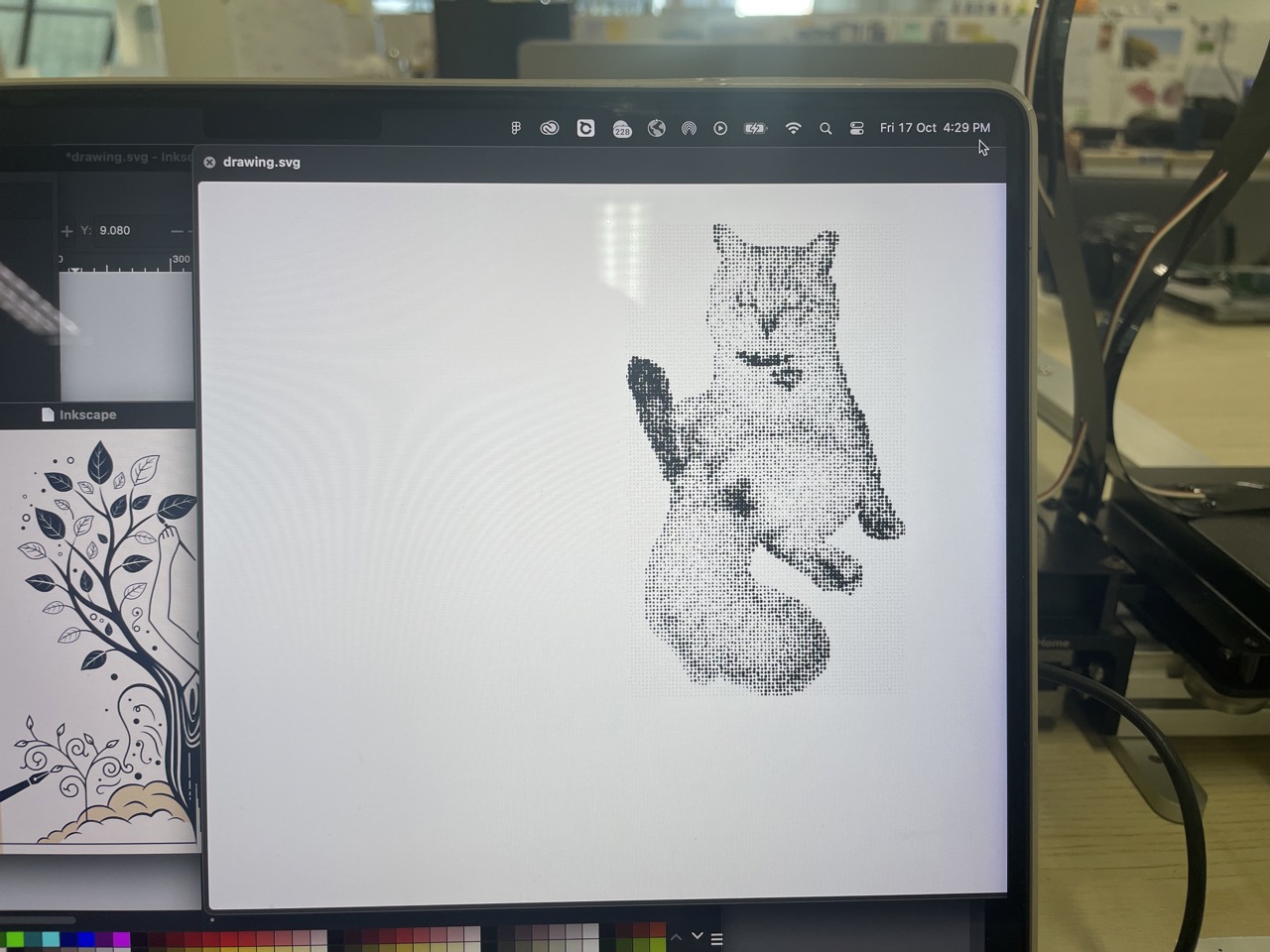
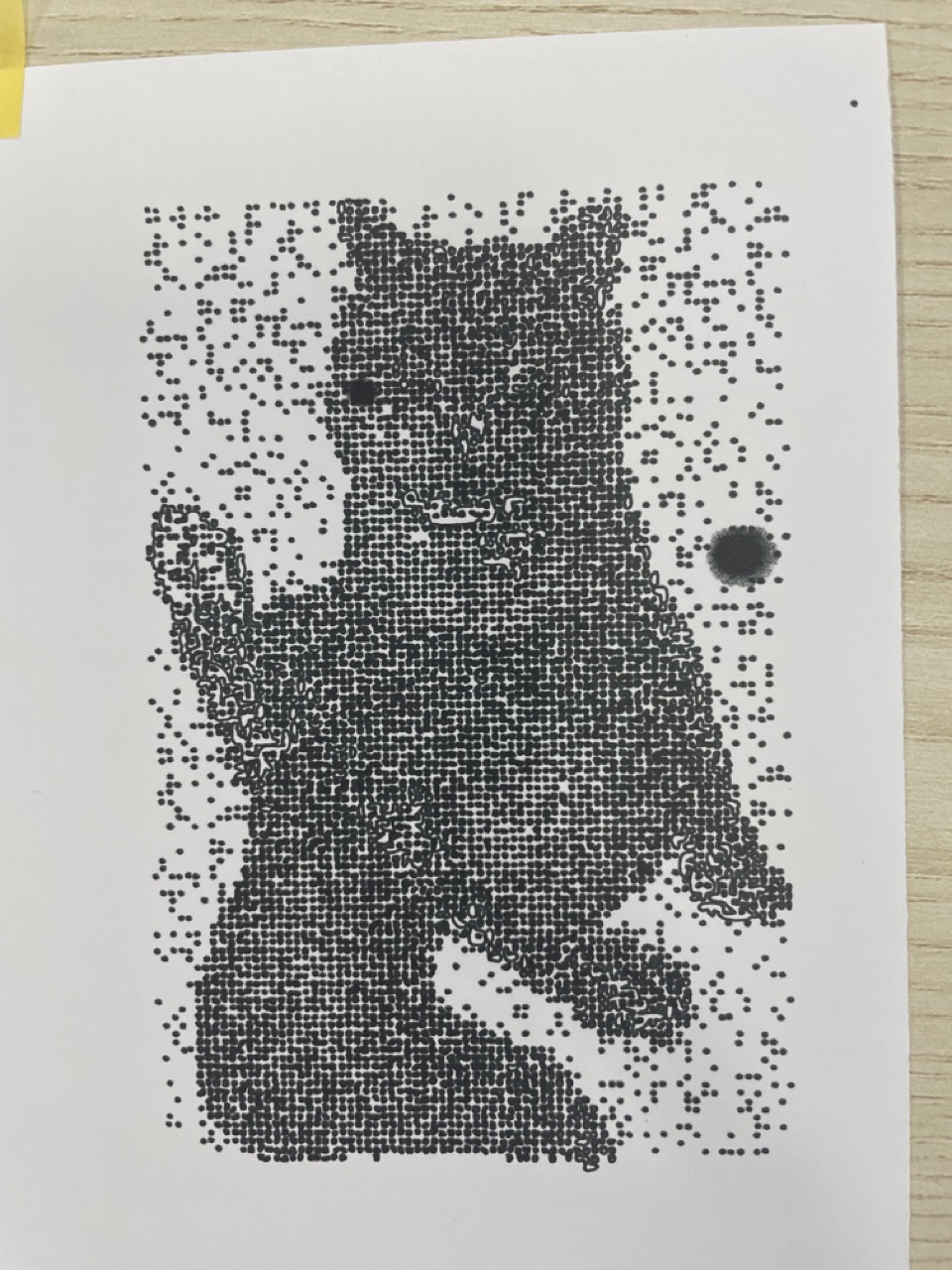
The ink bled more in high density areas. Some dots merged. The imperfections were noticeable and gentle. Dotting took a long time, so patience is necessary for bitmap work.
[ Reflections from the AxiDraw tests ]
A machine that never fully obeys
Working with the AxiDraw raised the same questions as my earlier experiments. The machine followed my files, but it always added something of its own. Even simple lines came out with small shifts or pressure changes. It reminded me that translation between digital commands and physical marks is never perfectly clean.
Imperfection inside mechanical systems
The tests showed how variation lives inside the hardware itself. The AxiDraw revealed its own rhythm and quirks. Ink bleeds, pens catch, motors hesitate, paper fibres drag. Even with precision parts, no two runs are identical. Imperfection felt natural, not like a fault to be removed.
Craft as negotiation between systems
Craft appeared in how I set up the pen, adjusted the mount, prepared files and tuned small settings. Code shaped behaviour, the machine shaped the surface, and my decisions sat between them. It felt less like pushing a button and more like negotiating between systems, where care shows up in these quiet calibration choices.