WEEK 6
RPO exchange and experiment 04
Peer review, repair, and what carries forward
This week circled around two things. First, seeing what my RPO actually does when someone else reads it. Second, starting a simple repair experiment with conductive thread. Both pointed to the same concern: how to keep traces of interruption visible without losing function.
Peer review RPO
What made sense, what felt vague, and where readers needed more context and evidence.
Lecturer feedback
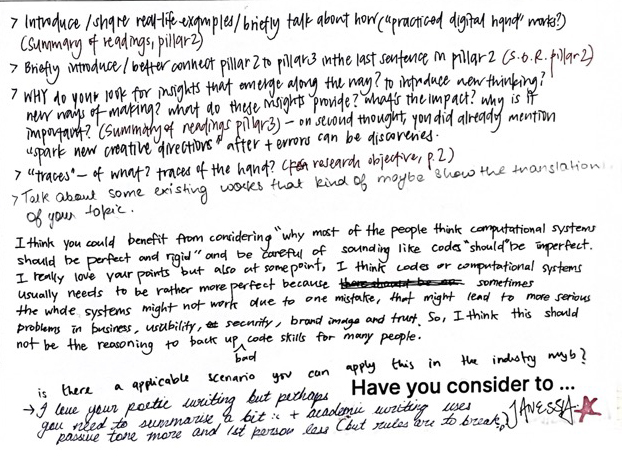
Say coding, not just systems. Name who people are. Support ideas with precedents instead of vibes.
Experiment 04
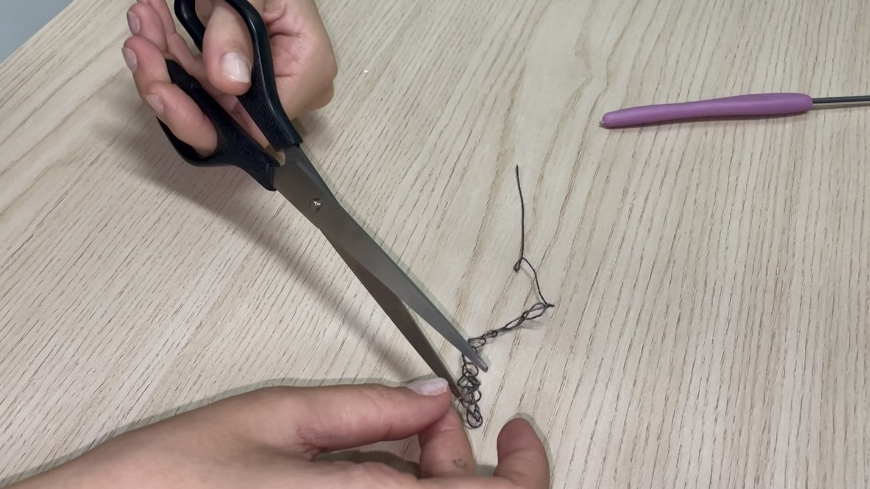
Cut, tie, test. Ask if a repaired conductive line can still work while keeping its scar.
[ Peer review RPO ]
Four quadrants
What landed and what did not
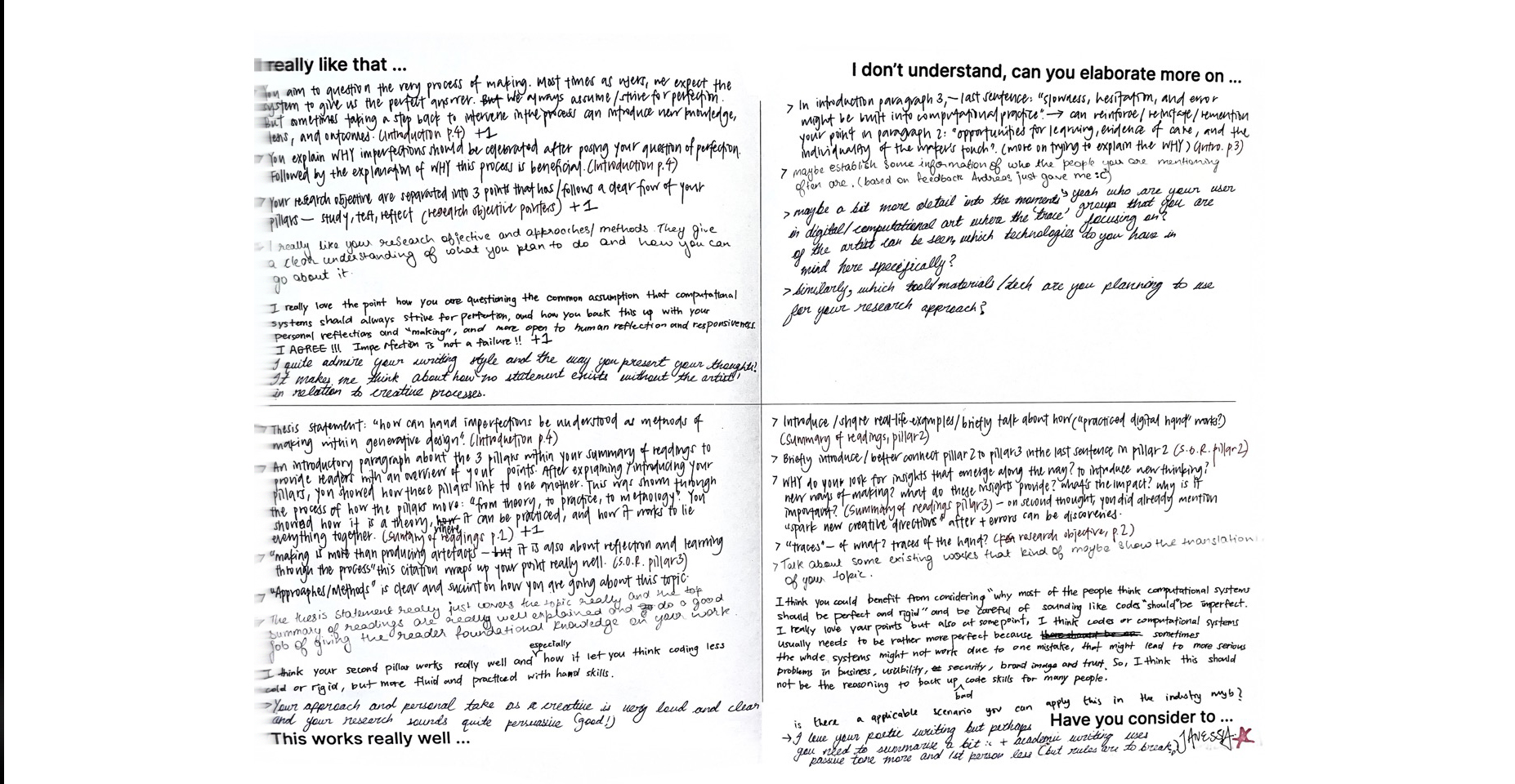
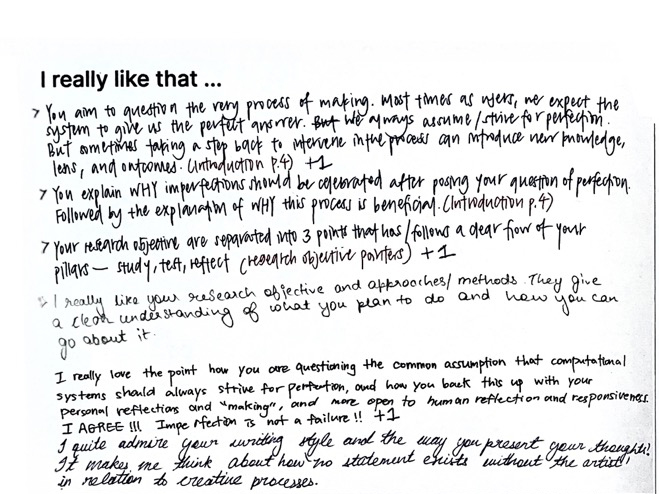
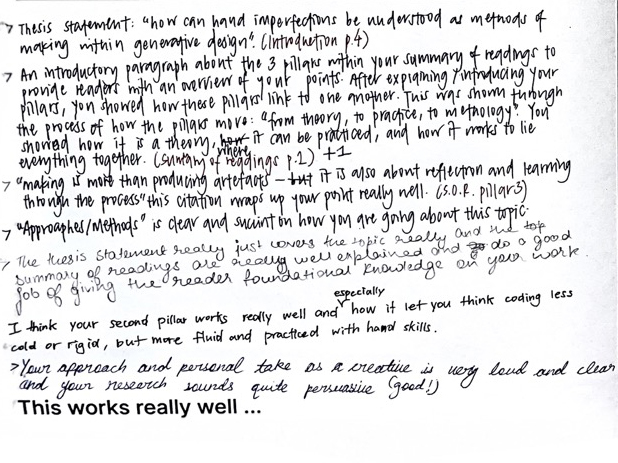
We swapped full drafts and filled an A3 sheet with four boxes: I really like that, I do not understand, this works really well, and have you considered. For my draft, peers liked that I questioned why computational systems are expected to be perfect, and that the artist voice stayed present in the writing. They felt the three objectives and pillars sat together in a clear flow.
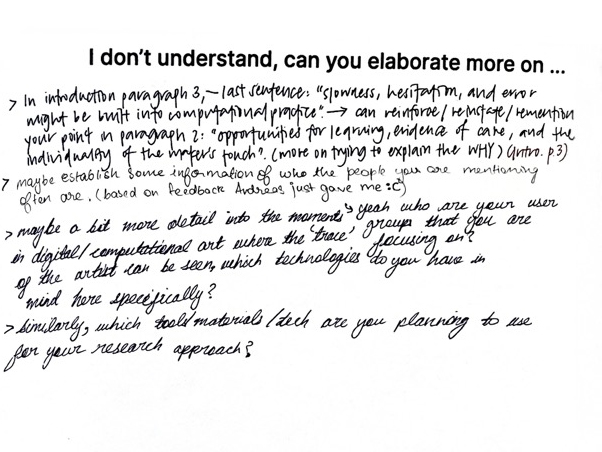
The gaps showed up in the other two boxes. They wanted a stronger link between slowness, hesitation, and error, and how that connects to care and individuality. They asked who I was citing, what kind of practitioners they are, and requested clearer examples of digital work where traces of the hand are actually visible. Several comments also asked me to name the specific tools and technologies I planned to use, instead of keeping it general.
[ Lecturer feedback ]
Language and evidence
Say coding, and show where it comes from
My lecturer pointed out that I hardly used the word coding at all, even though that is what I am doing. I leaned on words like computation and systems, which made the project sound more abstract than it is. The advice was simple: use coding as a verb, and repeat it in context, for example coding for generative design, coding for creative practice. That repetition will make the research question much sharper.
Another point was about name dropping. When I mention theorists, designers, or artists, I often do not say who they are. I need short identifiers so the reader knows why they matter. The same goes for strong claims. They should be followed by precedents, case studies, or specific works, not left floating. Finally, my subtitle, imperfections as a way of making, was flagged as too vague. It should either read as a clear question, a problem statement, or a concise way of framing the proposed response.
[ Reading other drafts ]
Notes as a reader
Clarity as a form of care
Reading four classmates’ drafts made me see how much structure affects attention. The drafts that used story, diagrams, or small visual cues felt easier to follow. Overly dense language quickly lost me. Subtitles that framed the question, problem, or proposal worked better than poetic but vague lines.
I also noticed that references only felt useful when they were triangulated and brought back to the research question. Listing readings was not enough. Name dropping without context was confusing. Taken together, it reminded me that writing here is not just for myself. It needs to carry the reader along, which is its own kind of craft.
[ Experiment 04 — Conductivity after repair ]
Motivation
What happens if I mend instead of restart
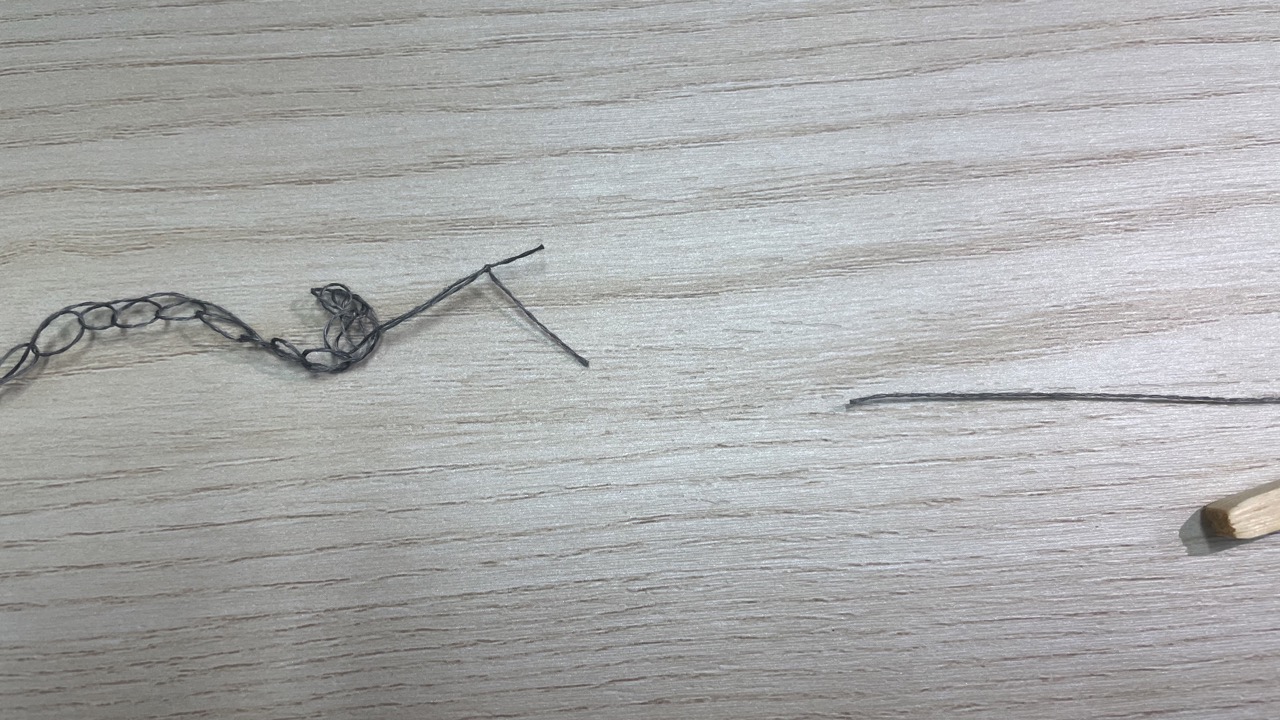
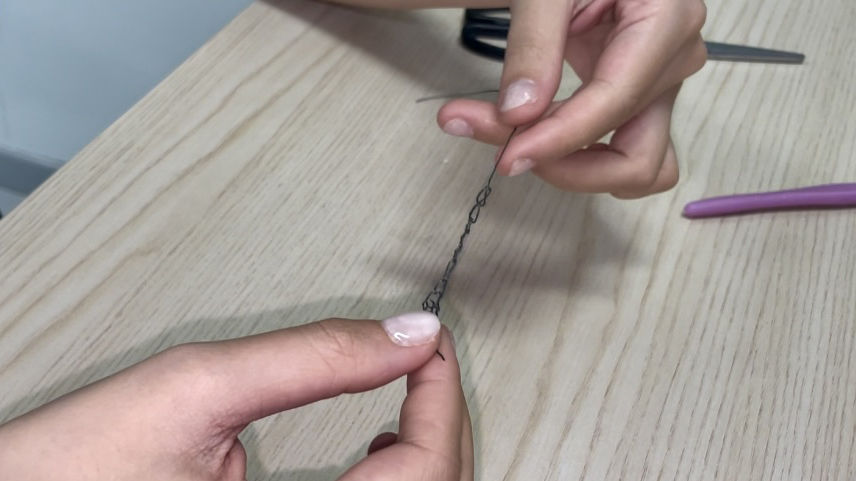
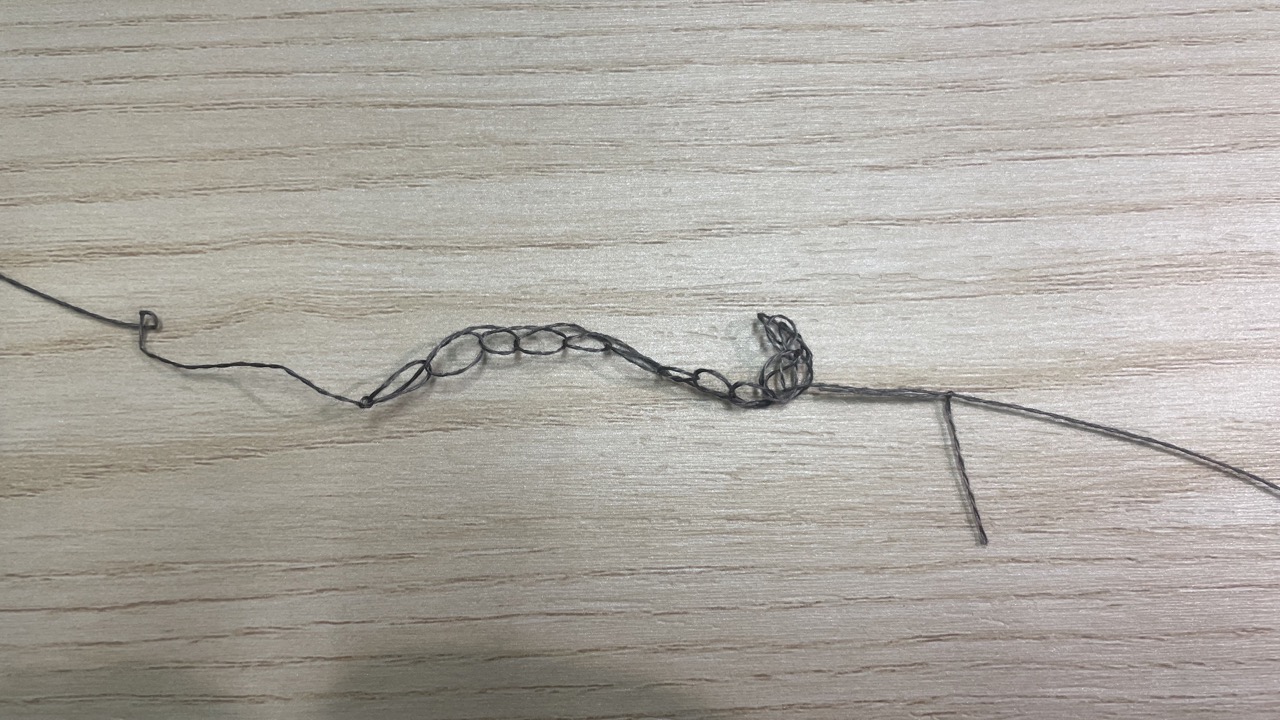
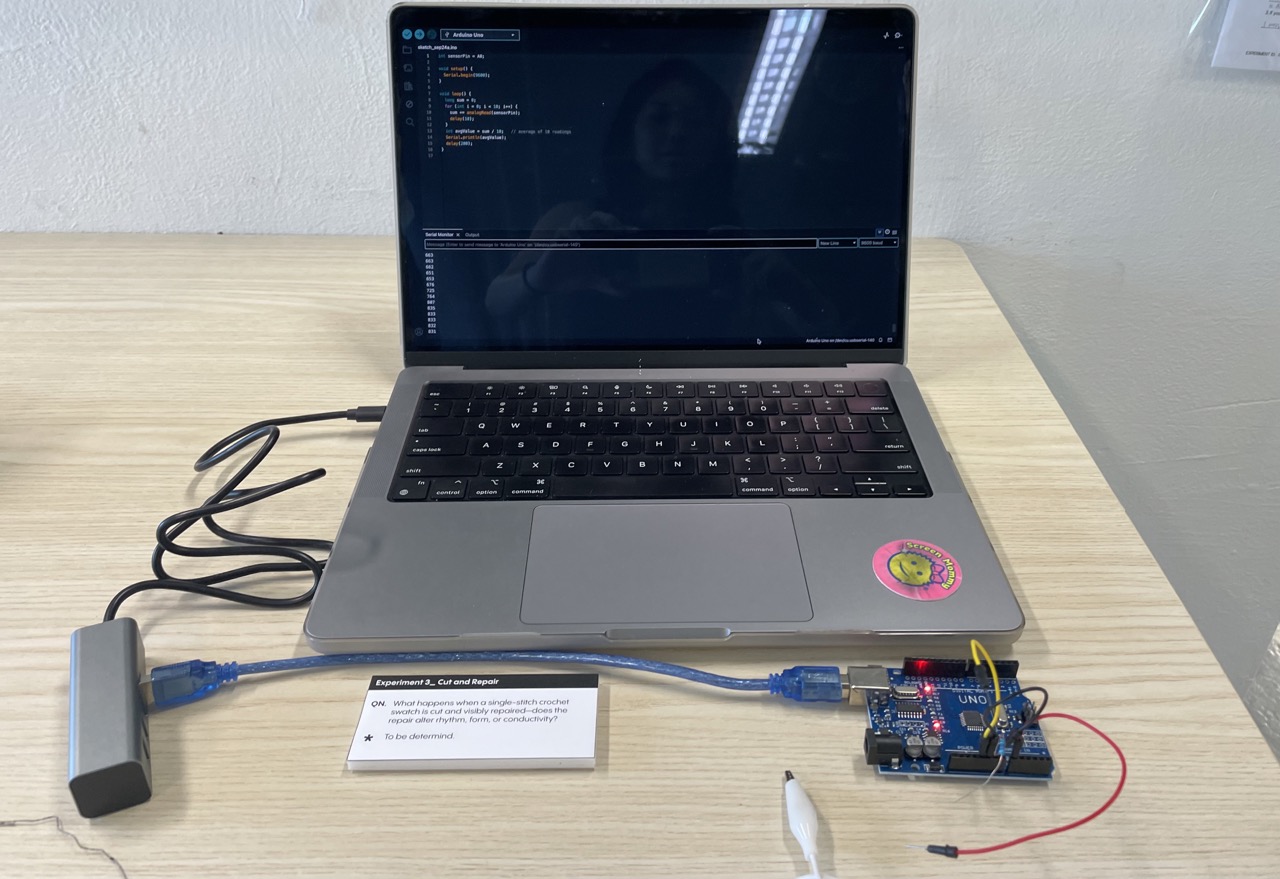
This experiment started with a simple question. If a conductive line breaks, what does it mean to repair it and keep going, instead of starting over. I cut a piece of conductive thread into two, tied the ends back together in a visible knot, and wired it up to my existing Arduino and capacitive sketch. The goal was not precision yet, but to see if the circuit would still respond after a clear interruption.
What I observed
The repaired thread stayed conductive. I did not measure changes in resistance yet, so I cannot say what shifted in terms of values, but the basic function remained. The important part here is the gesture. The knot holds the memory of the cut. The system does not return to a clean, untouched state. It carries the scar and still works.
What this suggests
Repair in this case is not just a patch. It becomes part of the method. The knot is a small, physical trace of interruption and care that stays in the circuit. This sits close to how I think about coding and imperfection. Instead of erasing error by restarting, I am interested in ways that repair and adjustment can stay visible and meaningful, both in material practice and in computational work.
[ Week 6 presentation — practice formative ]
Experiments 0 to 3
Let the research question lead
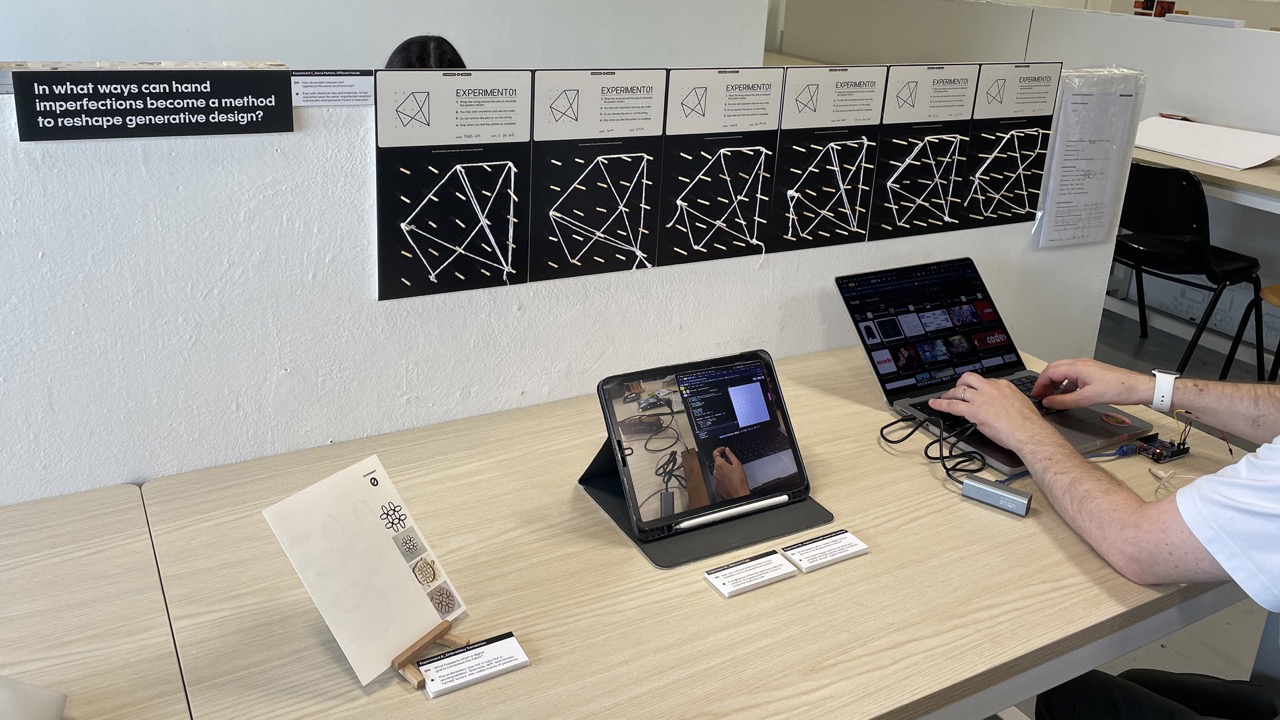
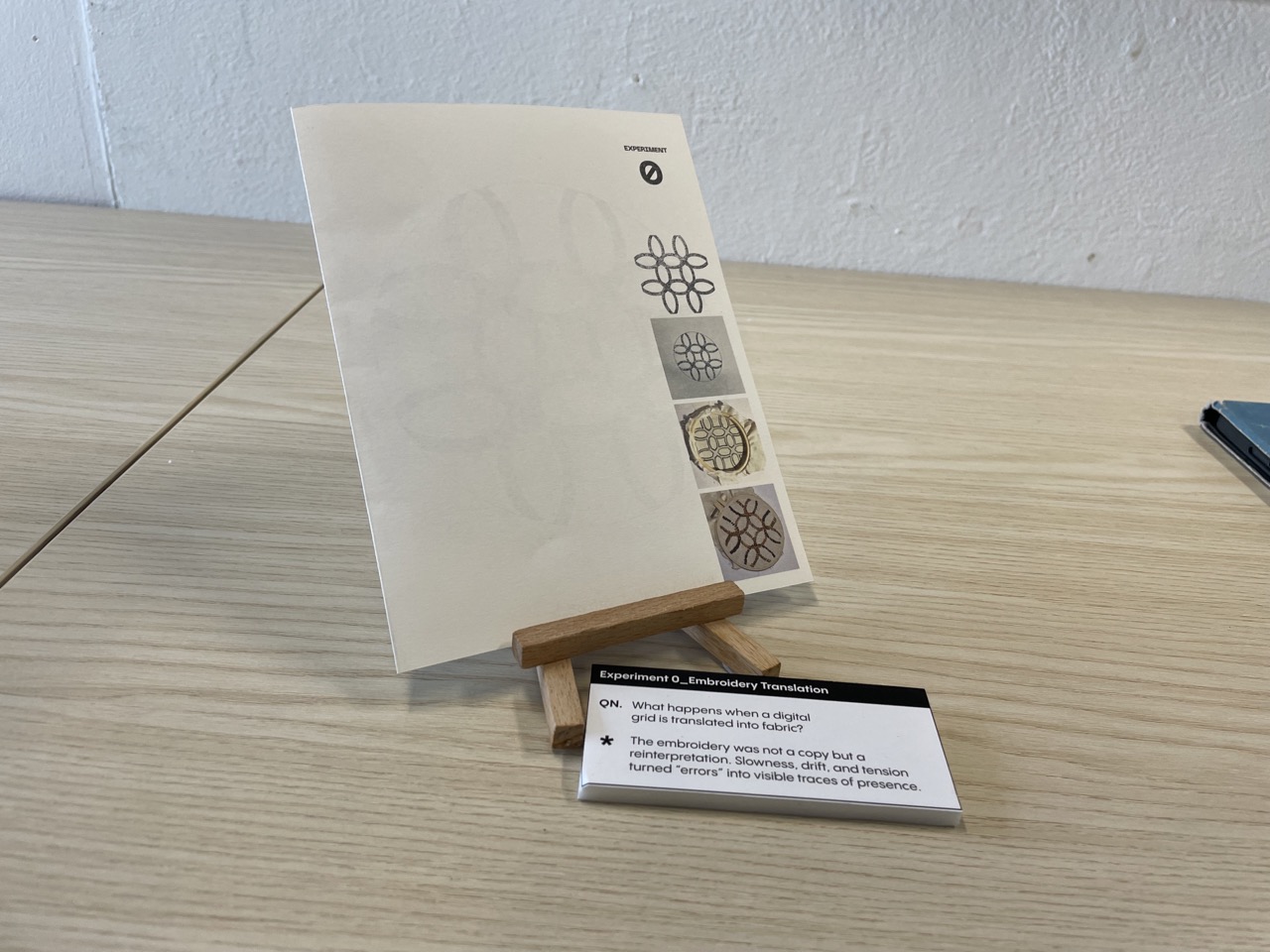
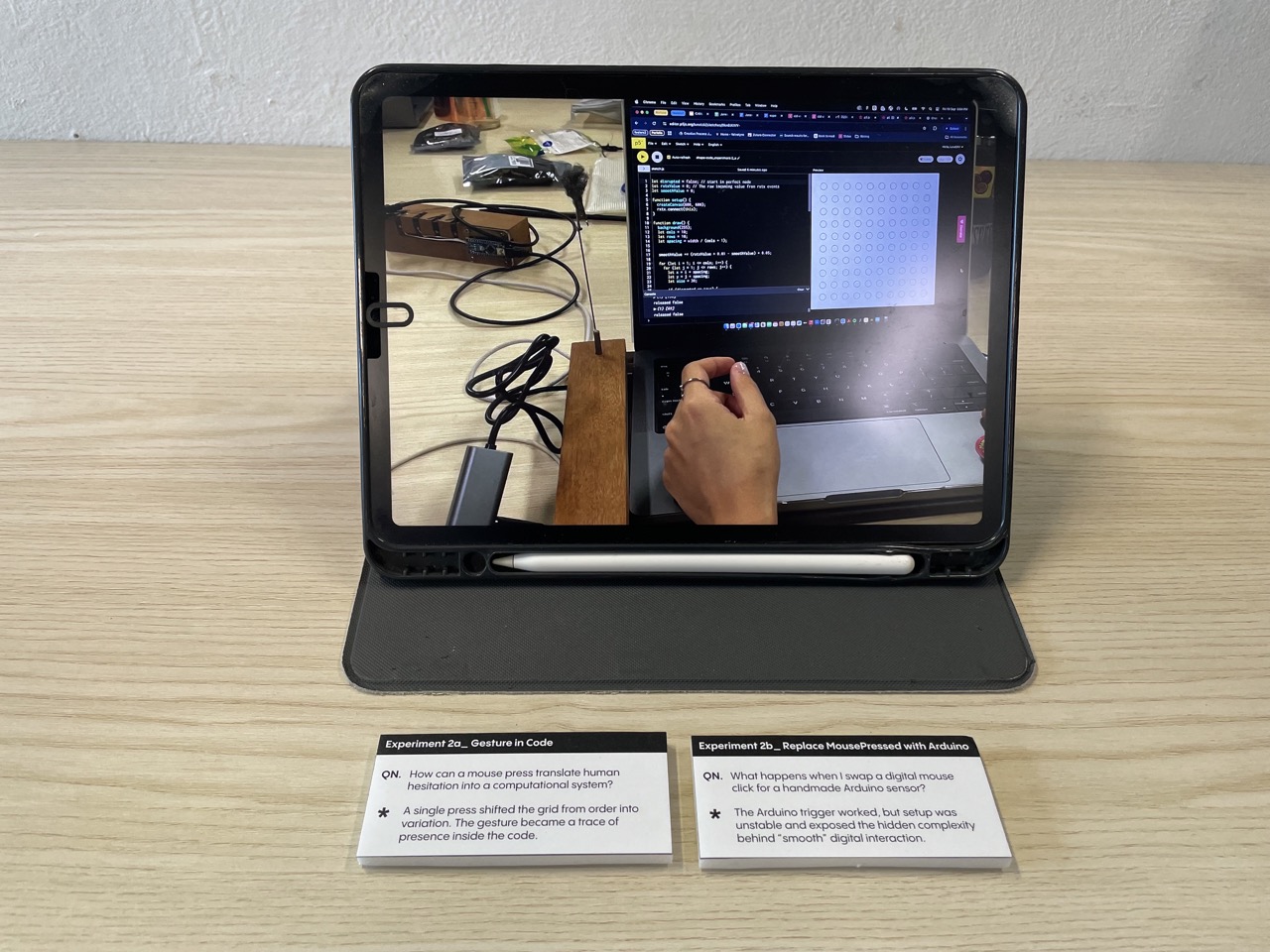
[ Feedback given ]
What to sharpen next
- Open the presentation with the research question so people know what you are reshaping.
- Explain what you mean by hand imperfections, not just use the phrase.
- Show a short, clear demo that makes hesitation or slippage visible.
- Say where the imperfection appears, in the material, in the code, or in the timing of the trigger.
- Reframe experiment 1 and clarify how it supports the later work.
- For experiment 2a, stress that you are interacting as a user, not breaking the code itself.
- For experiment 2b, lean into the fragility of the handmade sensor and frame it as a choice.
- Use the word coding instead of hiding behind the broader term generative design.
- Support claims with examples, precedents, or references, not only description.
[ Example setup from Andreas ]
How we should set up
What a clear experiment looks like
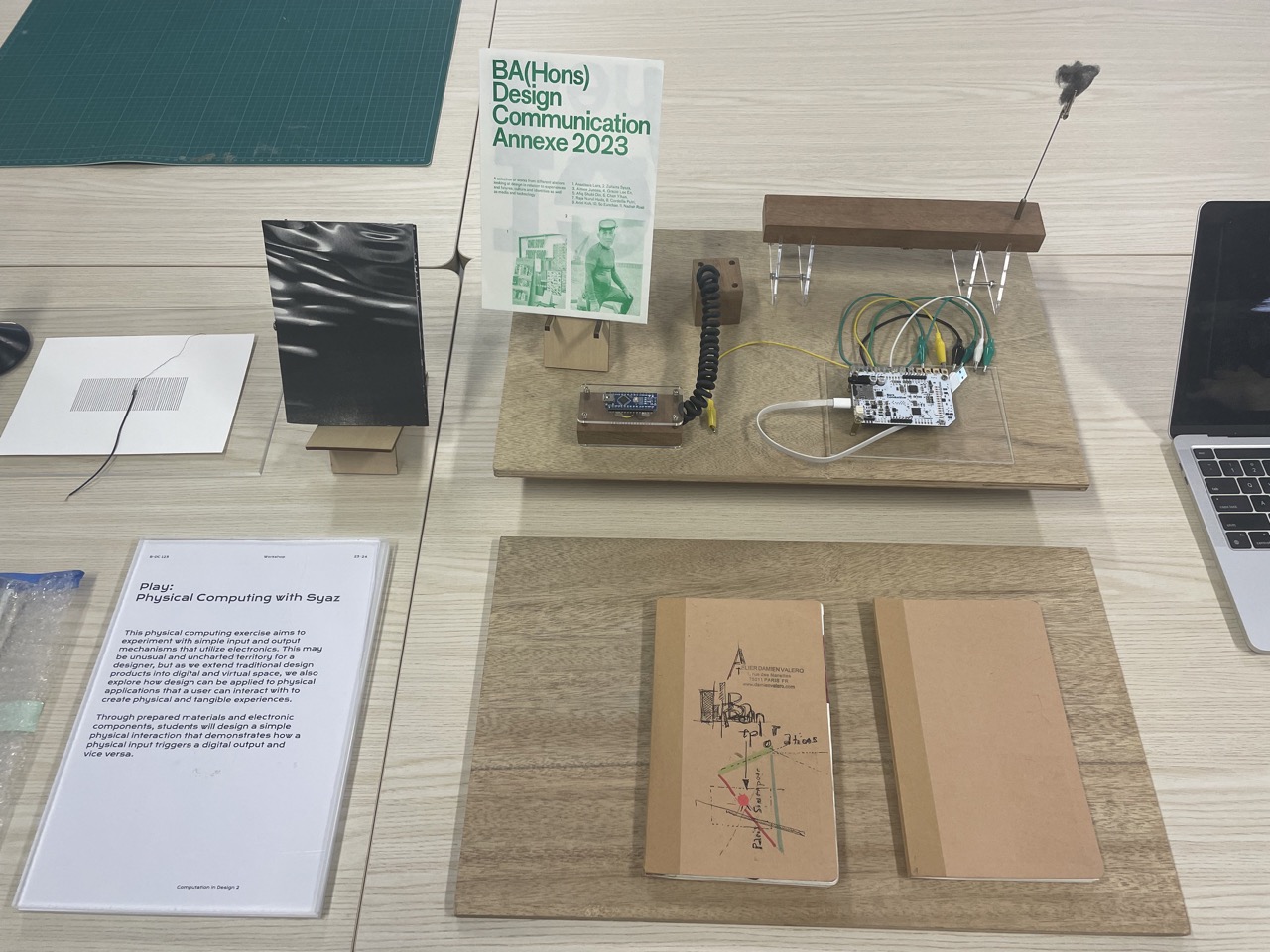
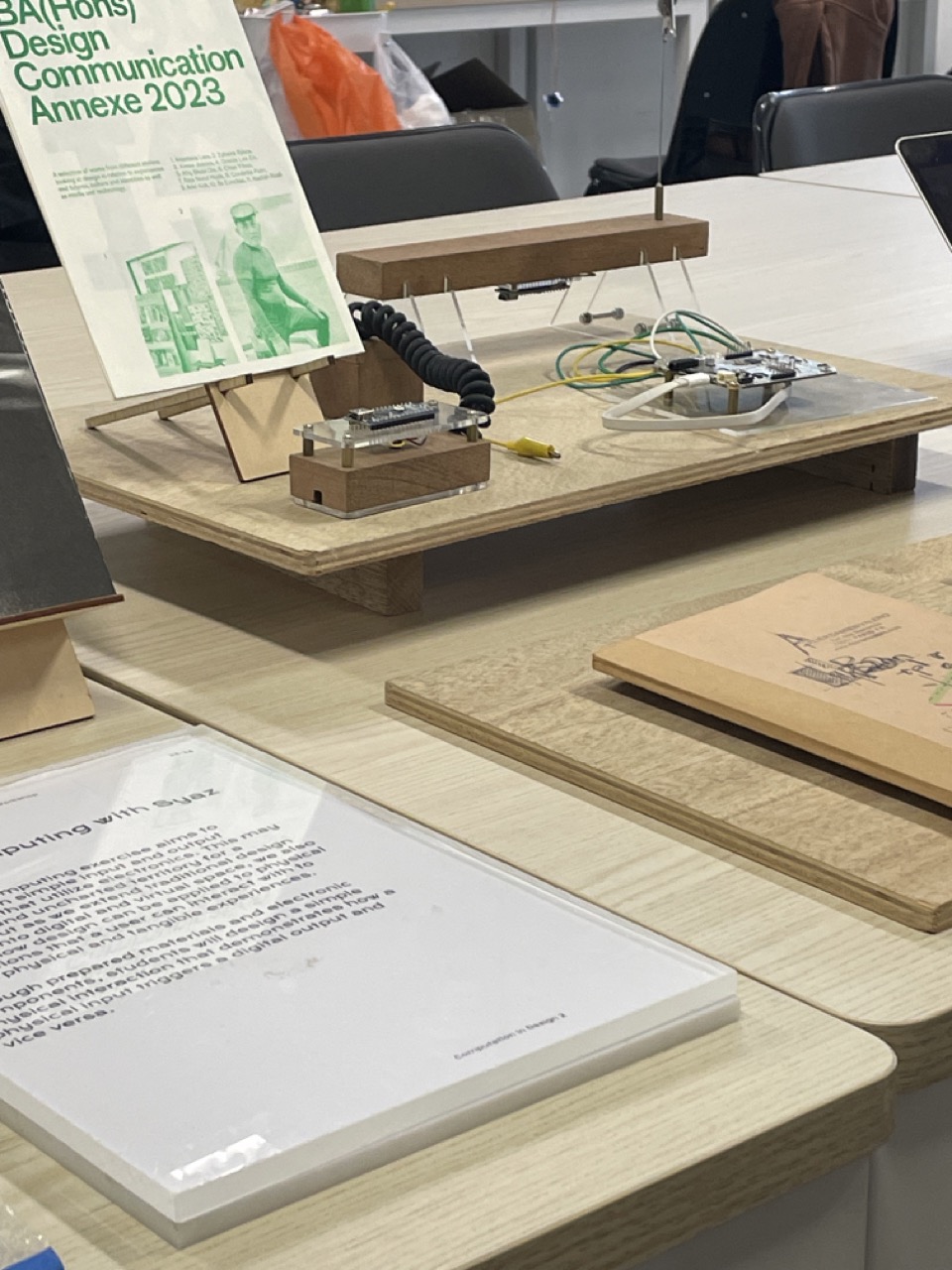
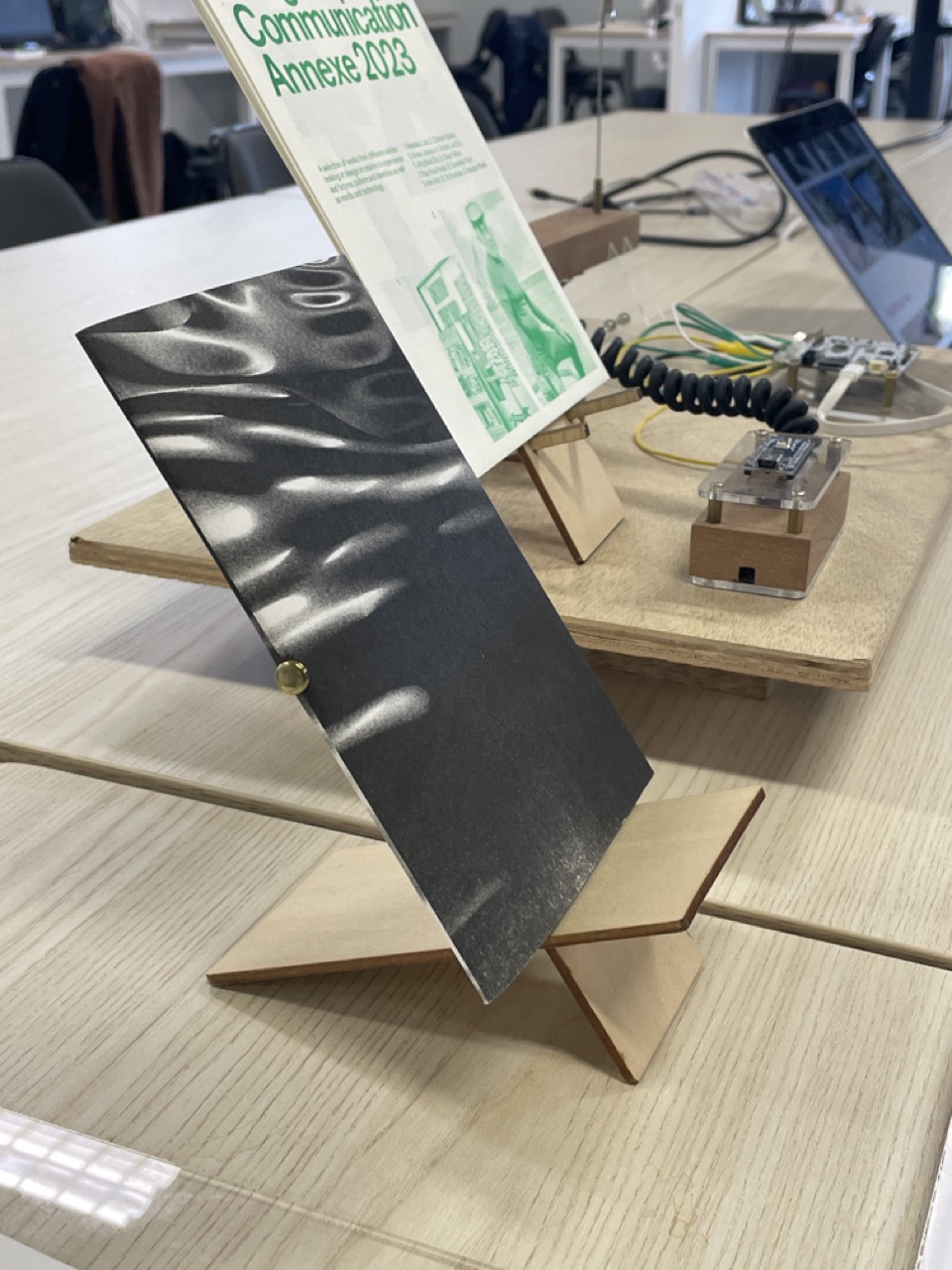
After my presentation, Andreas showed an example of what a good technical setup looks like. Everything was simple but very intentional. One clear question, labelled samples, stable wiring, and readings visible on screen. Nothing felt improvised or left to guesswork.
What I took from this was less about copying the exact circuit, and more about how to stage my own. Each variable is separated, the camera angle stays consistent, and notes sit right beside the test. It made me realise that the way I arrange tools and samples is part of how I communicate the work.
[ Experiment 04 — For Friday’s elective ]
Central focus
Does repair change behaviour
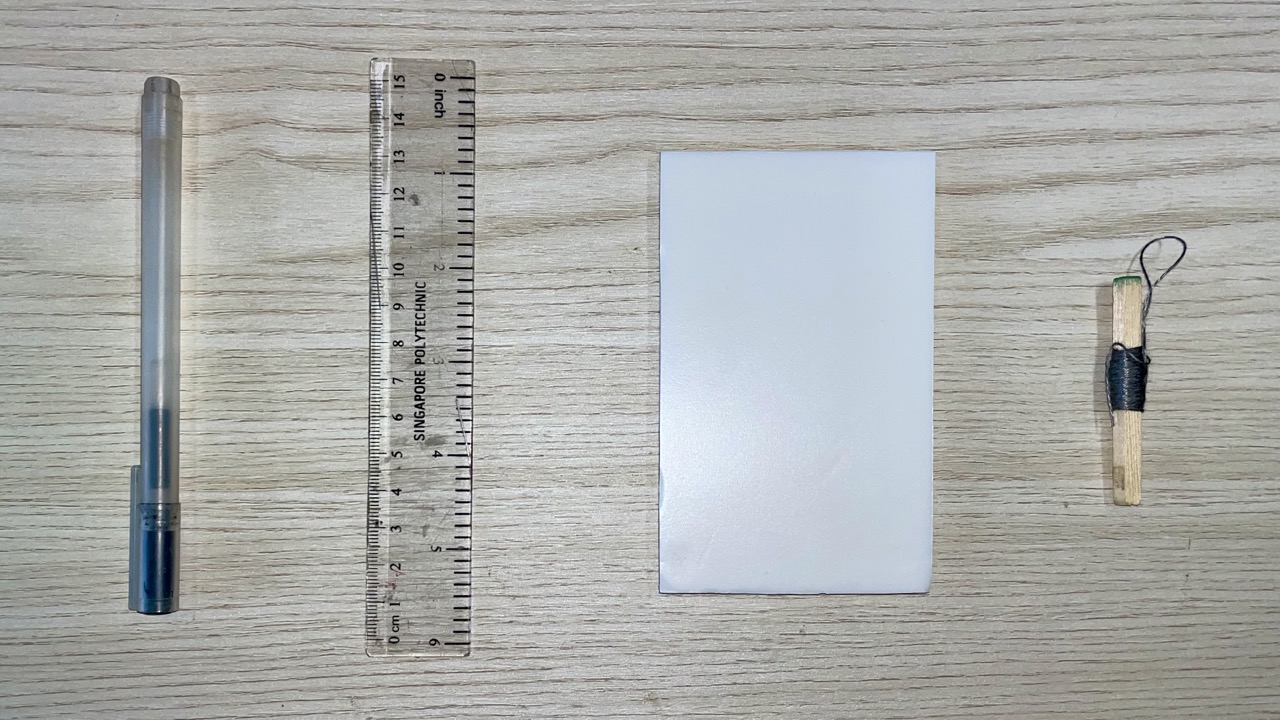
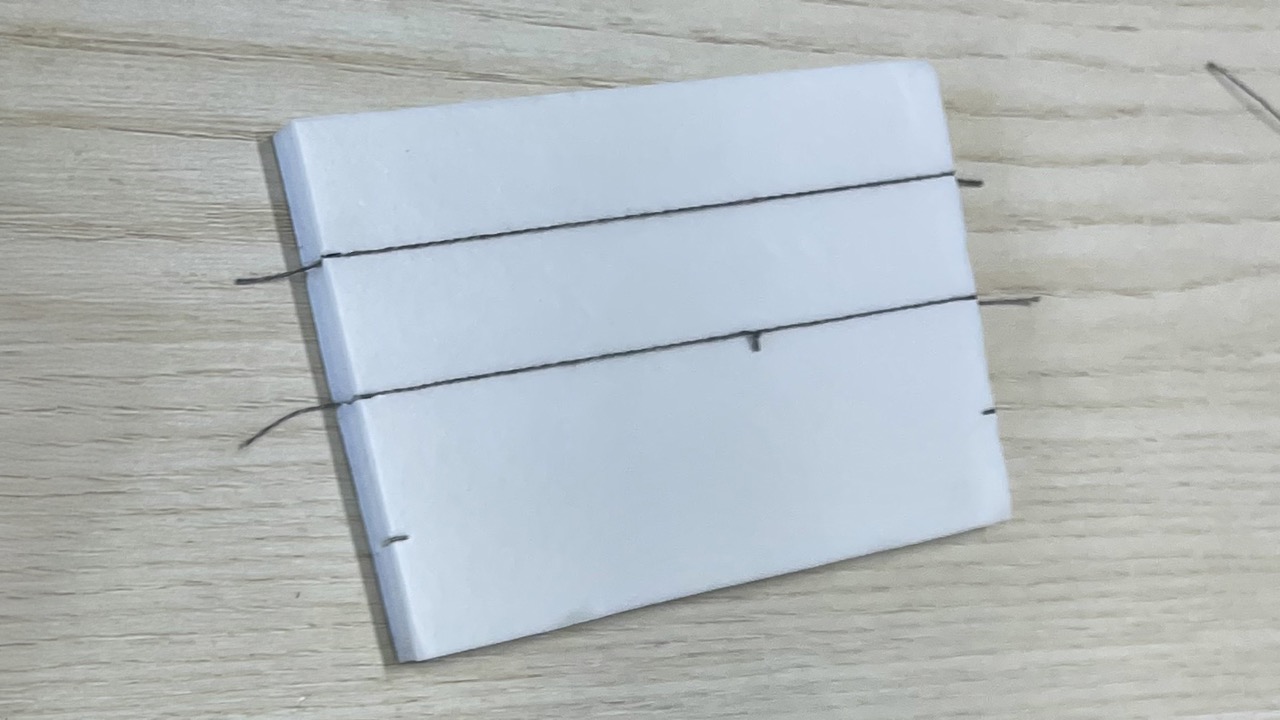
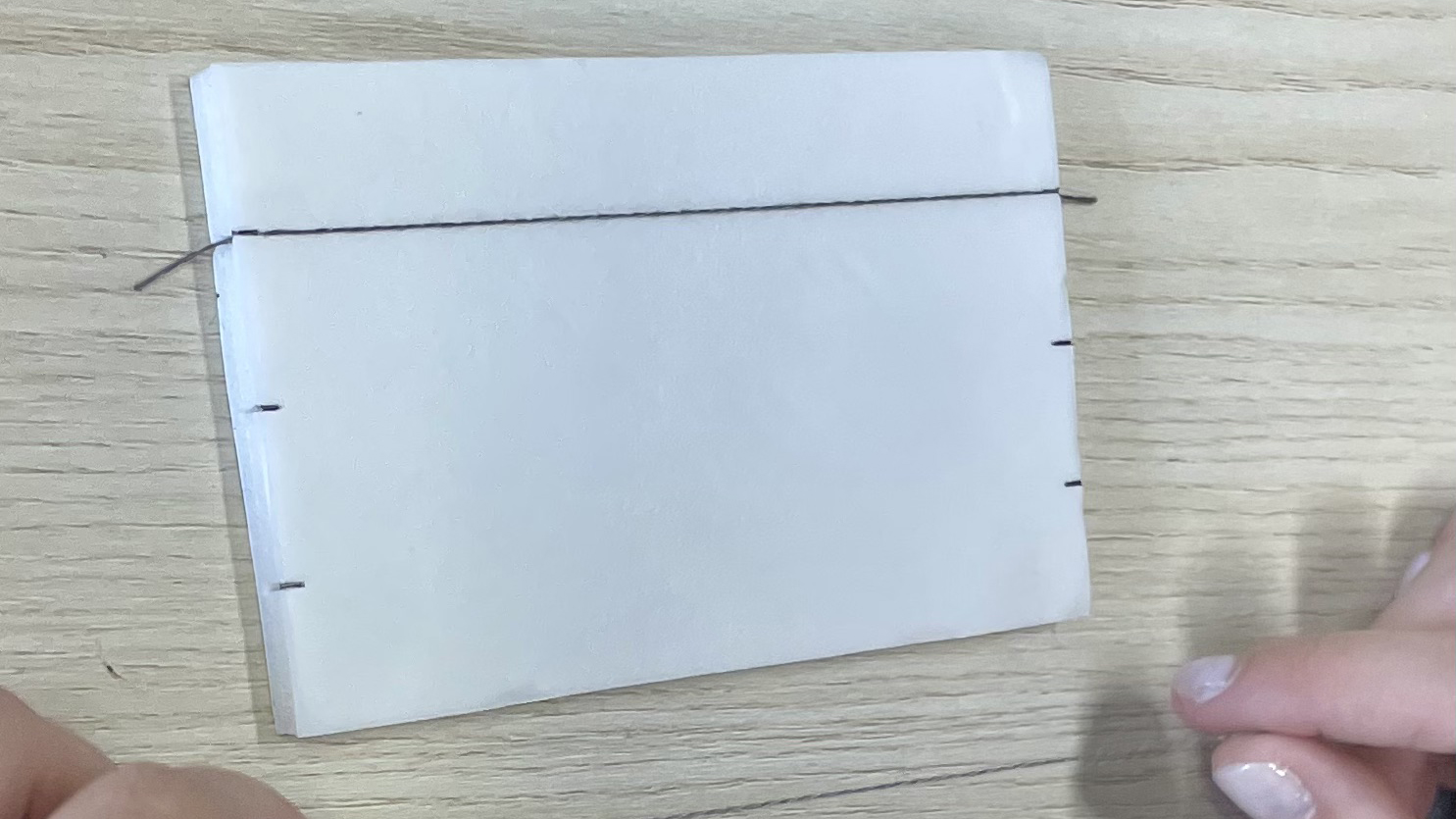
The next step was to test whether knots in conductive thread change how a simple circuit behaves. I prepared three samples of the same length. One pristine line, one with a single cut and repair, and one with multiple cuts and repairs. All were kept straight so the only planned difference was the presence and number of knots.
Setup
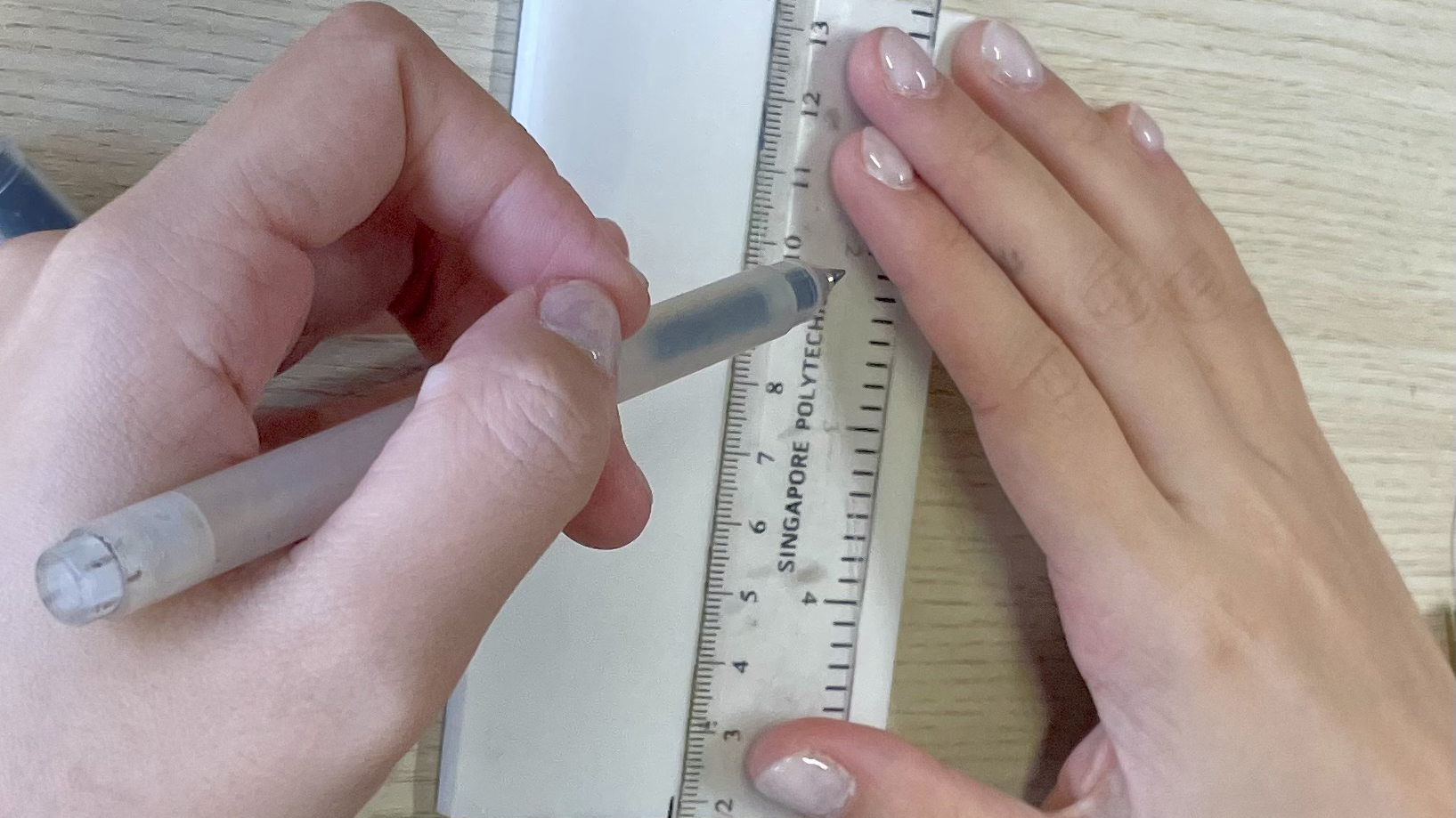
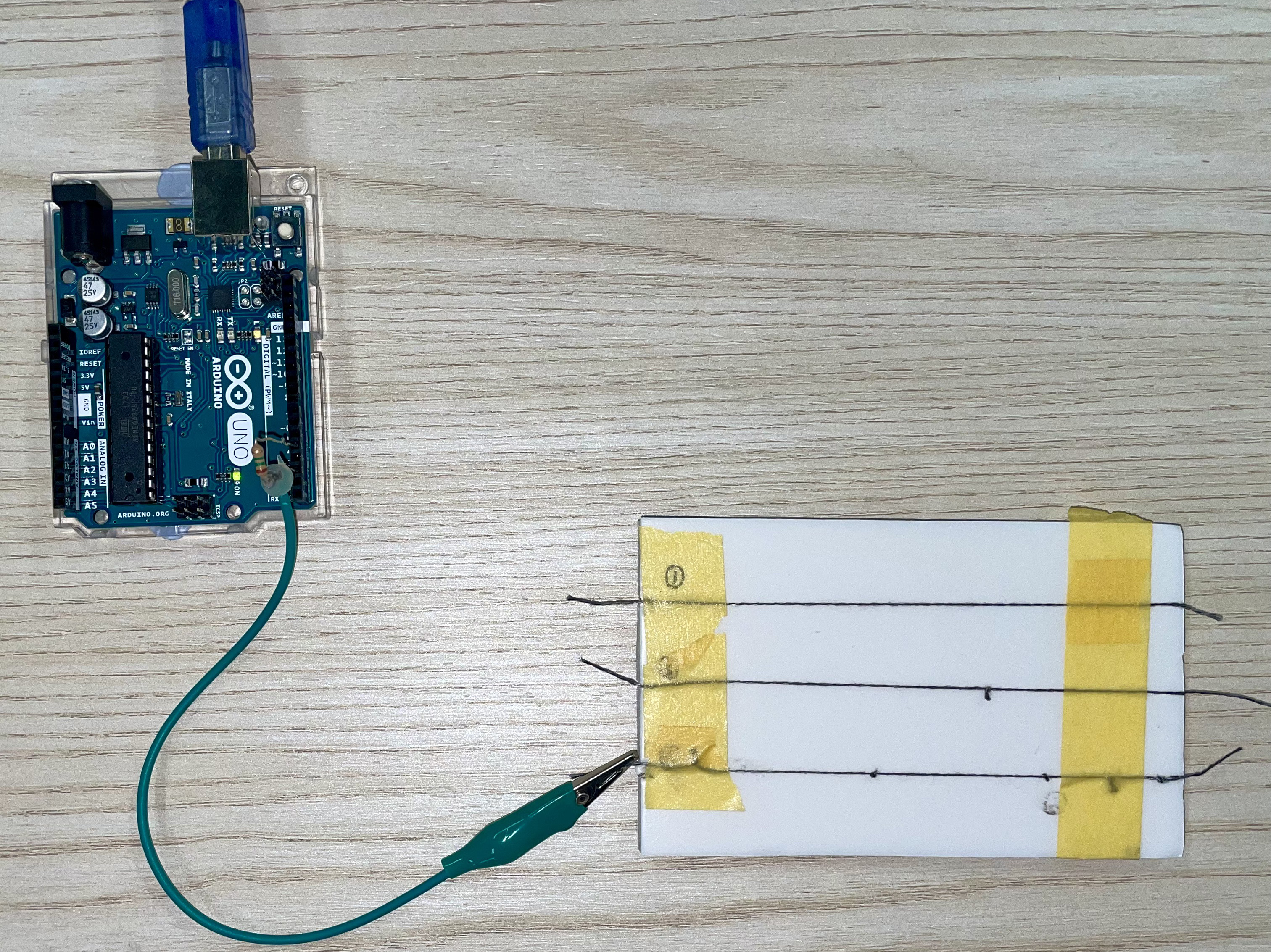
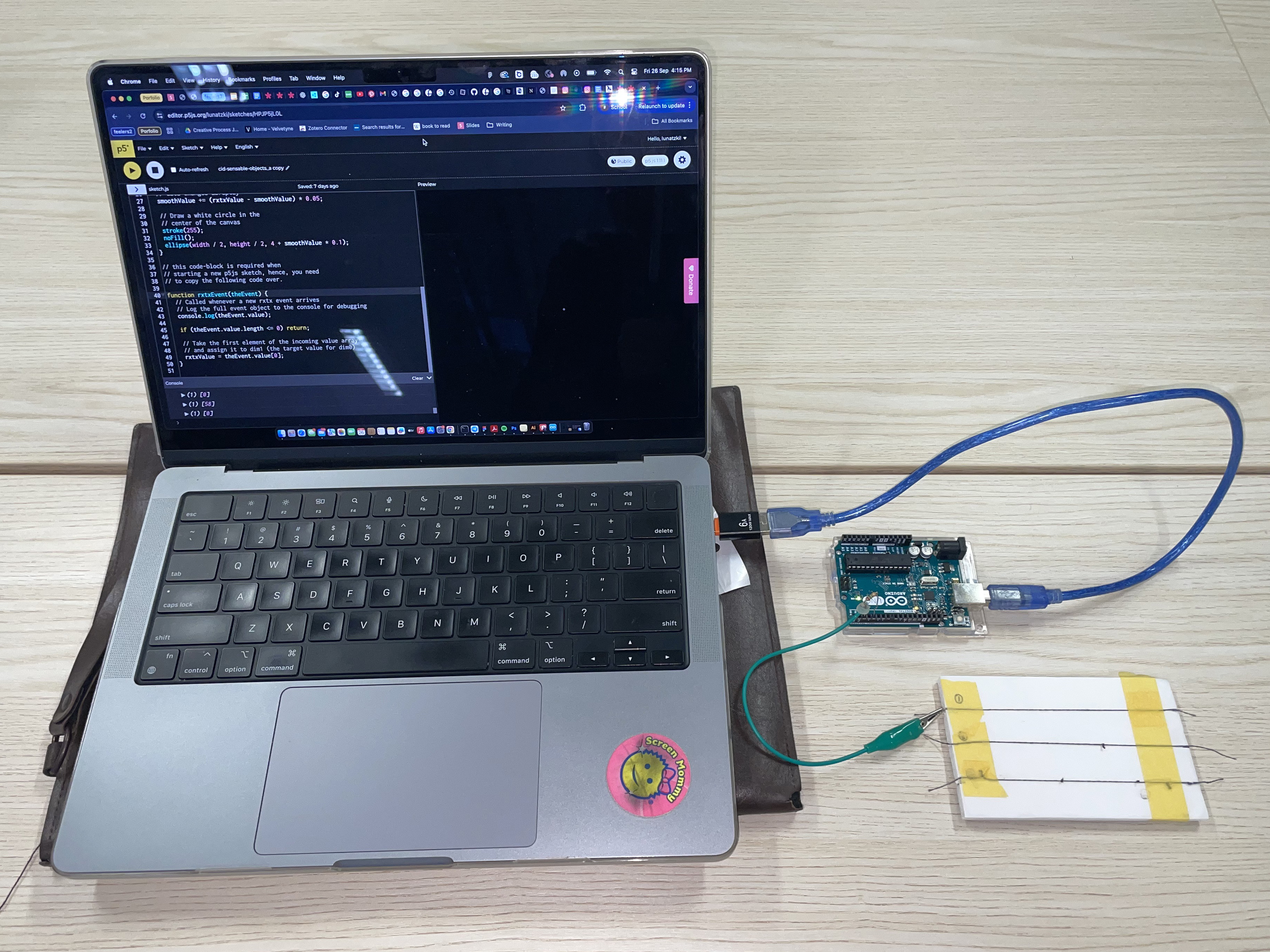
Sample A was pristine, no cuts. Sample B was cut once and tied back together with a single knot. Sample C had five cuts and five knots spaced along the same length. Each thread was clipped into a simple voltage divider on Arduino so I could read values as analog input. For each sample I took a baseline, flexed the thread a set number of times, then watched how the readings shifted.
What I hoped to see
I expected repaired samples to show higher resistance or more jitter compared to the pristine one. I was also curious whether knots would behave like small scars in the circuit, where readings might change more than in the smooth sections, and whether repaired samples would degrade faster after repeated flexing.
Preliminary readings
Early readings surprised me. The thread with no repairs read around 1301. The sample with one repair read around 1306 to 1308. The sample with five repairs read around 1368. On paper this looked more conductive rather than less, which I did not fully understand yet. It showed me that I need proper resistance measurements and a more careful setup before drawing conclusions.
Sample notes
A — Pristine (14 cm): no repairs; reading around 1301; feel is regular and a bit loose.
B — One repair (14 cm, knot at about 7.5 cm): reading around 1306 to 1308; feels tighter
with more tension along the line.
C — Five repairs (14 cm, knots at roughly 0.5, 1.7, 3.2, 6.5, and 9.2 cm): reading around
1368; feels the tightest and most tense to the touch.