WEEK 2
PRESENTATION 01
Introduction to Research and Prep for Experiment 01
I presented Hands that Shape Code: Interruptions as a Way of Making. The goal was simple. I wanted to see if code can carry the qualities I learned from handcraft, like intuition, error, slowness and care.
The hand as metaphor
I need to push this further. It is not only about why the hand matters, but how it shifts the way I design.
Care, code, community
Care kept surfacing. It may be central, possibly embodied through workshops and shared making.
Code as material
I want to treat code the same way I treat craft. Something that can be shaped, adjusted and tested through practice. It does not have to impress or perform. The value sits in the way it grows through small, careful steps.
[ What Happened in the Process? ]
Feedback takeaways
What the feedback revealed
Peers responded to the experimental tone and the “hand” metaphor, and asked for clarity on how these metaphors operate. “Care” stood out despite being brief, could consider bringing it in as the center of research.
Moving forward
Sharpening the enquiry
I will clarify the hand metaphor, place care at the core, treat code as material with slowness and tactility, explore community/workshop formats, and keep experiments playful but coherent.
Part B — Prep for Experiment 01
String Pattern Recreation
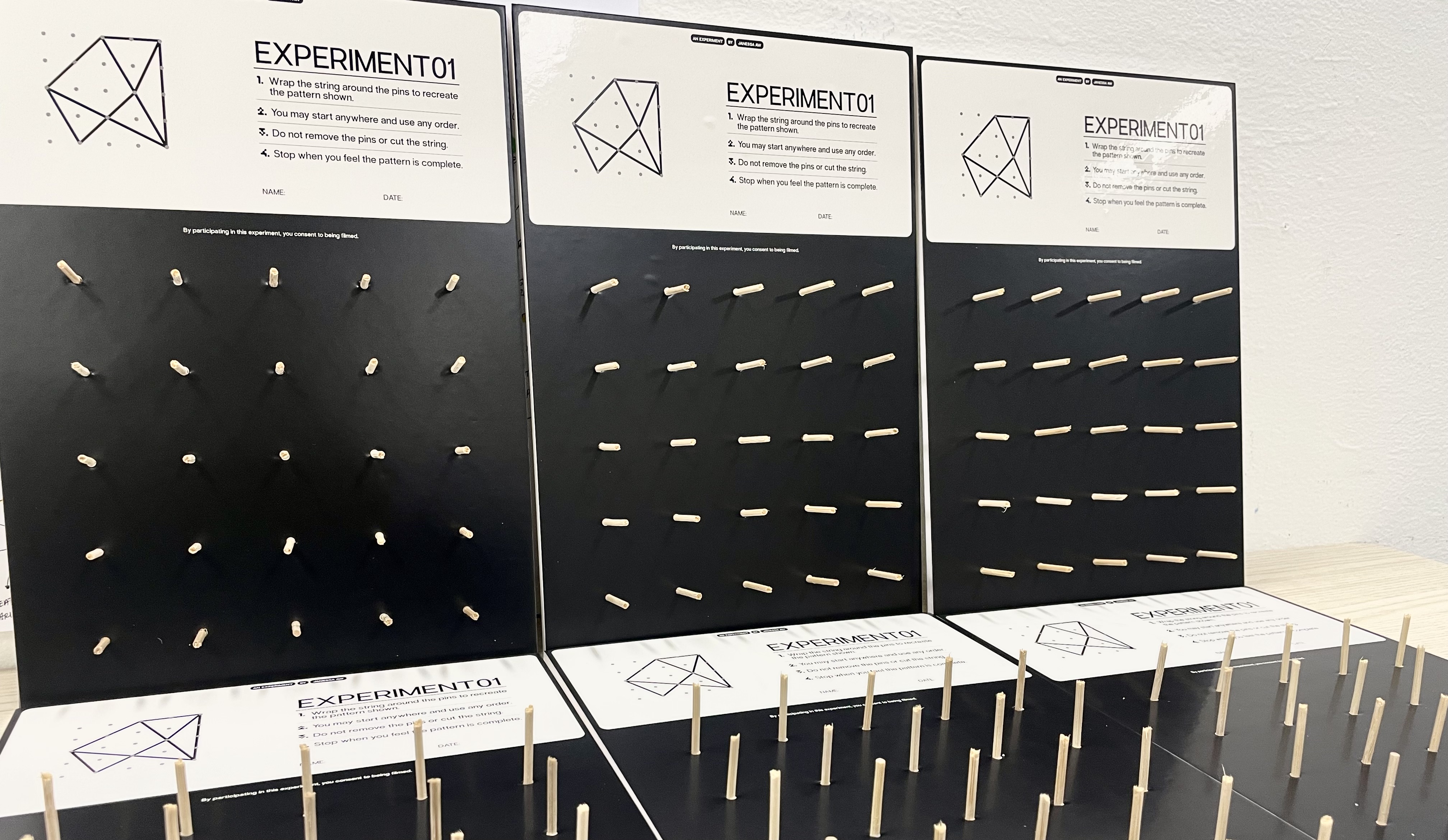
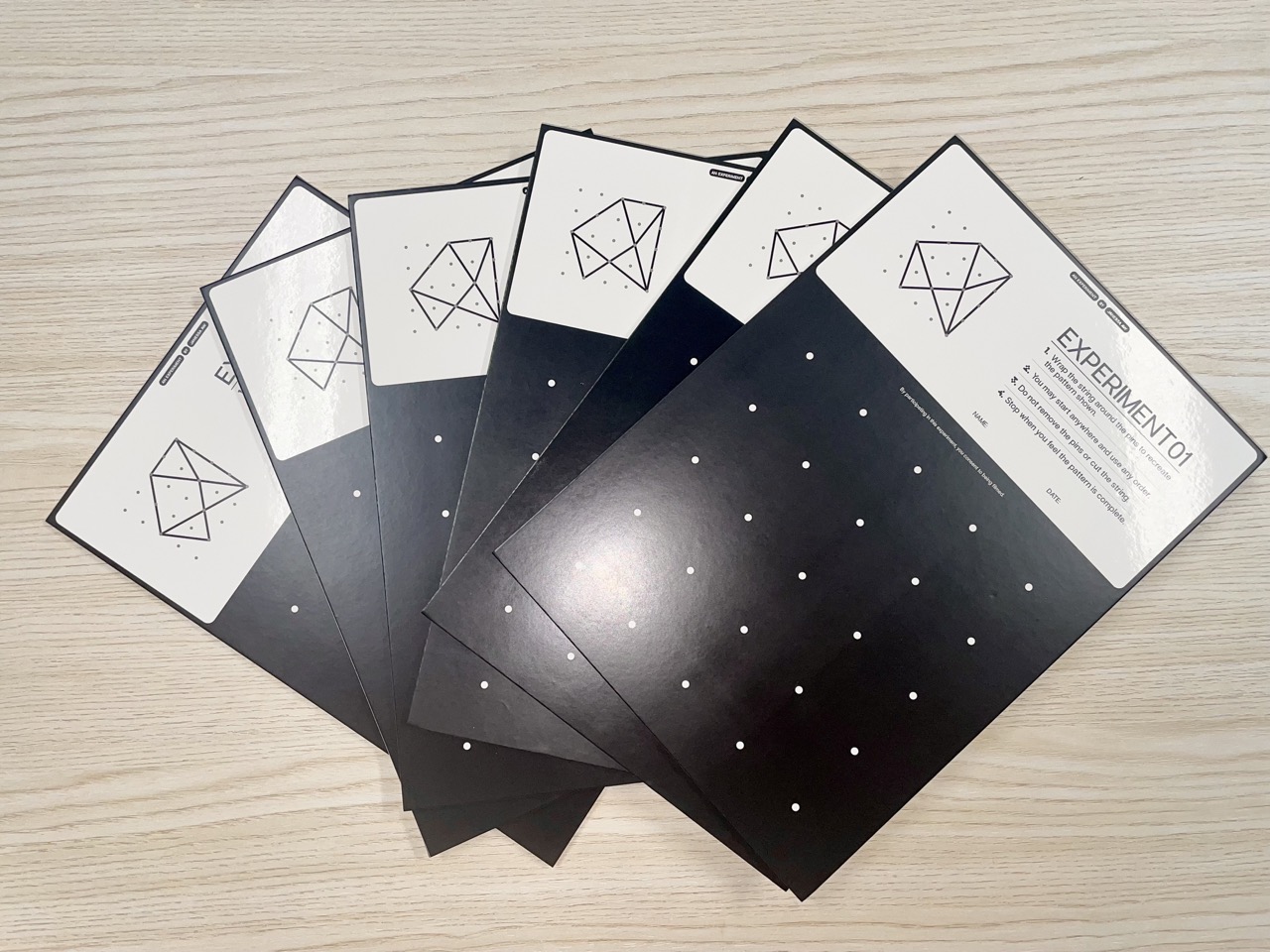
Inspired by last semester’s embroidery translation, this experiment asks participants to recreate a given pattern using string on a pinned board. With fixed materials and instructions, I’m studying how interruptions emerge from individual rhythms and material negotiation.
Designing the setup
Board, pins, and common rules
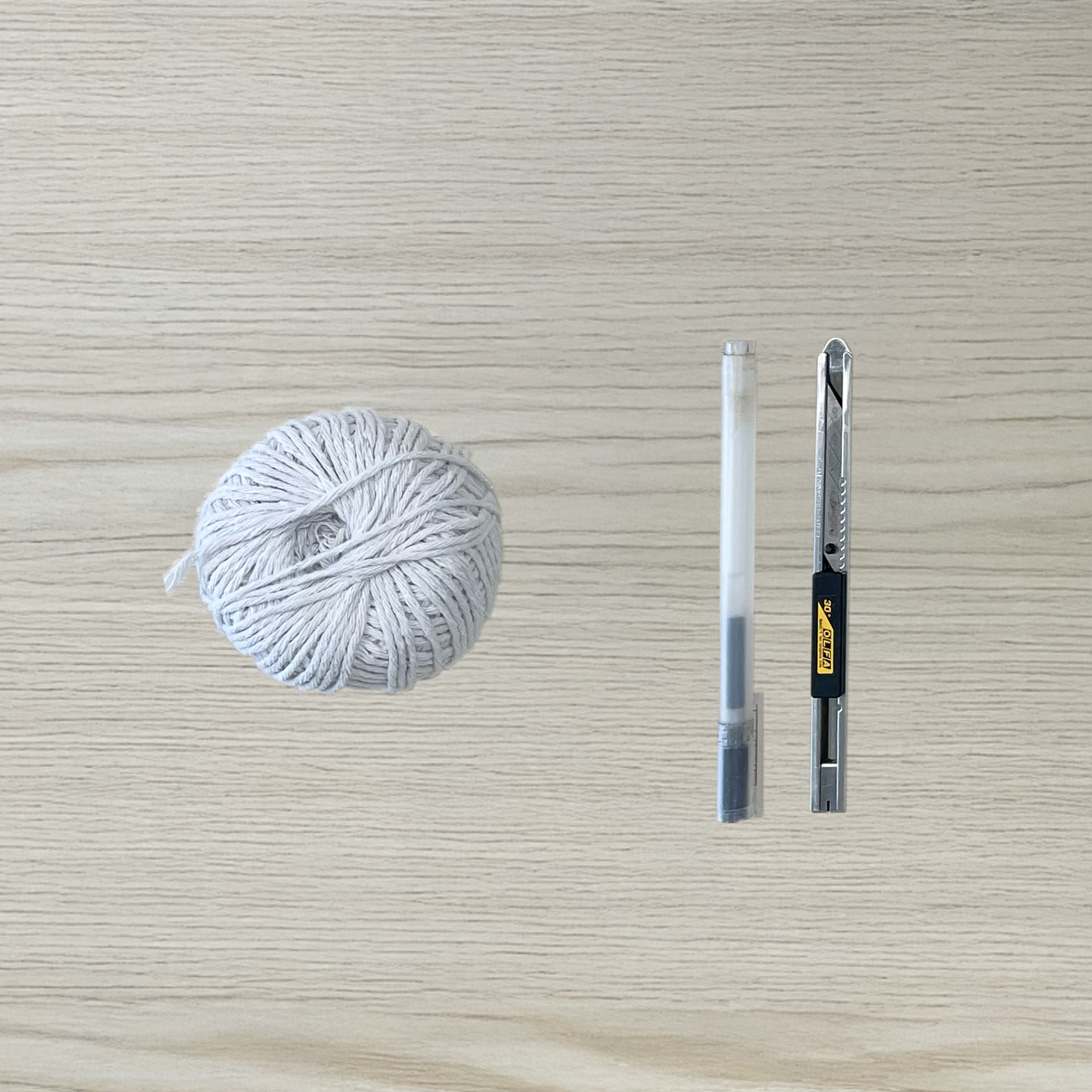
Materials: satay sticks (cut to 3 cm), board, hot glue gun, string, penknife.
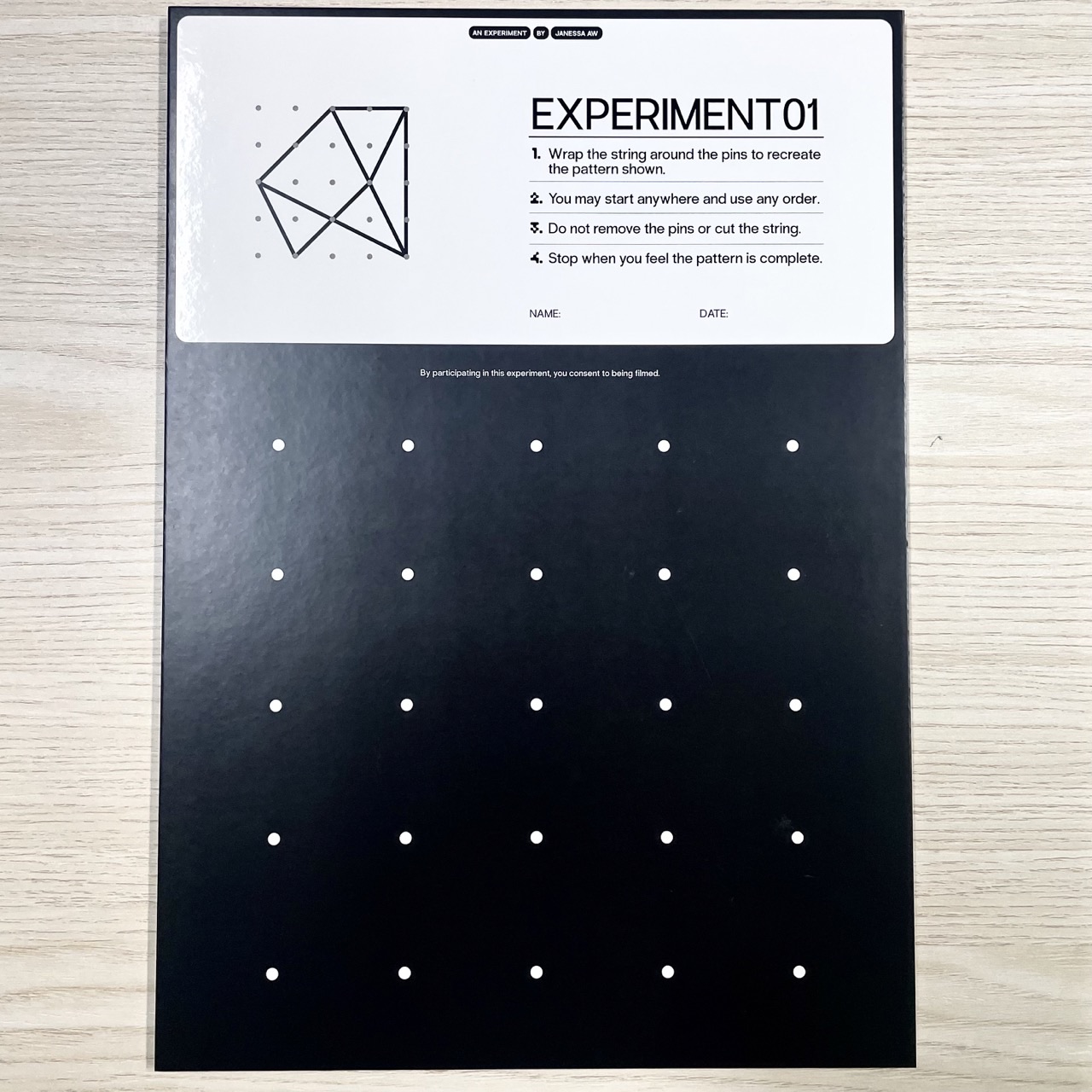
Each participant receives the same kit and instructions:
• Wrap string around pins to recreate the given pattern.
• Start anywhere, any order.
• Do not remove pins or cut strings.
• Stop when it feels complete.
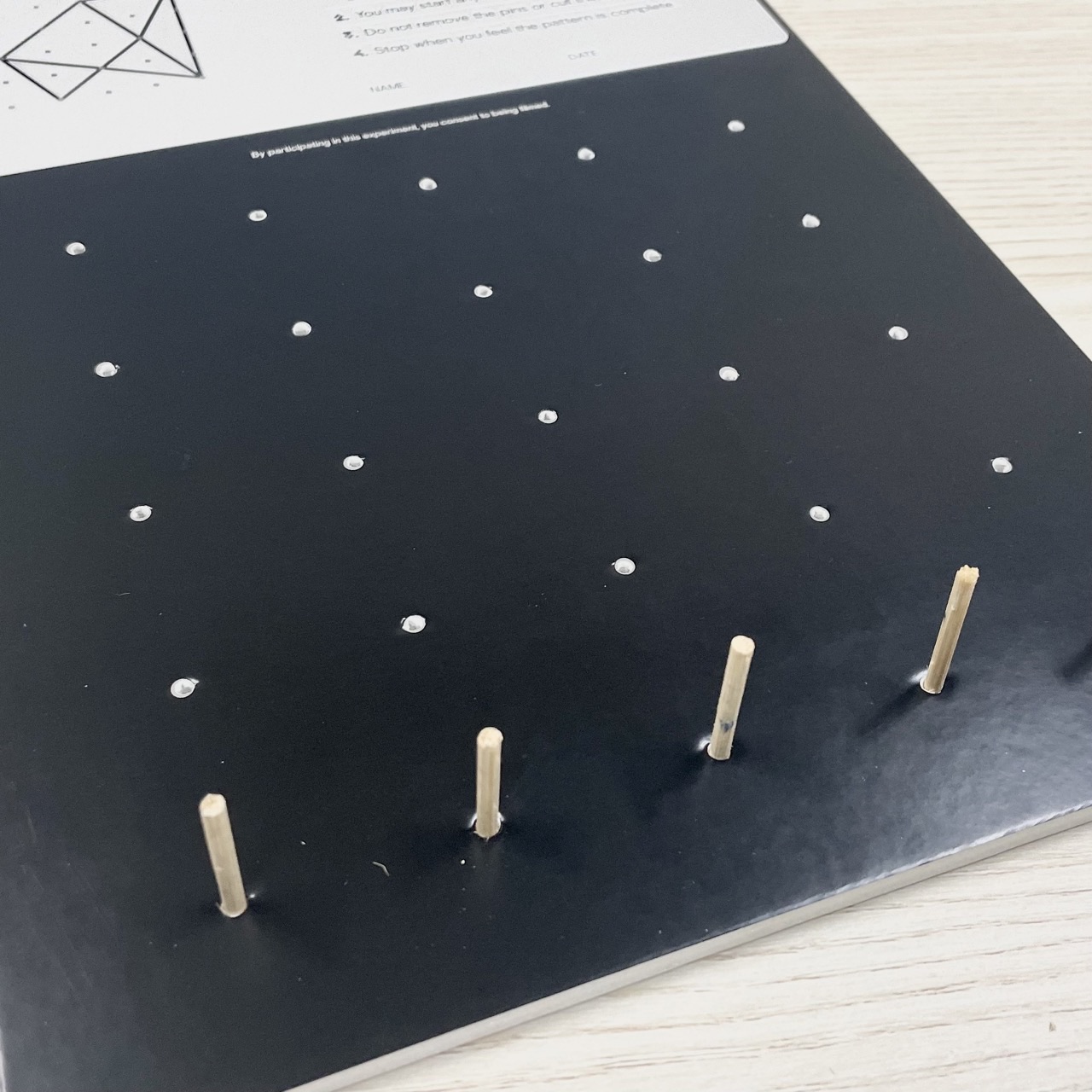
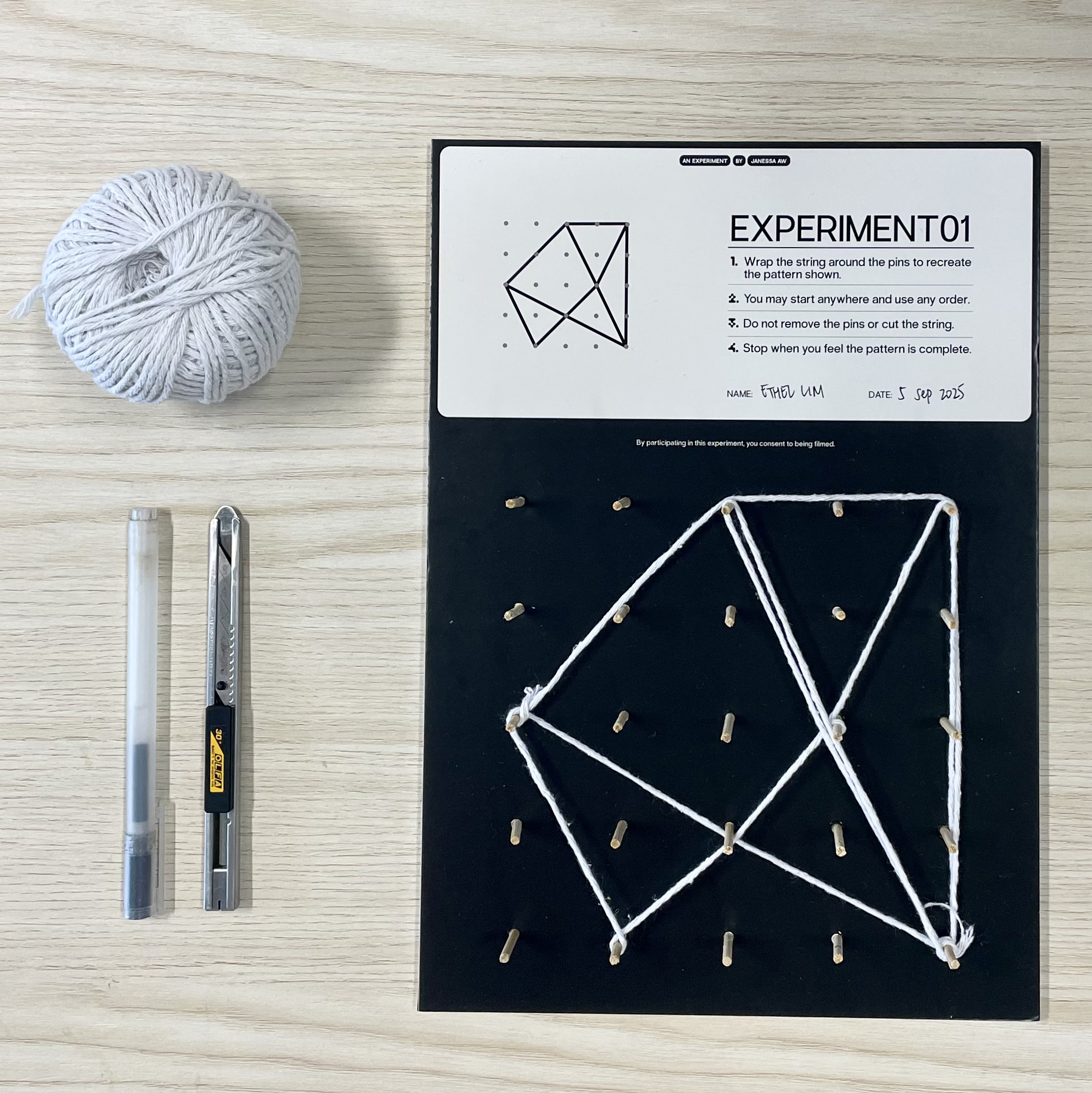
Preparing to observe
What I’ll record during the activity
Process: starting point, strategies (outline / diagonal / random), pauses, corrections,
rotations.
Form: density of crossings, string tension, sagging, drift, completion type (accurate /
partial / reinterpreted).
Reflection: short post-activity, fill up observation sheet about choices, frustrations, and changes.
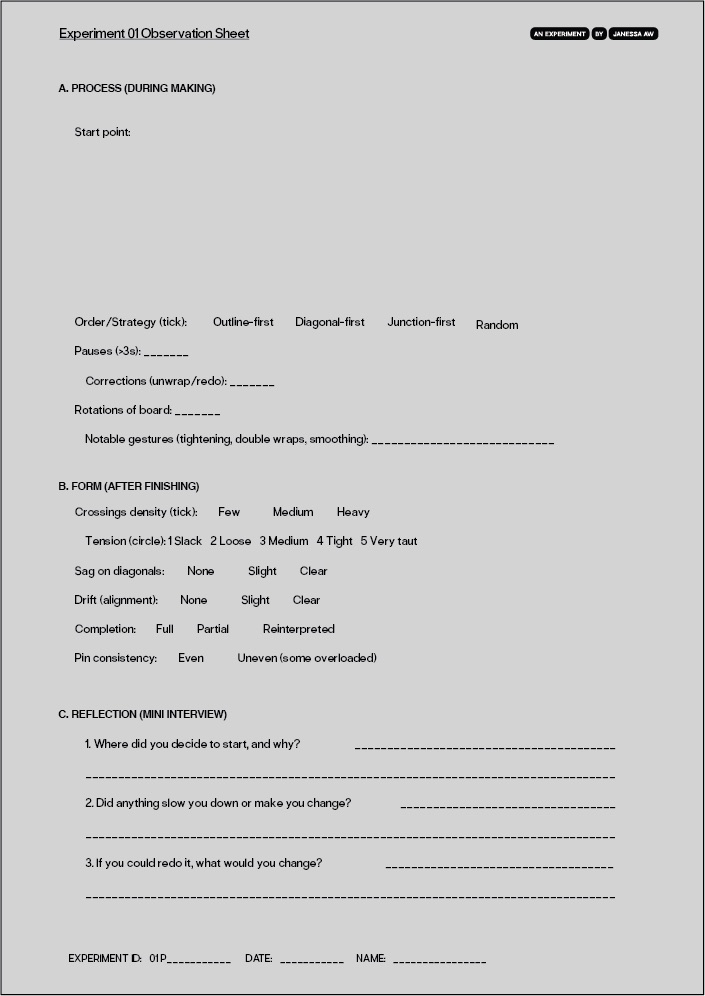
What I hope to learn
Mapping interruption as care, not failure
I want to understand interruption as a form of care instead of a mistake. By keeping the conditions the same for everyone, I’m looking at how hesitation shows up in the tension and crossings of the thread, and whether certain strategies lead to shared patterns. This links back to Tsaknaki’s thinking on care and Reddy’s idea of materials having their own ways of acting.
Why this matters to the project
From my hand to many hands
This experiment treats code as a starting point for people to make together. I want to see if a single computational pattern will break open into different interpretations once real hands work with it. It helps me move away from a single-maker mindset toward something more collective.
[ Questions for Experiment 1 ]
Same rules, different outcomes?
If everyone follows the same rules, why do results still diverge?
[ Questions for Experiment 1 ]
Where does error live?
How much belongs to material resistance vs human decision?
[ Questions for Experiment 1 ]
How variation reveals authorship
How far can human interpretation bend a pattern once the code sets the starting point?