WEEK 1
DISSERTATION DISCUSSION
Direction reset without expanding scope
The first week of Semester 2 was centred on aligning my dissertation, experiments, and final project direction. The discussion with Andreas, Syafiq, and Ethel surfaced gaps in my thinking that I had been circling but not fully addressing. The workflow is emerging clearly, but the language, scope, and intention around gesture still need work.
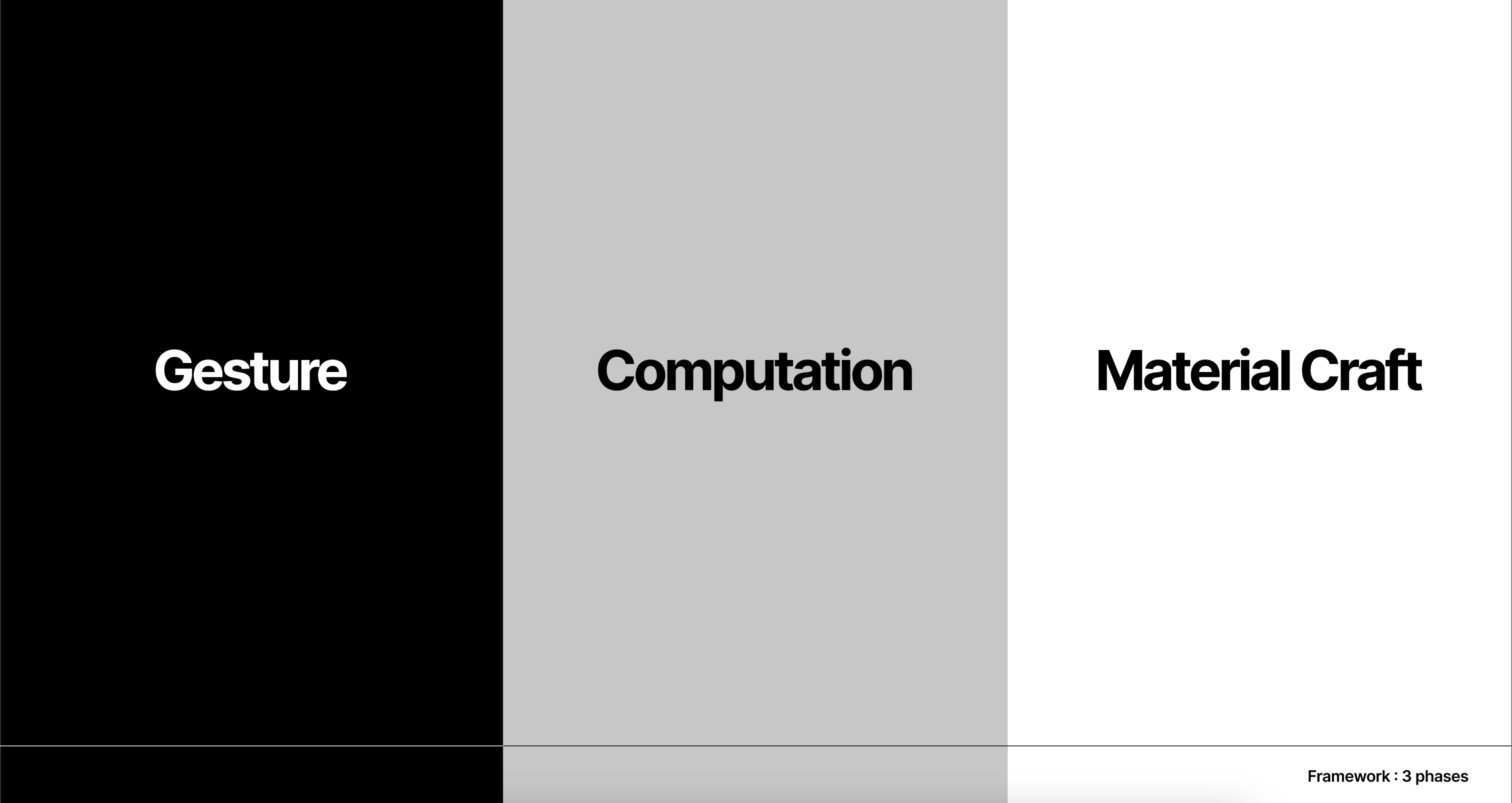
Gesture
Hand movements captured as input for the system.
Computation
Code processes and modifies the captured gestures.
Material craft
The processed gestures are made physical through material output.
[ Key discussion points ]
Dissertation progress
Clear improvement since the RPO
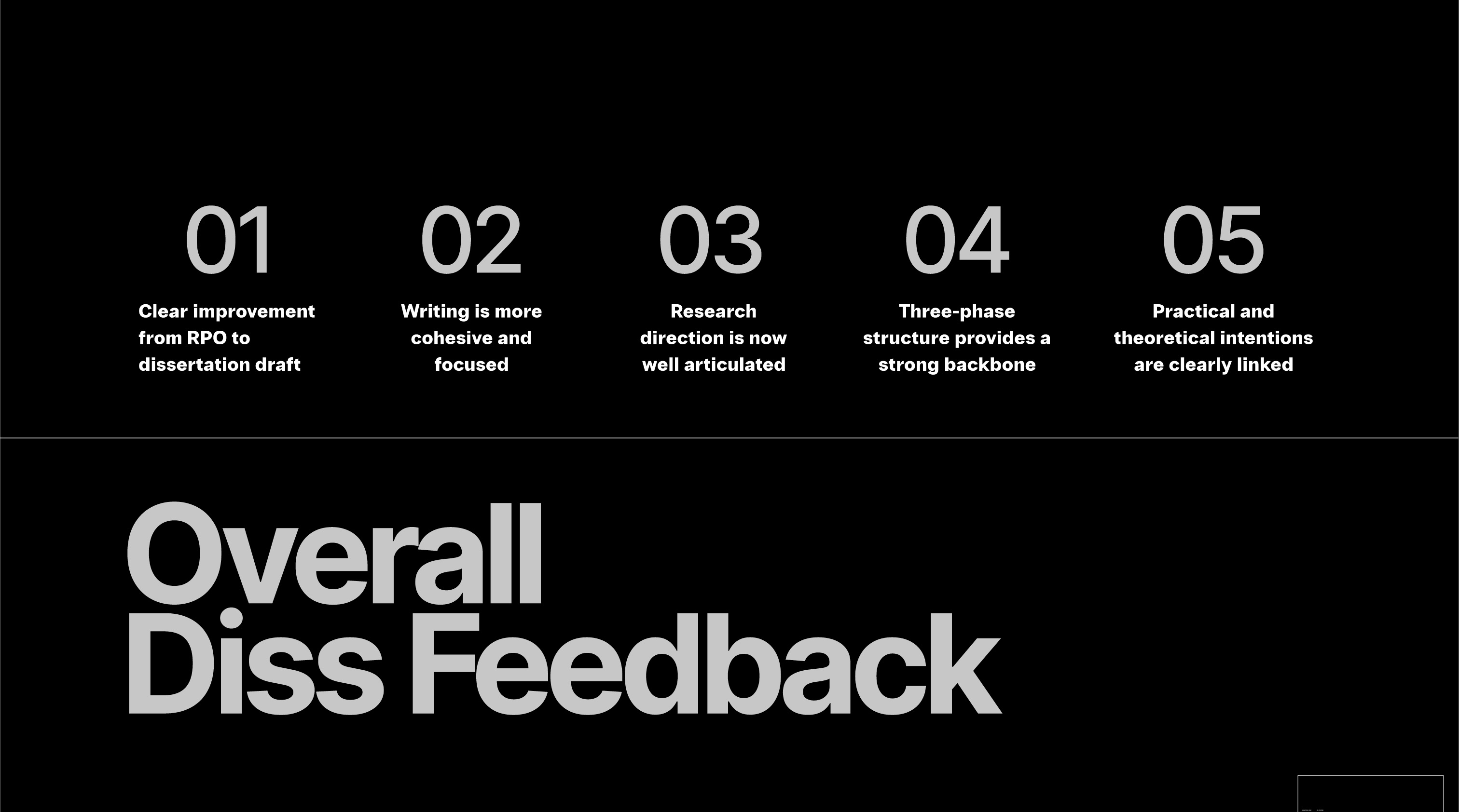
- Writing
more cohesive and focused. - Research direction
intent is clearer and easier to understand. - Structure
the three-phase framework provides a strong backbone. - Practice and theory
practical work and readings link more cleanly.
Defining terms
Difference between movement and gesture
Movement
Functional, habitual, or mechanical actions such as typing, scrolling, or tapping.
Gesture
Intentional, expressive, and communicative actions such as brush strokes, conducting, or performative hand motion.
Why it matters
If I do not define what counts as gesture, the project loses focus and becomes difficult to articulate.
Narrowing scope
Focus on hand gesture
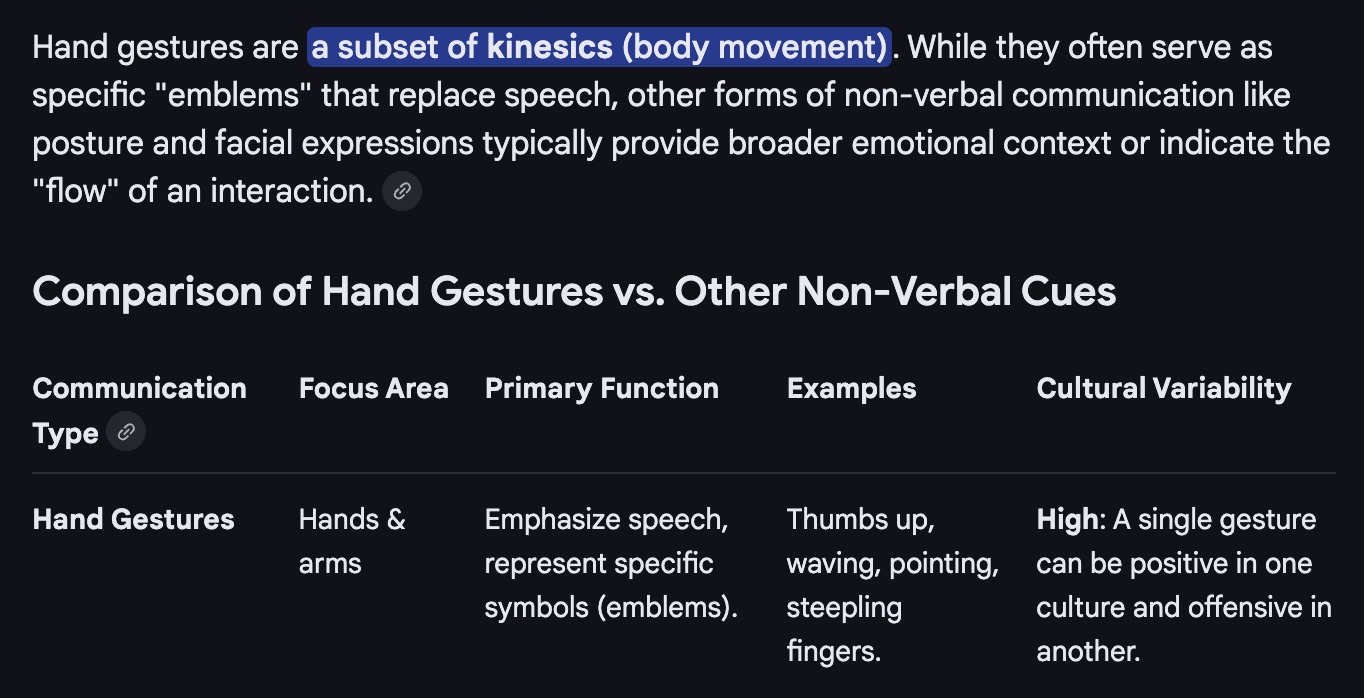
Gesture already exists across calligraphy, music performance, and dance. Those references are useful, but the warning was clear: I should not try to cover everything. My role is not to redefine gesture across all fields, but to study how hand gesture behaves inside my workflow of analogue input, computational translation, and material output.
| Type | Primary function | Examples | Cultural variability |
|---|---|---|---|
| Hand gestures | Emphasise speech, signal specific meanings | Pointing, waving, thumbs up | High |
| Facial expressions | Convey core emotion and immediate reactions | Smiling, frowning, raised eyebrows | Lower overall |
| Posture | Signals openness, confidence, defensiveness | Slouching, crossing arms | Moderate |
| Eye contact | Signals attention, sincerity, dominance | Steady gaze, looking away | High |
| Proxemics | Signals intimacy, power, comfort | Standing close vs keeping distance | High |
Iteration and scope
Stop collecting new ideas, start iterating
Another strong point of feedback was about scope and iteration. I tend to generate many ideas quickly, but I move on too fast when something does not work. The expectation for this semester is not more experiments, but better iterations.
- 01 Settle on one to three ideas.
- 02 Refine them through repeated testing.
- 03 Do not abandon an experiment after the first failure.
- 04 Keep asking what works/fails, what needs adjustment.
Workshop discussion
A workshop must do research work
The idea of a workshop is not rejected, but it must be justified. The question is not “can I do a workshop,” but “why does a workshop make sense.” It should function as a design activity that tests gesture, interaction, and system behaviour, not as an add-on.
- 01 What is the purpose of the workshop?
- 02 What will participants actually do?
- 03 What insight does it generate?
- 04 Why is this format necessary for my research?
Before designing my own workshop, I was advised to attend existing ones, especially those run by Feelers Feelers and the School of Poetic Computation, to understand how process and documentation are handled.
Dissertation submission reminder
Week 7 submission is about writing and reflection
A key clarification was that the dissertation is based on writing and reflection, not completed outcomes. I do not need a finished final project to submit it. It can include:
- 01 Semester 1 experiments.
- 02 Documentation of my making process.
- 03 Minimum one prototype from Semester 2.
- 04 A clear conceptual explanation of what comes next.
Strengthening the dissertation
My draft feedback highlighted two areas to strengthen:
- + Computational references
Expand computational references, especially from creative coding and media arts communities. - Needs more visual
Use more visuals such as diagrams, photos, and process documentation to communicate my thinking.
Practical portfolio feedback
The workflow is strong, the framing must catch up
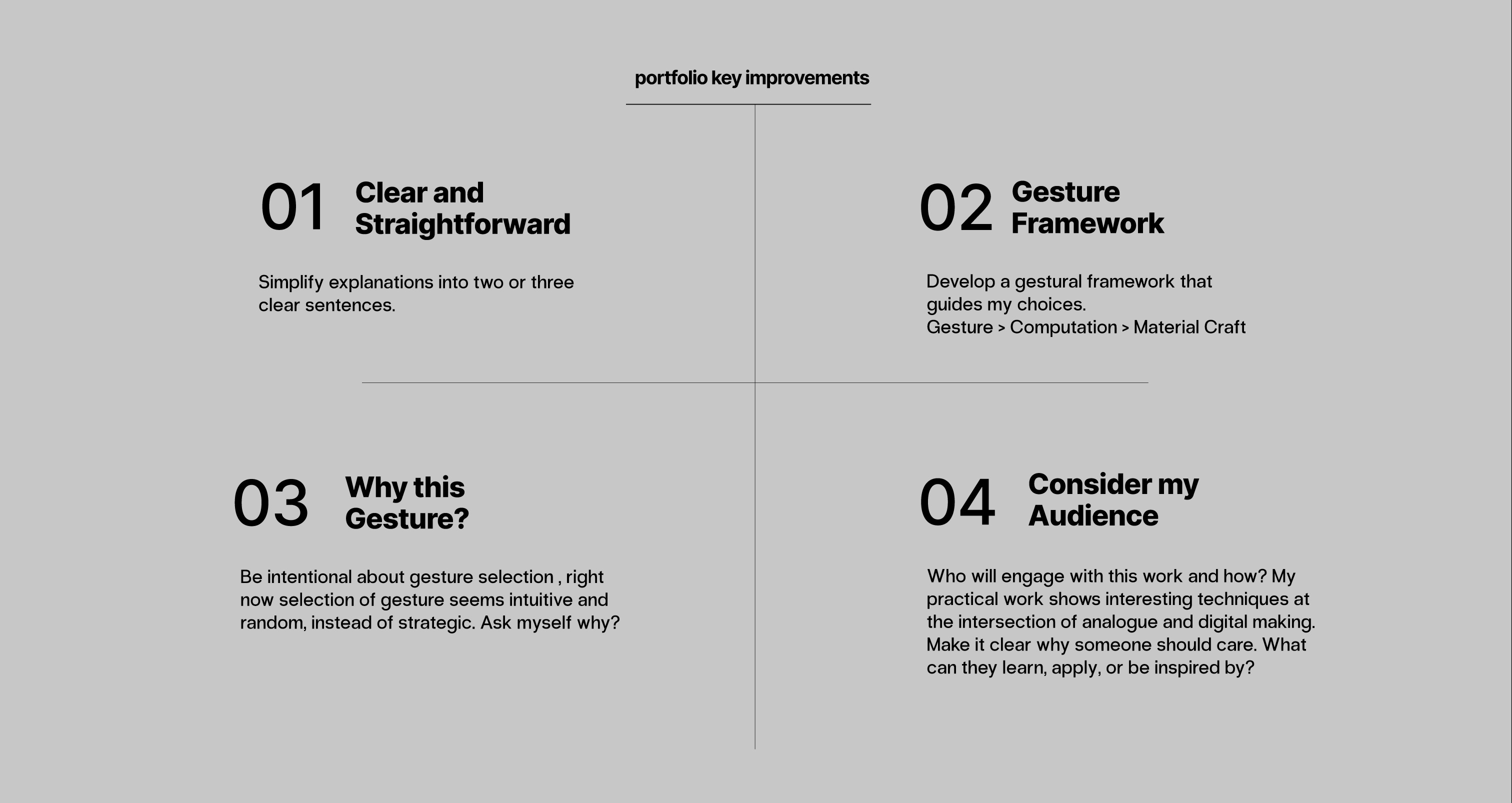
- 01 Simplify explanations into two or three clear sentences.
- 02 Develop a gestural framework that guides my choices.
- 03 Be strategic with the certain hand gesture im choosing.
- 04 Clarify who the audience is and why they should care.
Reflection
Clarity as care
This discussion made it clear that I am not stuck, but I am at a point where precision matters. The project does not need to expand further. It needs to tighten. Defining gesture, limiting scope, iterating properly, and designing with intention are not constraints. They are what will allow the work to grow with depth and confidence.
For Semester 2, my focus is to refine what already exists, articulate it clearly, and let the work mature through deliberate iteration rather than constant expansion.
[ The mirror talk ]
Mediated perception
Seeing yourself through a system
In this talk done by Andreas, he shared with us some key insights that would be useful for us. A camera captures the audience and reflects them back on a screen, sometimes filtered and sometimes unfiltered. What matters is the invisible dialogue between the audience, the camera, and the system itself. The screen becomes an intermediary rather than a neutral mirror.
Sigmund Freud and Jacques Lacan
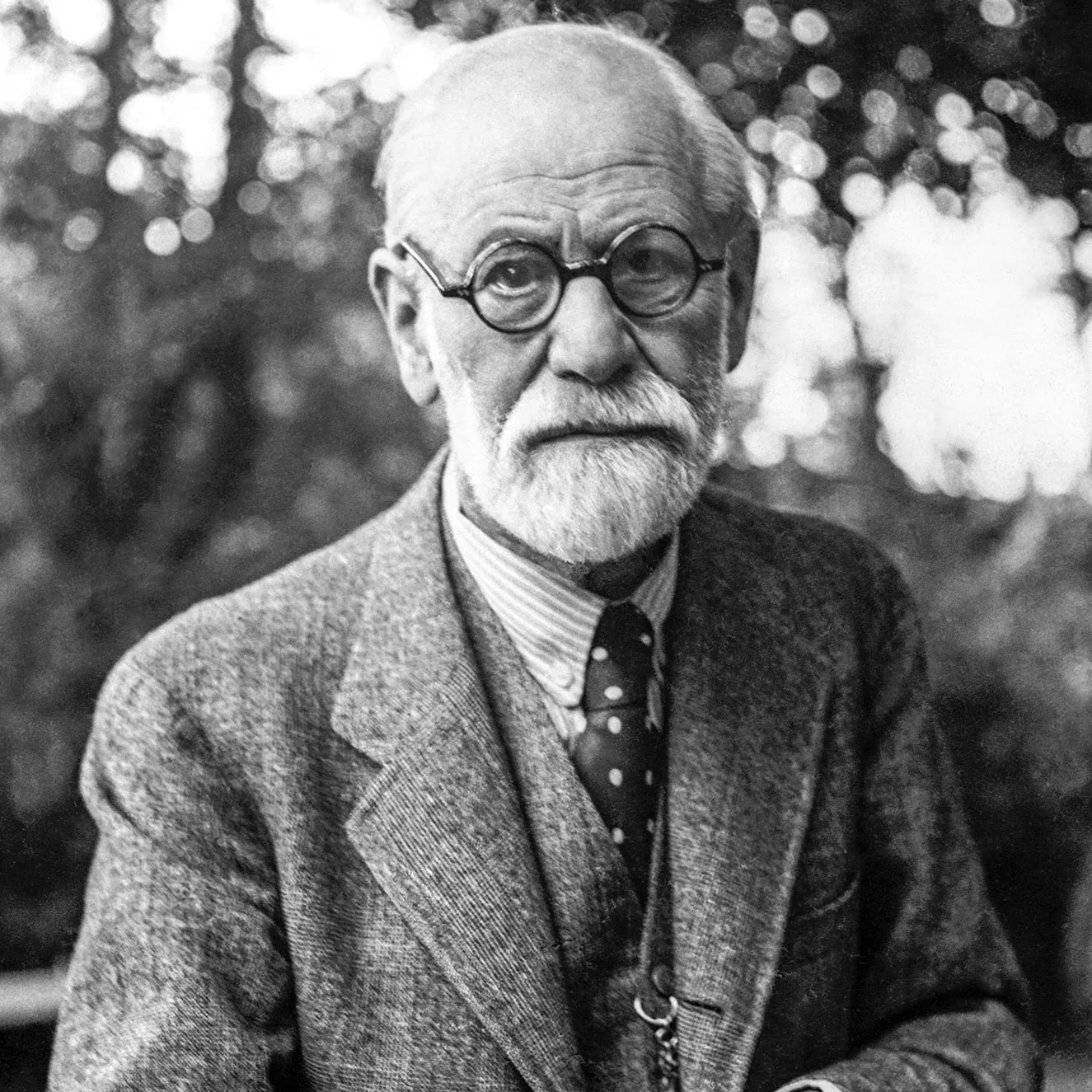
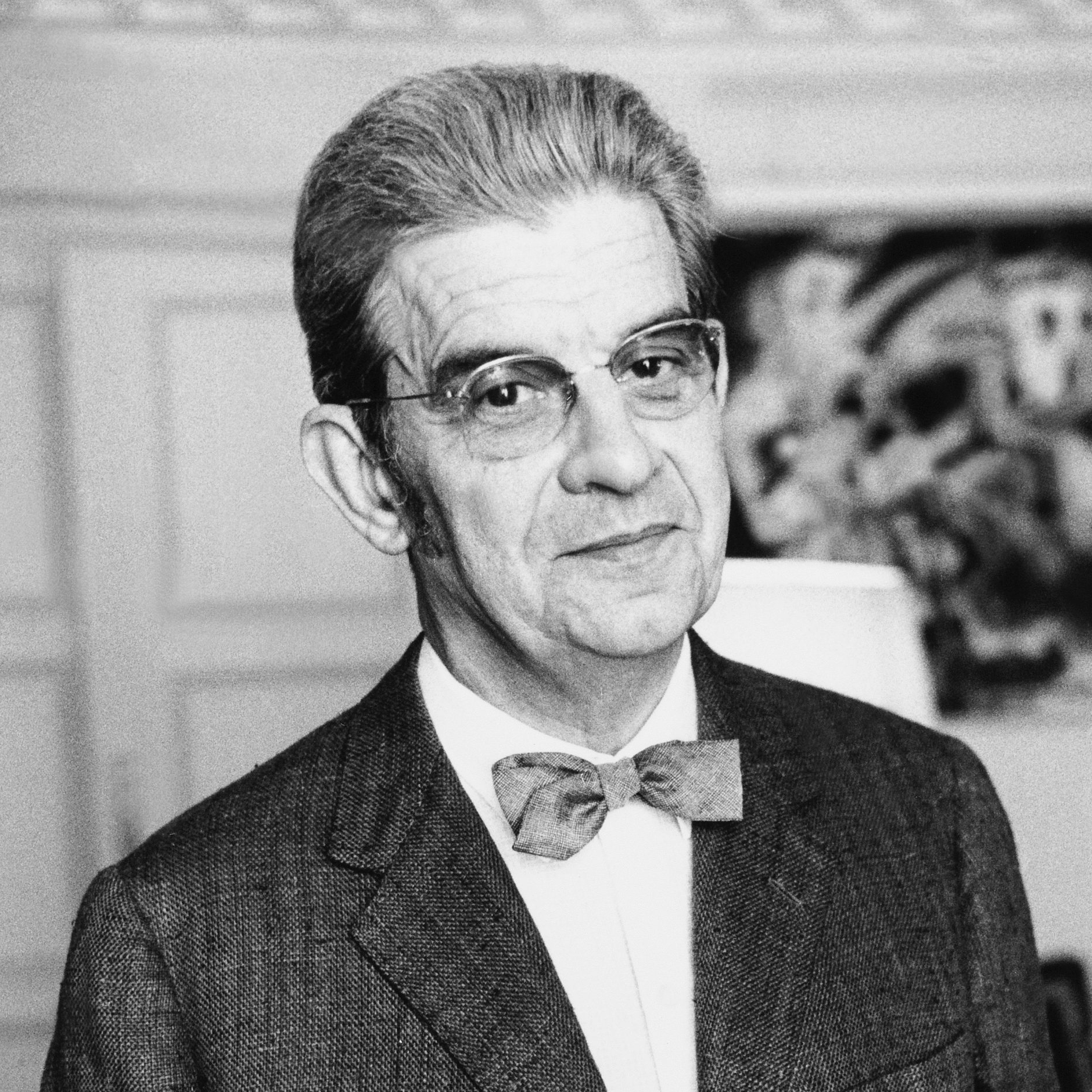
Andreas linked this to the mirror stage, where self-perception forms through external surfaces. A reflection is not passive. It shapes how we recognise ourselves and how we think we are seen by others. Once a system is involved, the reflection becomes even more complex.
Connecting back
Gesture through reinterpretation
This stayed with me because it parallels my project closely. Gesture is captured by a system, translated through code, and returned in another form. What comes back is not the gesture itself, but a version interpreted by the system. Gesture does not travel cleanly. It is filtered, delayed, compressed, or amplified. These transformations are not errors. They are part of the dialogue between body and system.
[ Checklist 1 ]
Gesture selection and direction
Define which hand gestures are used, why they matter, and how their qualities are strategically chosen to support the research.
[ Checklist 2 ]
Audience and relevance
Clarify who engages with the work, why it matters to them, and what they can learn, apply, or be inspired by through the analogue–digital process.
[ Checklist 3 ]
Workshop as an outcome
Explain the workshop’s purpose, participant actions, insights generated, and why this format is necessary for advancing the research.