WEEK 11
Experiment 07 and Feedback
Refining craft and code through a drawing machine
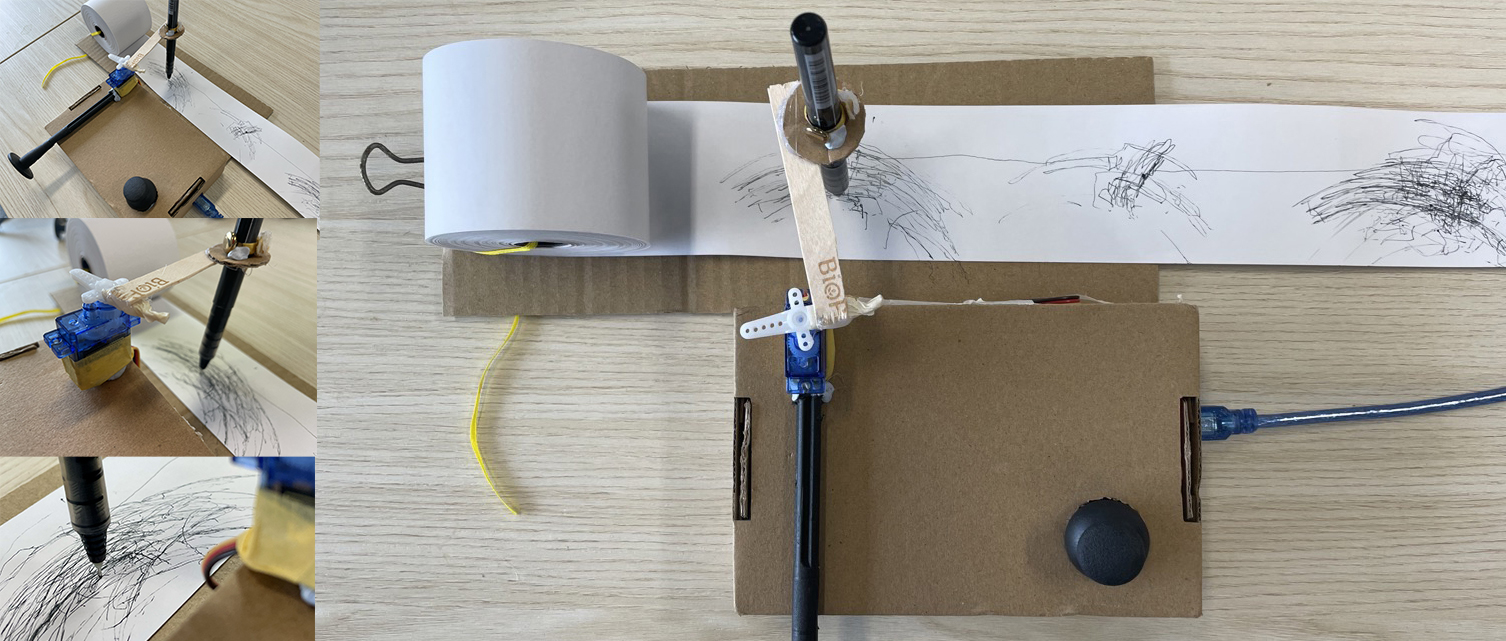
This week was about building a working system instead of planning one. I wrote an Arduino sketch for a joystick, mapped the X and Y values until the readings felt consistent, then linked the joystick to a micro servo that moves a pen.
Input first
I started by stabilising the joystick readings so the servo would not jitter randomly. Once the input felt reliable, the behaviour of the marks made more sense to read.
Form through rough assembly
A quick sketch and loose layout helped me understand reach, scale and where the pen needed to sit before committing to any enclosure.
Craft in the build
Cutting, mounting and fixing small issues in the shell turned into a material way of thinking through the system, not just dressing it up.
[ Prototype setup ]
Input and motion
Getting the joystick and servo to speak
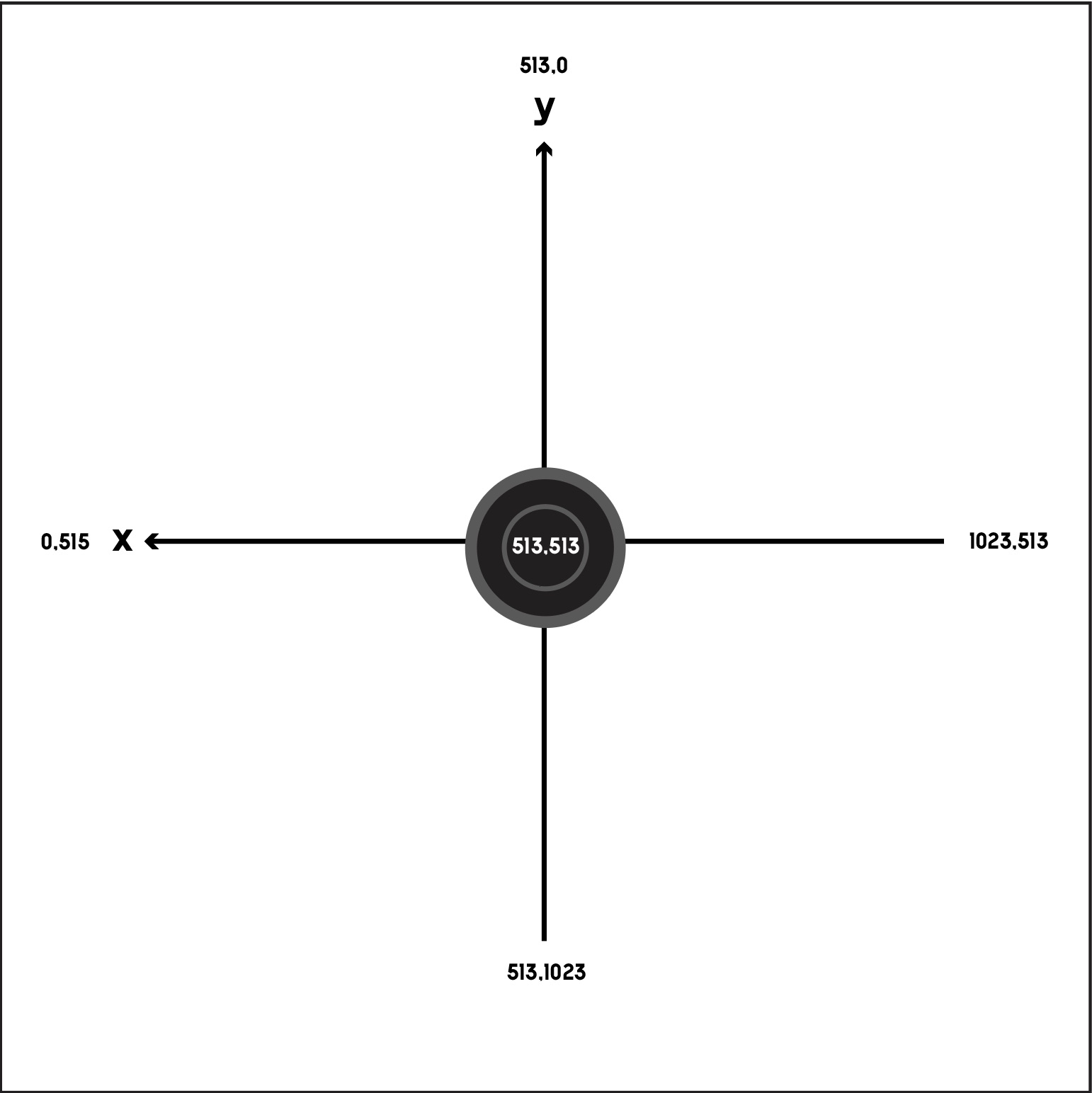
I created an Arduino sketch for the joystick, printed the raw X and Y values, then mapped them to servo angles. The goal was not precision, but a range that felt predictable enough to draw with.
[ Form and assembly ]
Rough form first
Sketching, layout and building the shell
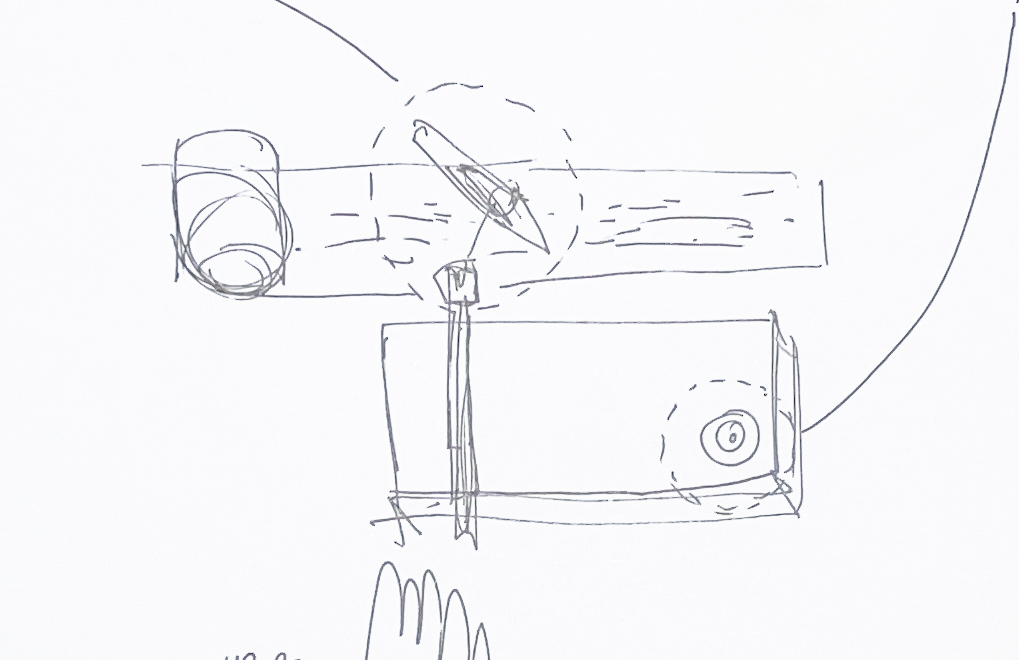
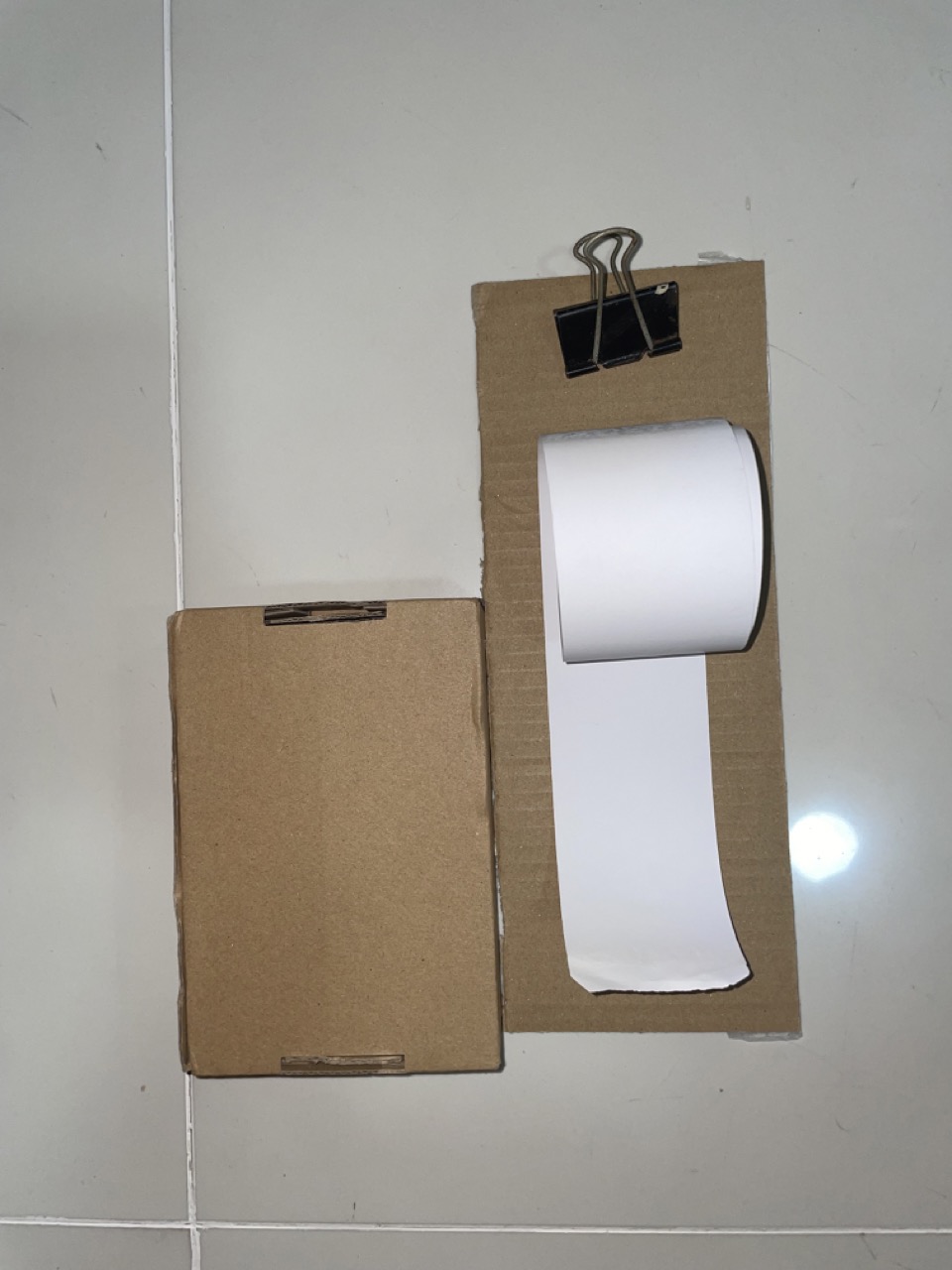
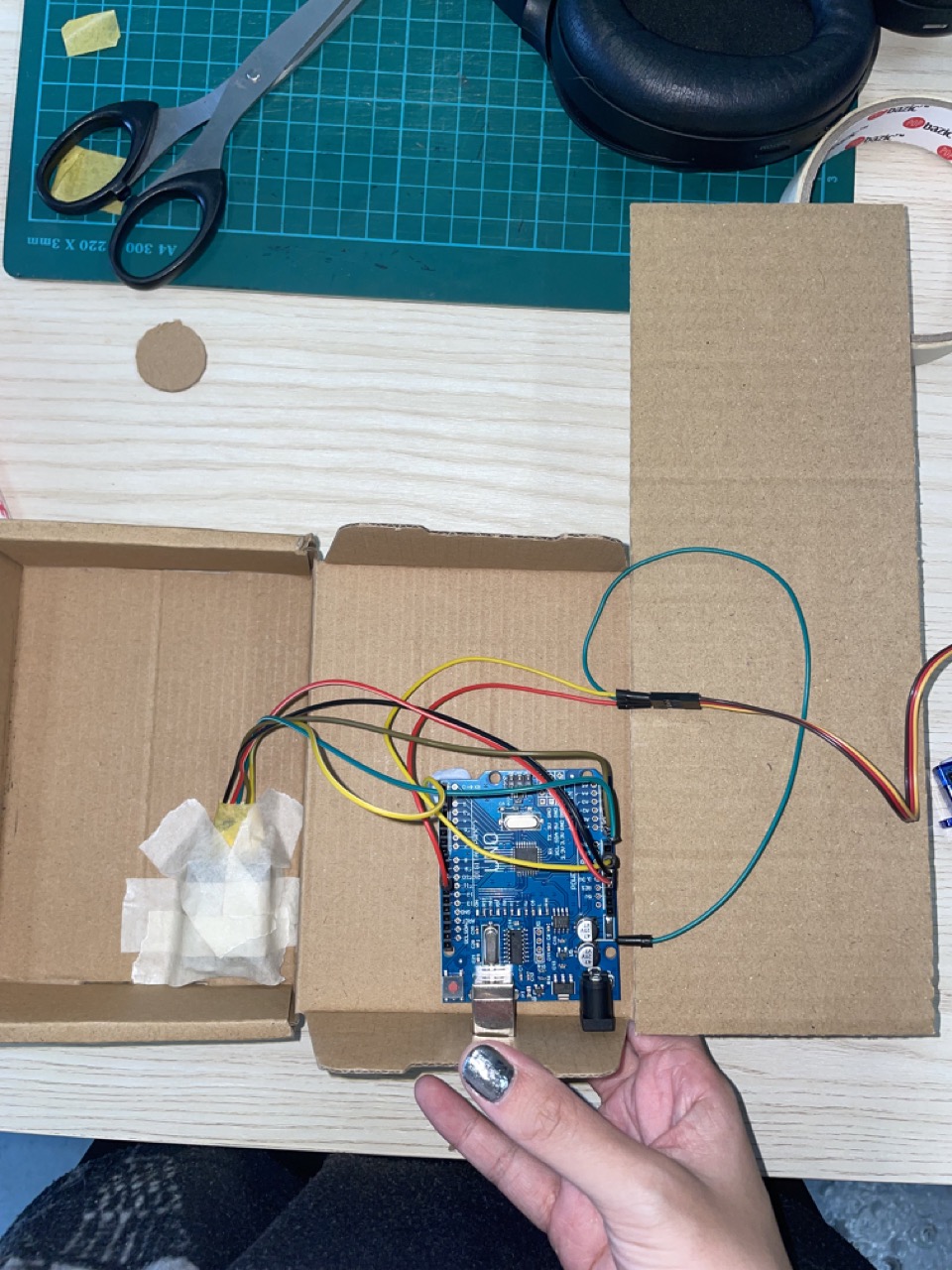
Before building a proper housing, I sketched a quick top view and laid the parts out together. This made the physical constraints obvious: how far the servo arm could reach, how much space the joystick needed, and where the paper had to sit.
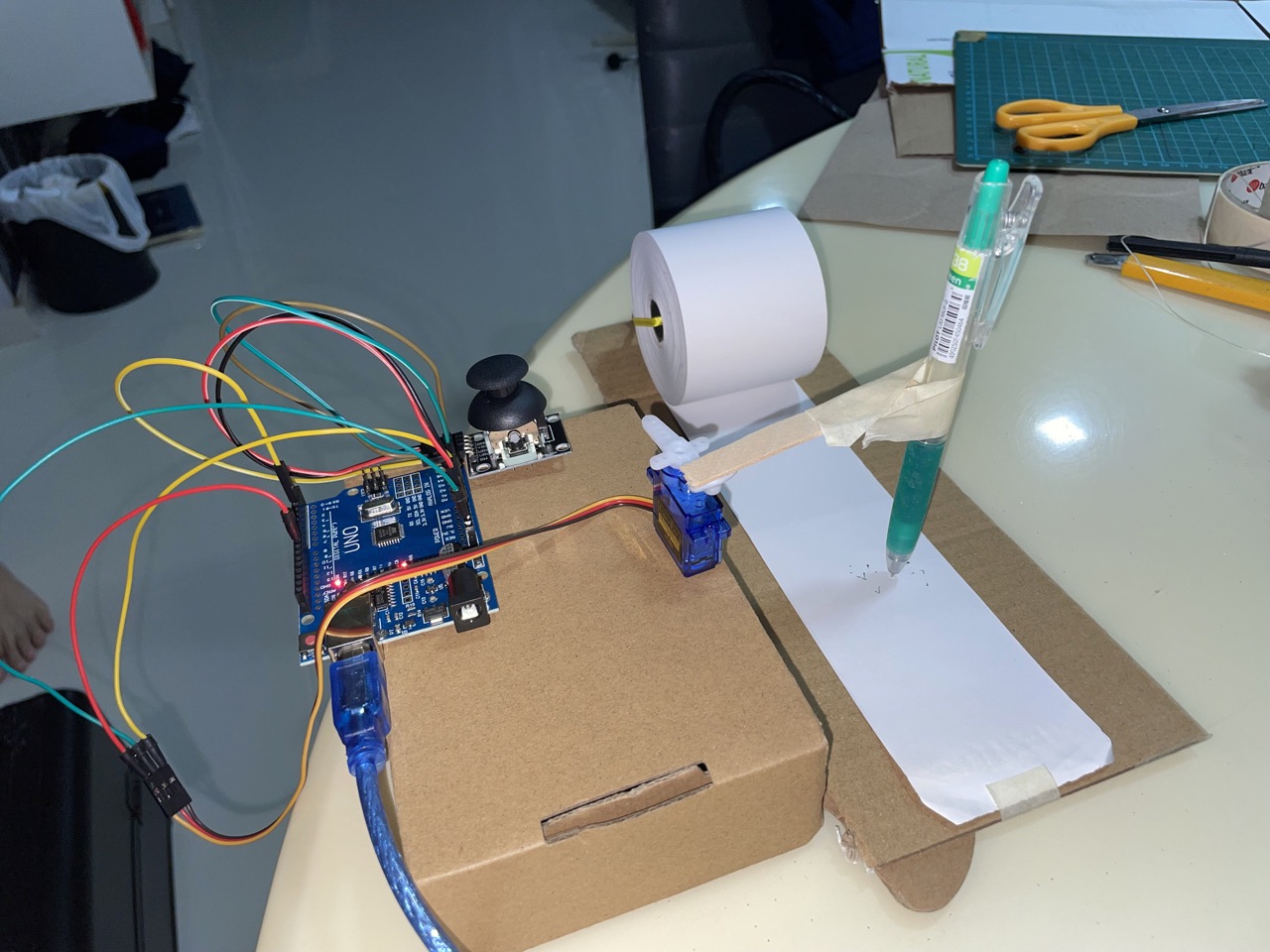
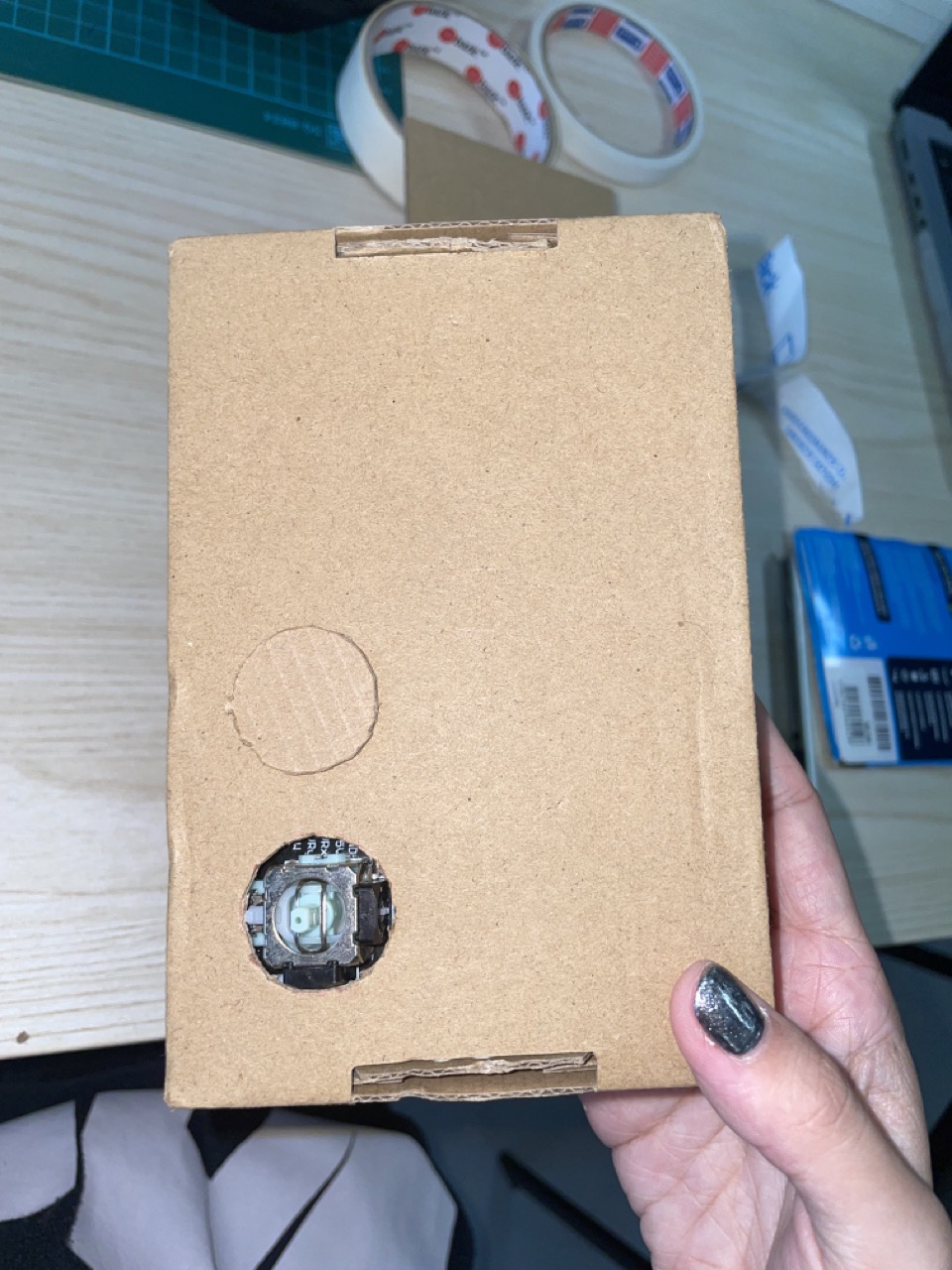
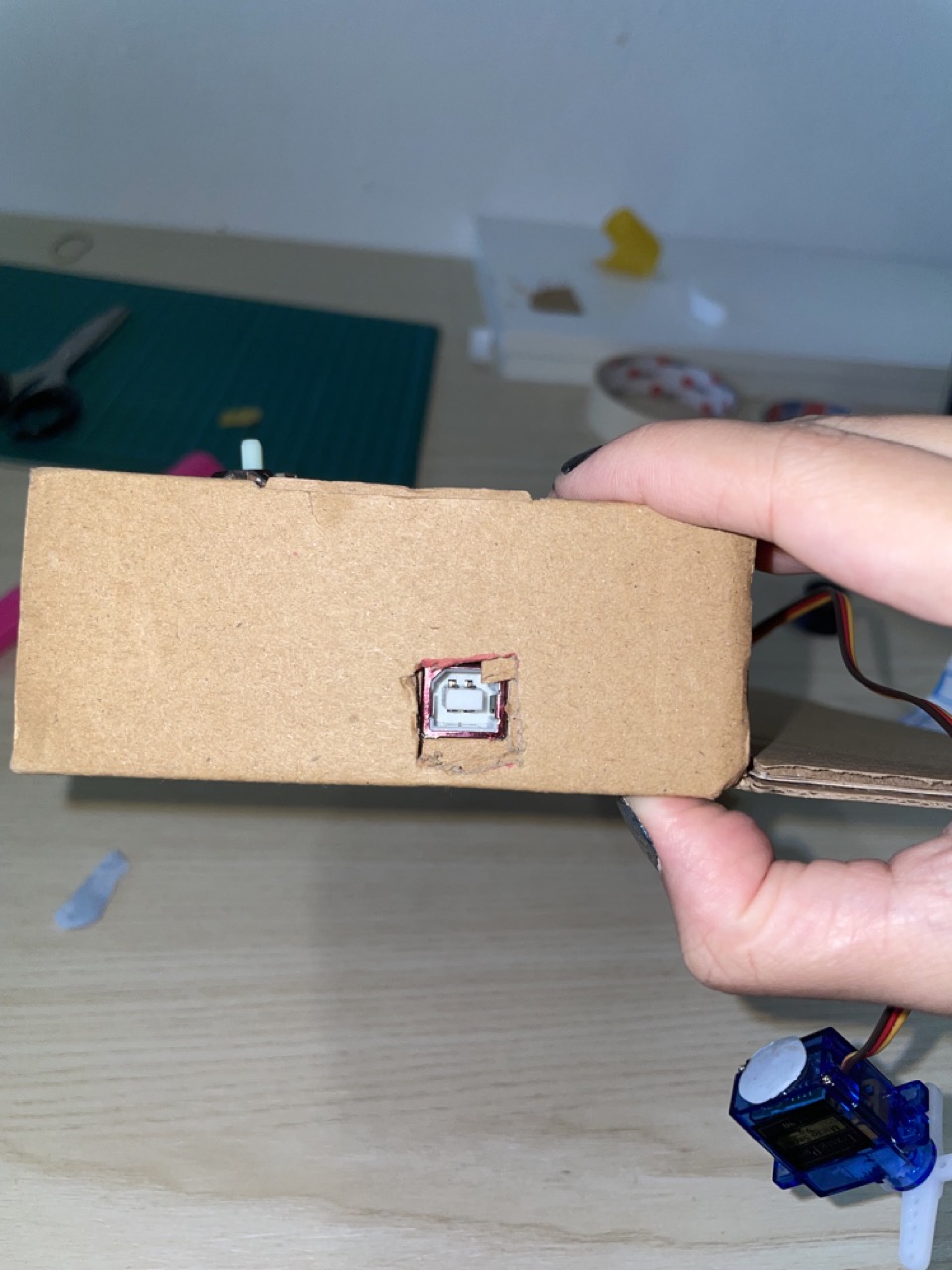
Then I built the physical shell. I cut openings for the joystick and servo, measured pen placement and improvised small fixes as I went along.
[ Running the system ]
Prototype in motion
Drawing lines across the page
Once everything was in place, I ran the full system. The pen responded to joystick input and drew across a long strip of paper. The movement was not smooth. The servo hesitated, jumped and occasionally lagged behind me.
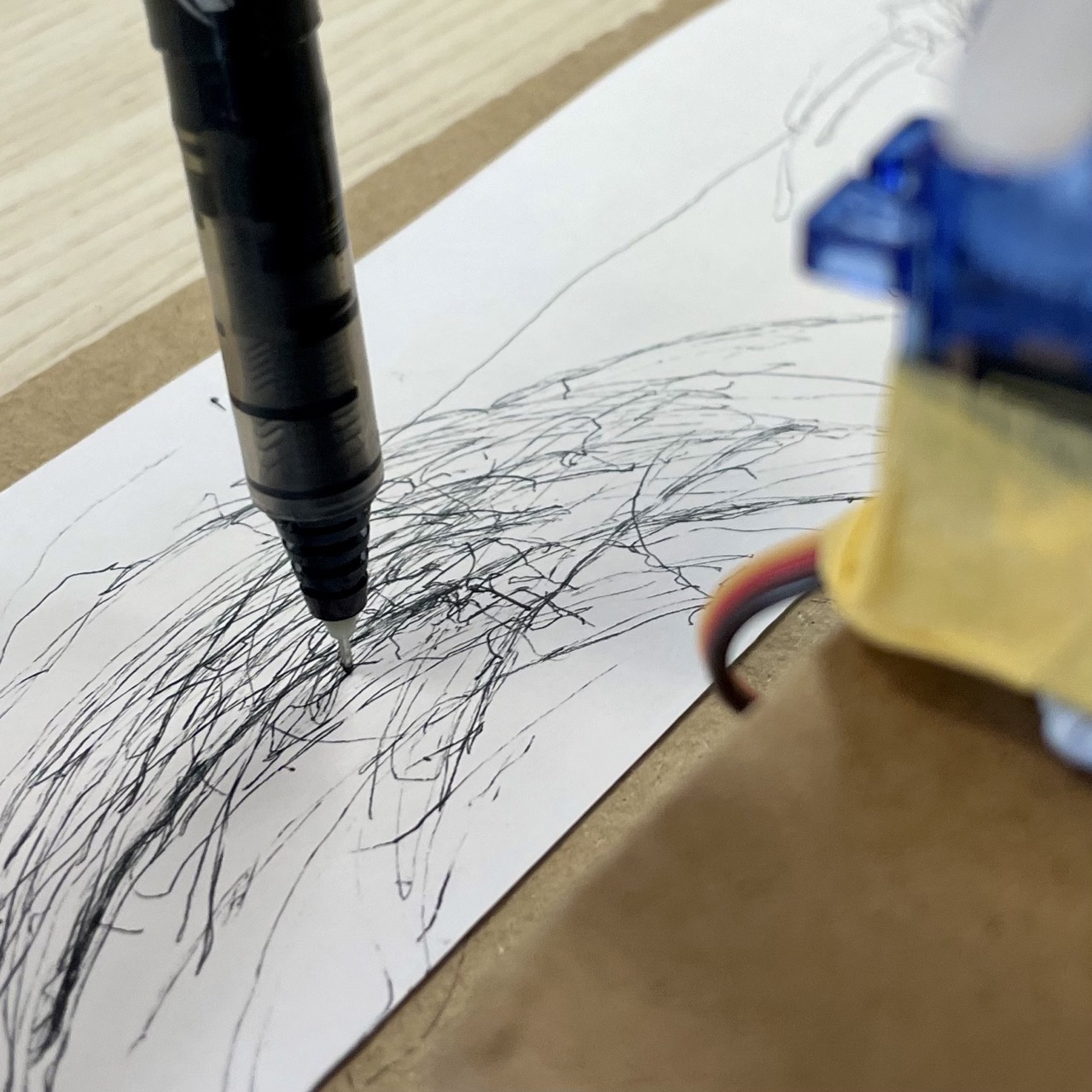
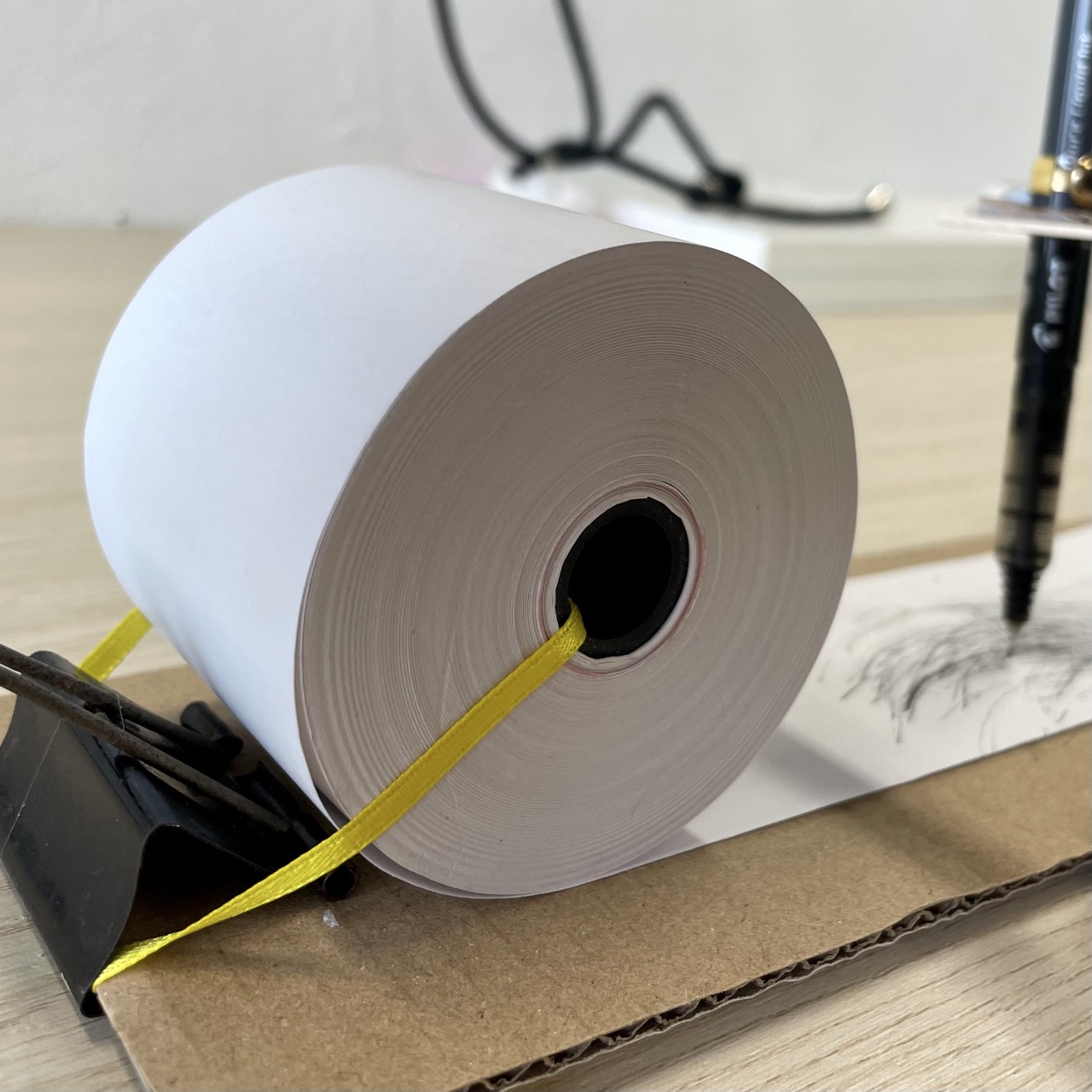
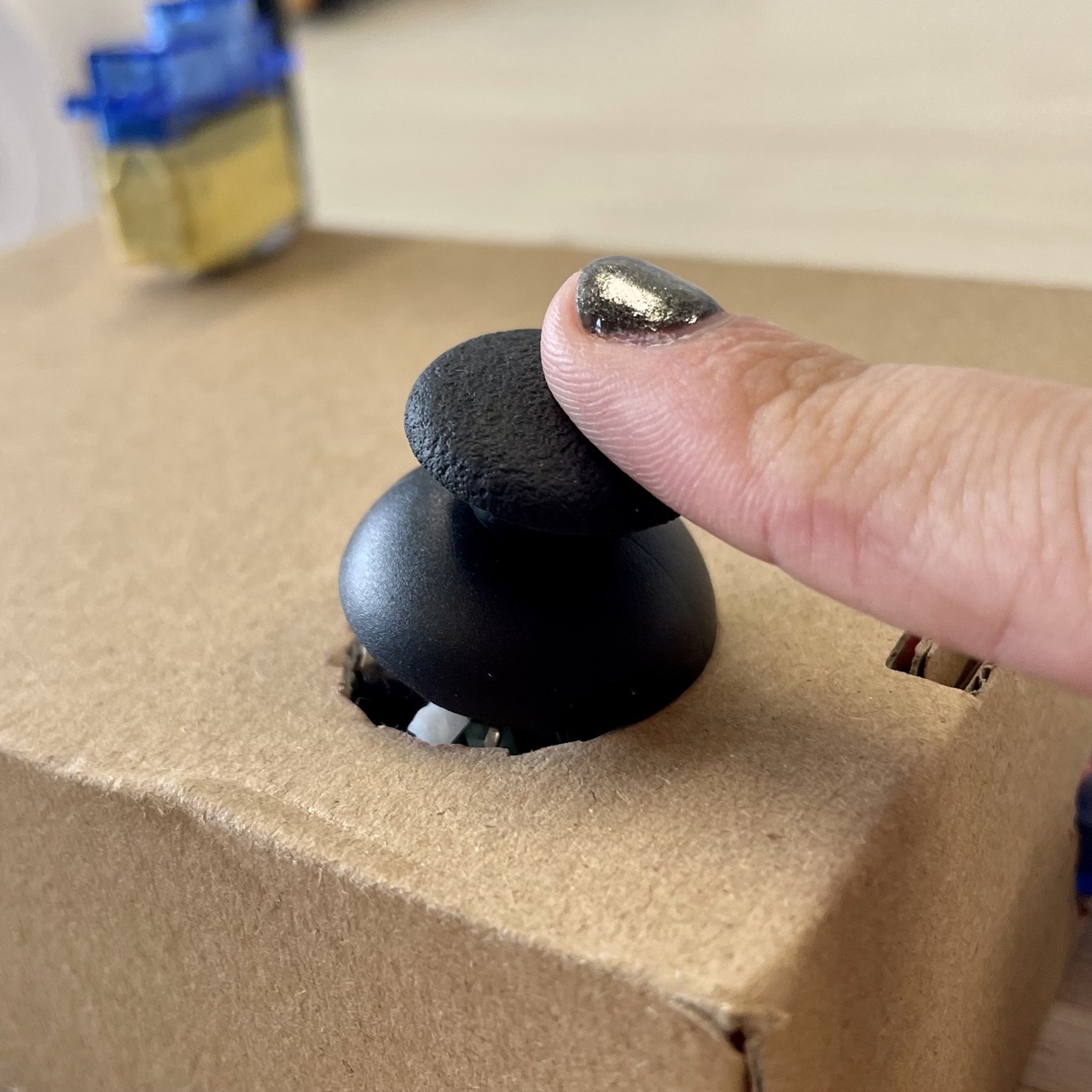
Interaction video showing how joystick motions translate into drawn lines.
At first I read the jitter as a flaw. But looking at the paper, I realised the lines carried my rhythm. Hesitation, pressure and speed appeared in the traces, even with a mechanical arm in between.
The machine was not just drawing. It was translating my behaviour into marks. The imperfections became the most interesting part, because they revealed the relationship between my hand, the servo and the surface.
[ Consultation with Andreas ]
Prototype review
Where craft actually sits
I brought the prototype into consultation. Andreas said the system made my craft and code intersection visible in a physical way, but the purpose and framing still felt unclear.
Key points from the feedback:
- I need to define what I mean by craft. Is it the object or the act of making.
- The prototype shows interaction, but I have not articulated what I want the maker or user to experience.
- Is this about mark making, slowness, therapy, attention, or extending the body.
- Madeline Schwartzman’s Extensions of the Body could help me think about tools that extend gesture and sensation.
- Craft should appear not only in construction, but also in how I think about making.
- The human, the machine and the output should be treated as three interdependent parts.
- One idea was to create a series of small crafted tools that each make different marks, to highlight how different human machine gestures result in different traces.
Overall, the prototype is strong, but I need a clearer statement of what craft represents inside the project.
[ Rethinking craft ]
Noun or verb
Craft as a relationship across system parts
After the tutorial, I sat with the question: is craft a noun or a verb.
For me, craft is a verb. It sits in the act of working with materials and systems through attention, patience and touch. It is less about the final object and more about the way I adjust, correct and respond while making.
In the build
I assembled everything by hand, improvised small fixes, adjusted angles and found ways to stabilise the pen.
Even choosing materials and fitting components required judgement.
In the interaction
Controlling the joystick was not straightforward. I felt the servo lag and had to slow down, ease pressure or
re-angle my hand. That negotiation is also craft.
In the reflection
Watching the traces made me aware of how my micro decisions influenced the marks. The lines became a record of
that relationship.
Craft became the link between my hand, the machine and the drawing. It was not the object on its own. It was the relationship that formed through making and using it.
[ Improving the build ]
Refinement
Structure, stability and trace
After consultation, I revised the prototype so the system felt more deliberate. I replaced the cardboard base with a firmer structure, tidied the wiring and improved the servo mount. I also stabilised the pen so most of the noise in the line came from my hand rather than loose parts.
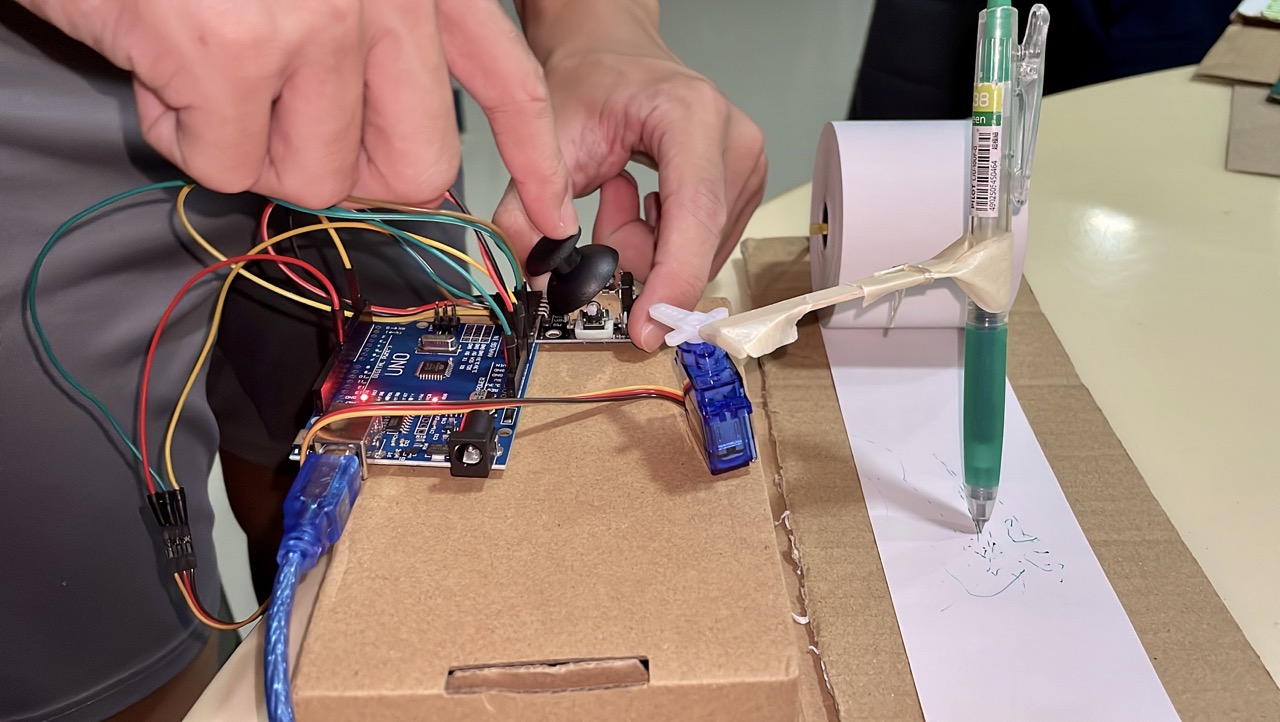
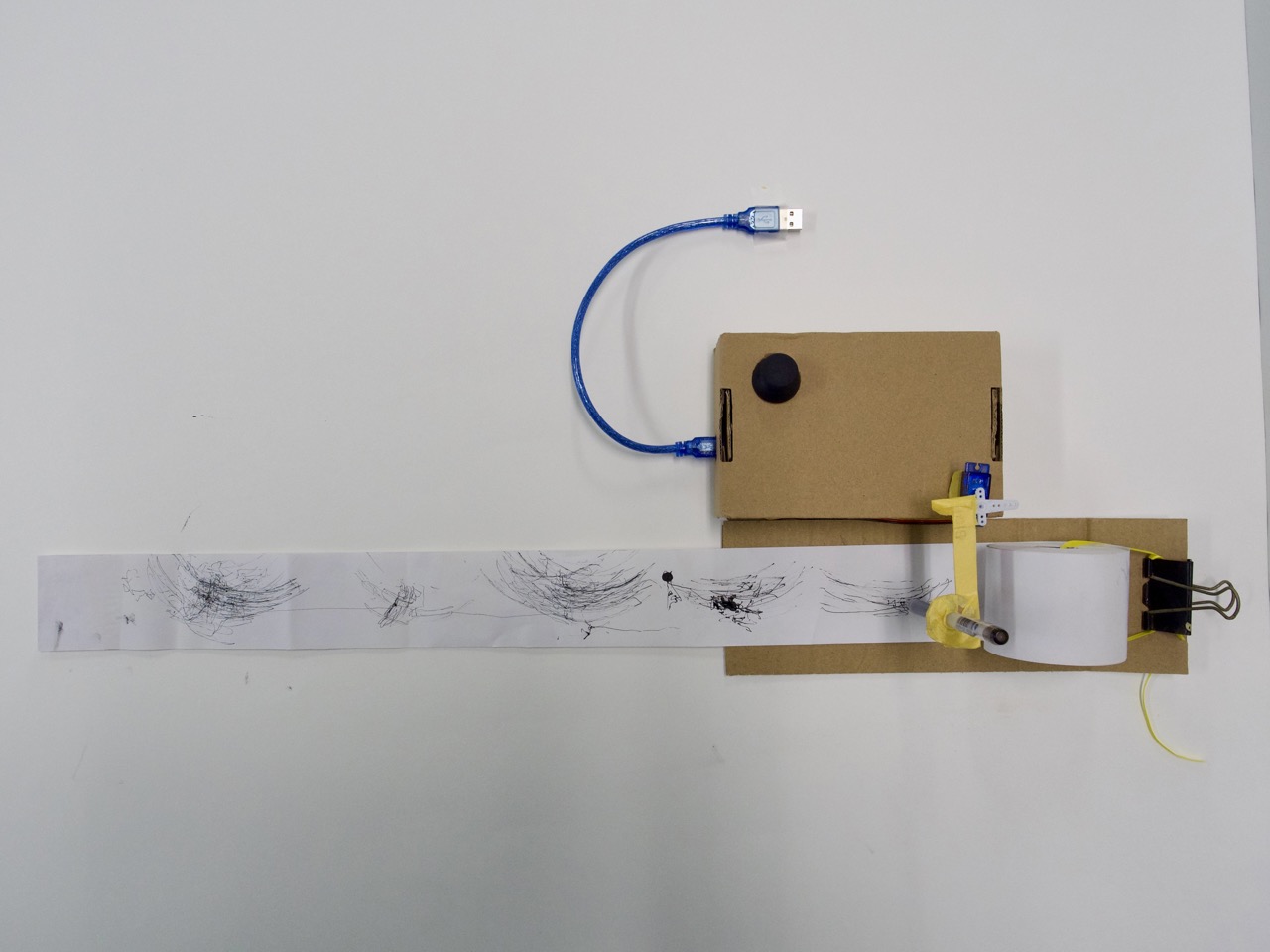
Archived in the Catalogue of Making.
[ Friday elective ]
Electronic Music Workshop with Brian O’Reilly
Learning how sound behaves, not just how it is produced
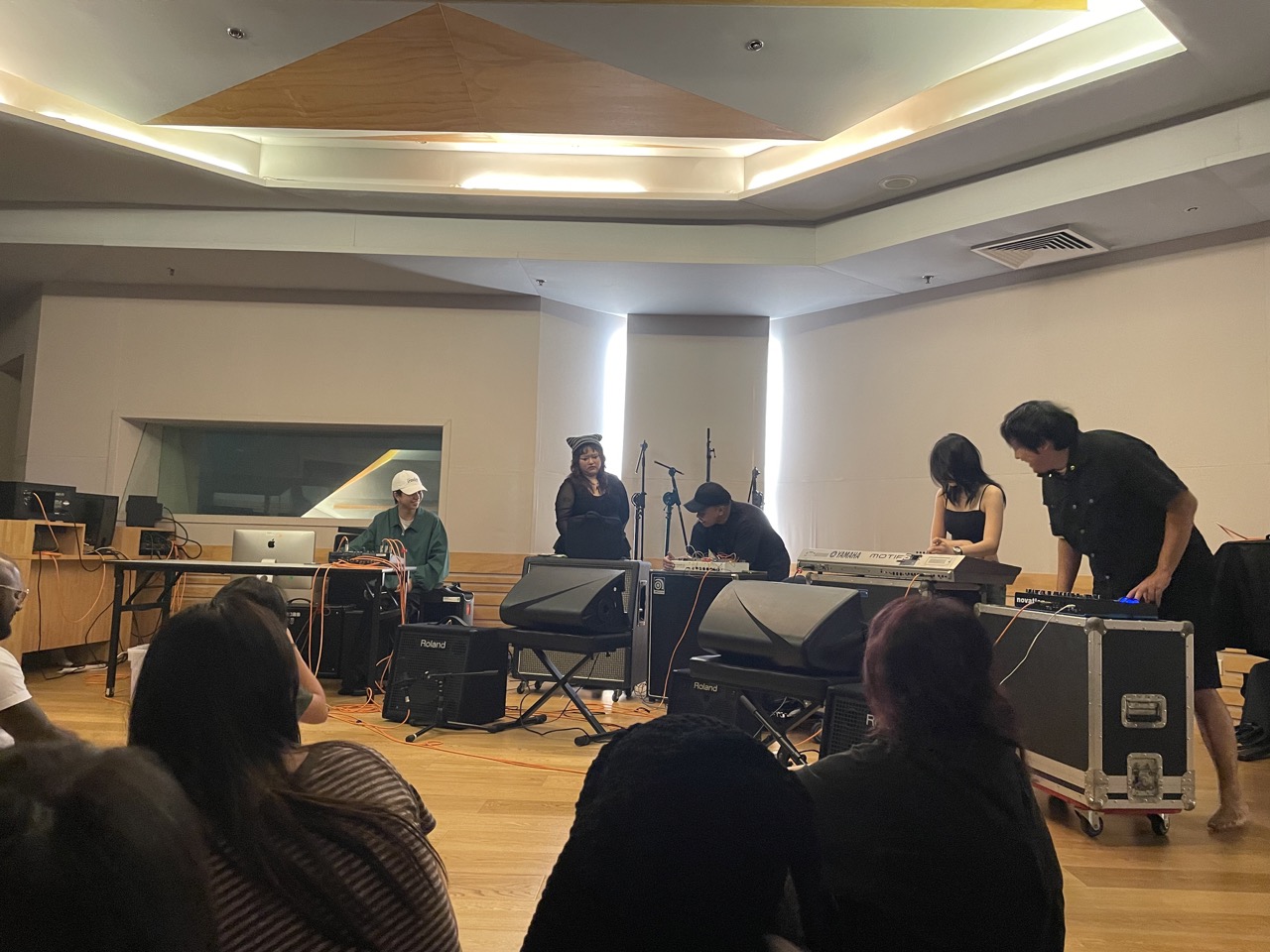
This Friday session was a break from my usual workflow, but it ended up connecting directly to how I think about systems, gesture and interpretation. Brian O’Reilly introduced us to the history of electronic music and the tools used to shape sound. The class was practical, historical and surprisingly relevant to how I understand expression through machines.
Musique concrète
Recorded sound as material
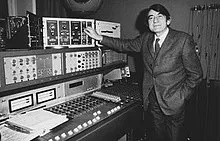
Brian introduced Pierre Schaeffer, often described as the father of musique concrète. Instead of composing with instruments, Schaeffer recorded everyday sounds and treated them as musical material.
I noted that musique concrète works with recorded sound rather than traditional notes, that abstract sound is open to interpretation, and that this approach marked the beginning of sampling.
This idea of reinterpreting recorded material reminded me of my own work. A recorded gesture, like a recorded sound, becomes raw material that can be shaped, cut, looped or transformed. Once it enters a system, the meaning changes depending on the listener or viewer.
[ Early tools and machines ]
Gesture and proximity as input
Theremin, archives and early synths
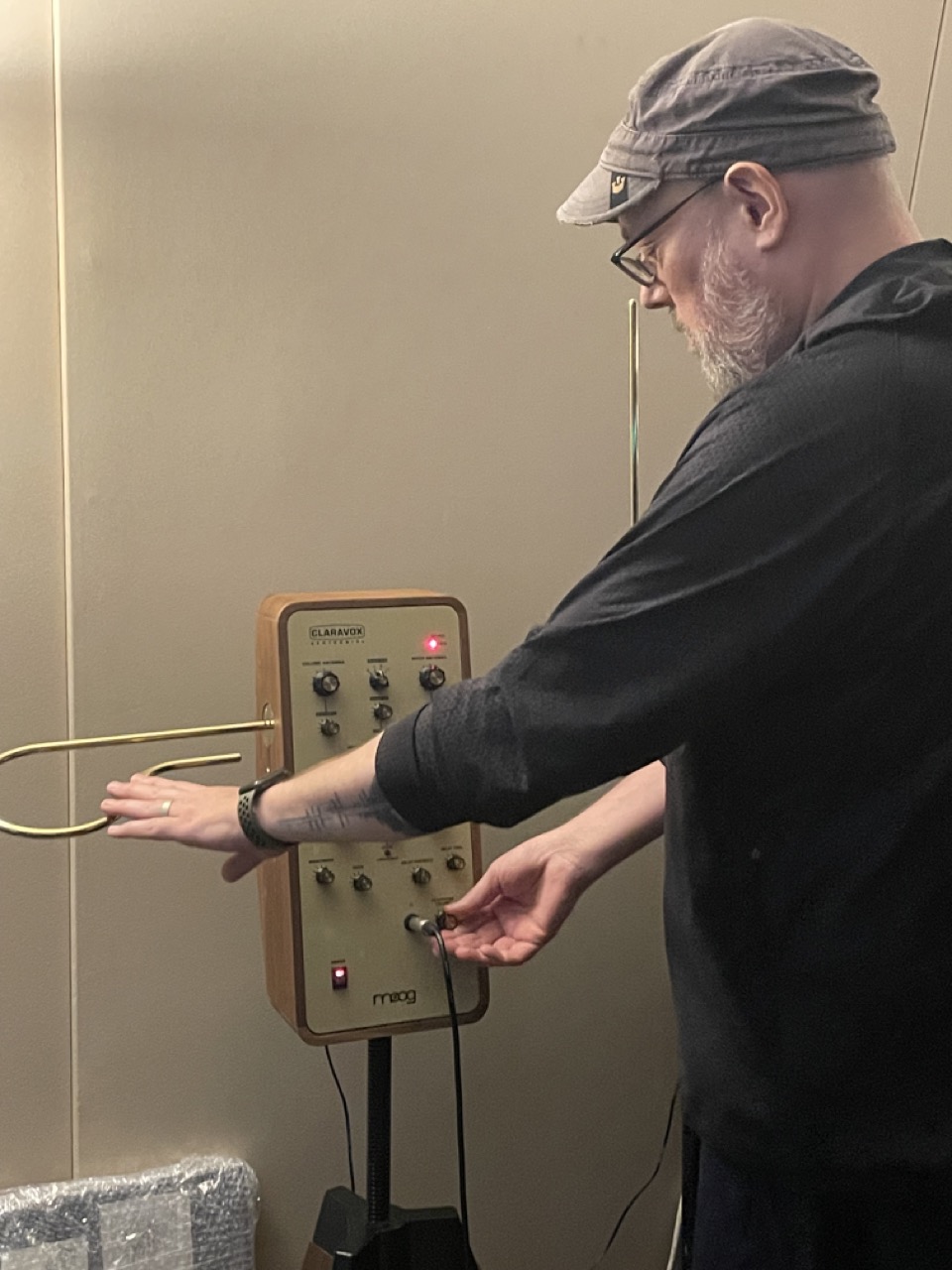
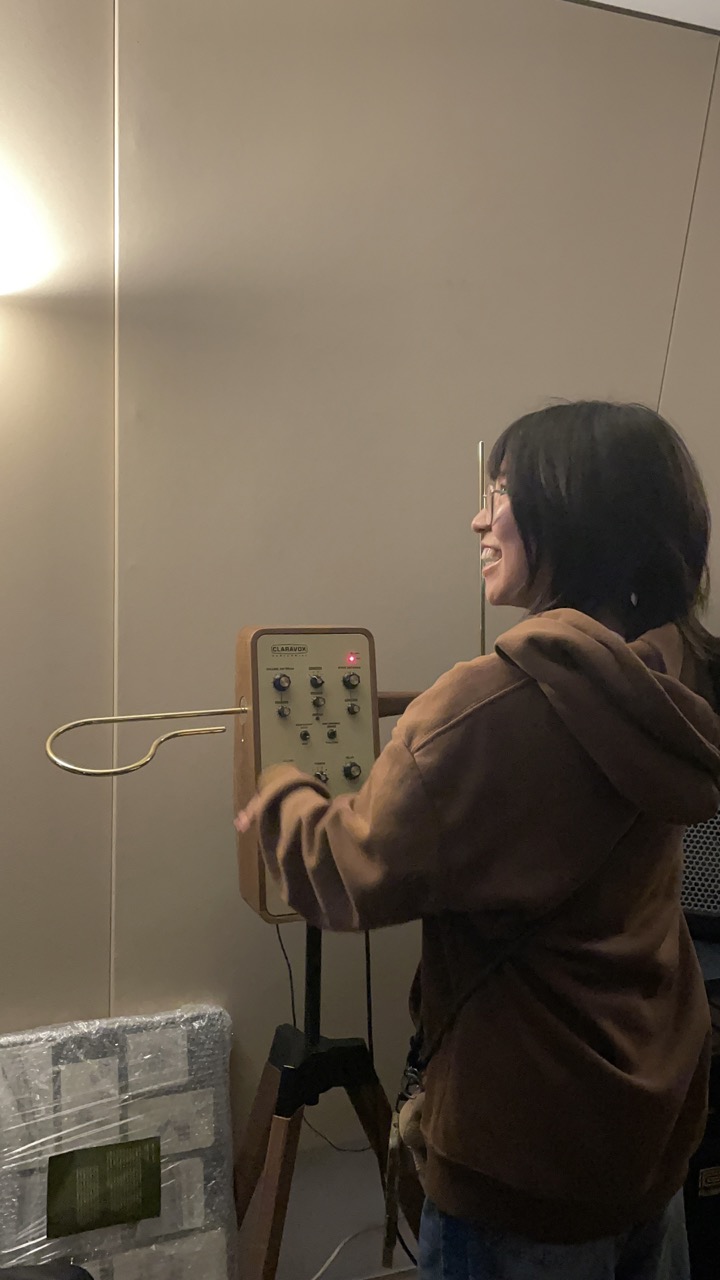
Brian showed us how early composers and engineers worked with the limitations of their tools. He mentioned systems like the Odyssey, early synthesizers that used punch cards, and historical archives such as 120years.net. The theremin, played by Clara Rockmore, stood out the most.
The theremin is played entirely through gesture. There is no physical contact. The player shapes sound by moving their hands through space, which feels very close to what I am exploring with sensor based gesture capture.
[ Modular thinking ]
Synthesis as a system
Modules, routing and behaviour
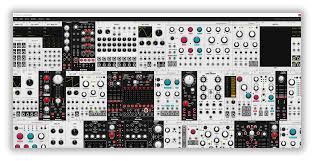
We then moved into the basics of synthesis. Brian pointed us to vcvrack.com as a modular synthesizer environment, to Audible Instruments modules, and to Audacity as a simple visual tool for inspecting sound.
Modular synthesis builds sound from small functional blocks. Oscillators, filters, envelopes and amplifiers are patched together to produce behaviour. Signals flow through the graph, and small routing changes create very different outcomes.
[ Why this class mattered ]
Connecting sound back to gesture
Translation, tools and interpretation
At first, the session felt disconnected from my project. By the end, it gave me a new way to understand translation, systems and interpretation.
A gesture is not fixed. Once it enters a system, it can be stretched, distorted or reinterpreted, just like a recorded sound in musique concrète. Tools shape expression. Early synthesizers limited what musicians could do, which mirrors how my sensing hardware shapes the gestures I can capture.
Gesture as input also has a long history. The theremin shows that gesture based interaction is not new. I am working in a similar territory, just through computational tracing instead of sound.
Seeing sound routed through modules helped me imagine gesture flowing through capture, processing and material output. Modularity gives me a clear mental model for how movement travels across stages in my own system.
[ Reflection ]
What this week clarified
Reading the relationship, not just the drawing
Week 11 was the first time the interaction between craft and code felt tangible. The prototype showed that I am not just building a device. I am studying the relationship between my gesture, the system’s behaviour and the marks that appear.
The feedback made it clear that I cannot talk about craft loosely. I need to define it with intention, understand where it sits in the project, and recognise that my goal is not simply to show imperfection, but to understand how human and machine gestures interact.
This prototype is an early step, but it pushed the project in a clearer direction. The interesting part is not the drawing on its own, but what the drawing reveals about how I move and how the system responds.