WEEK 0
EXPERIMENT 0
Translating Generative
Patterns by Hand
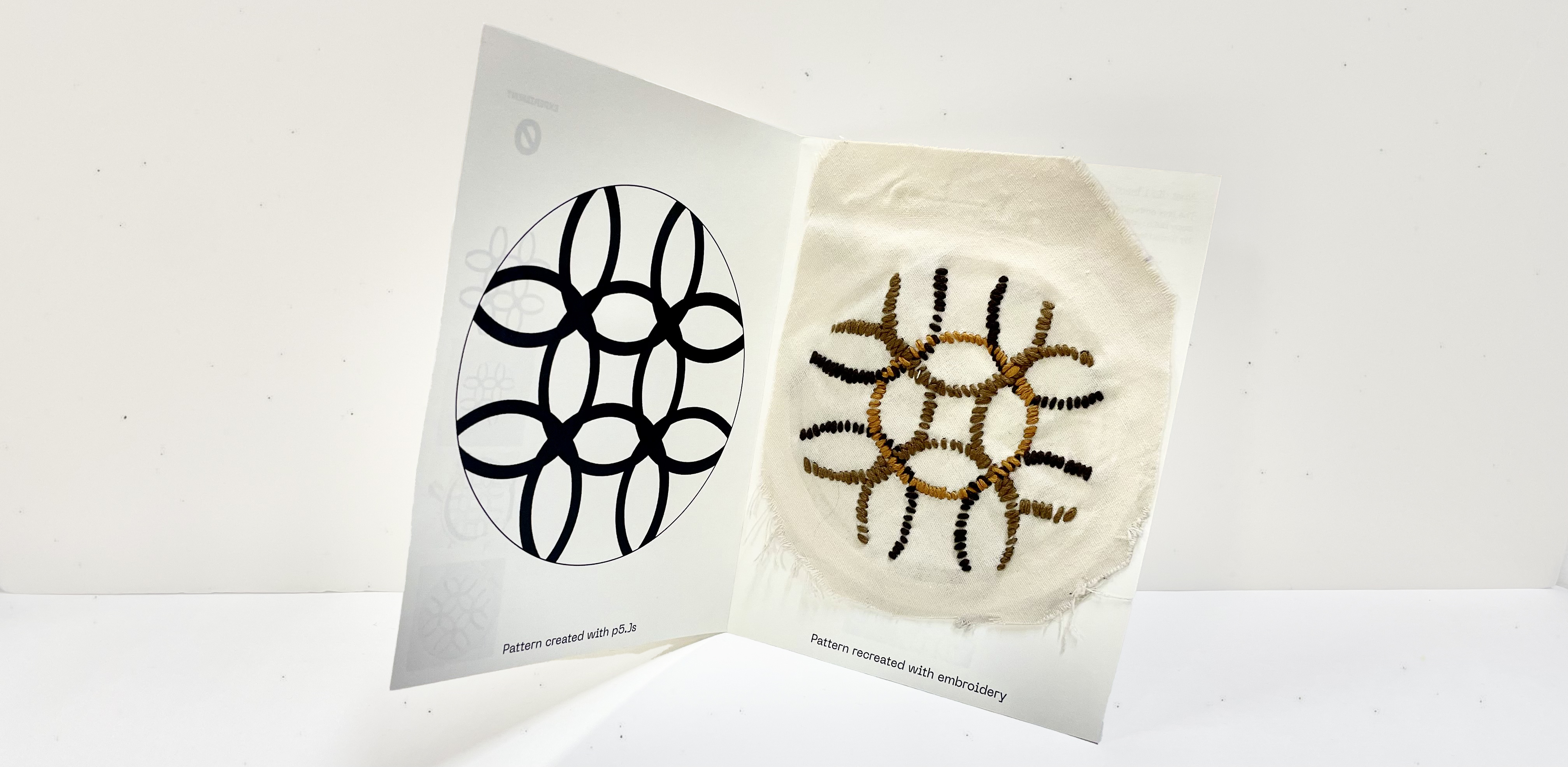
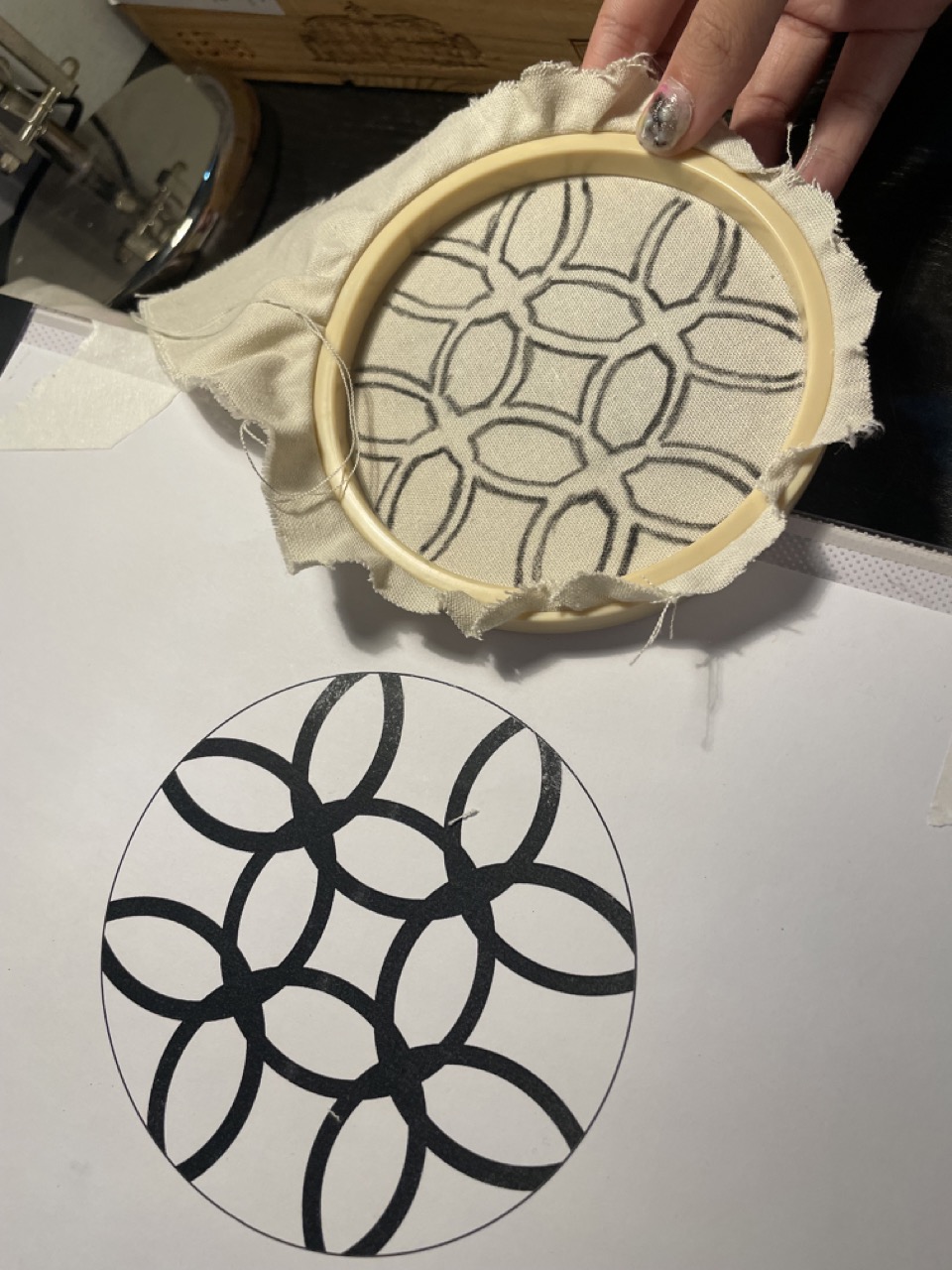
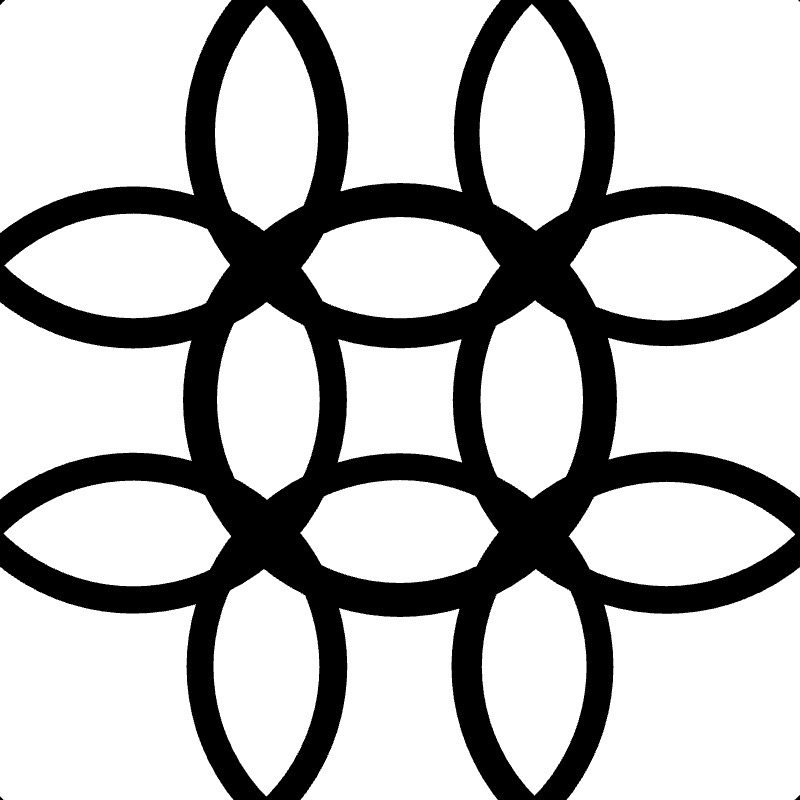
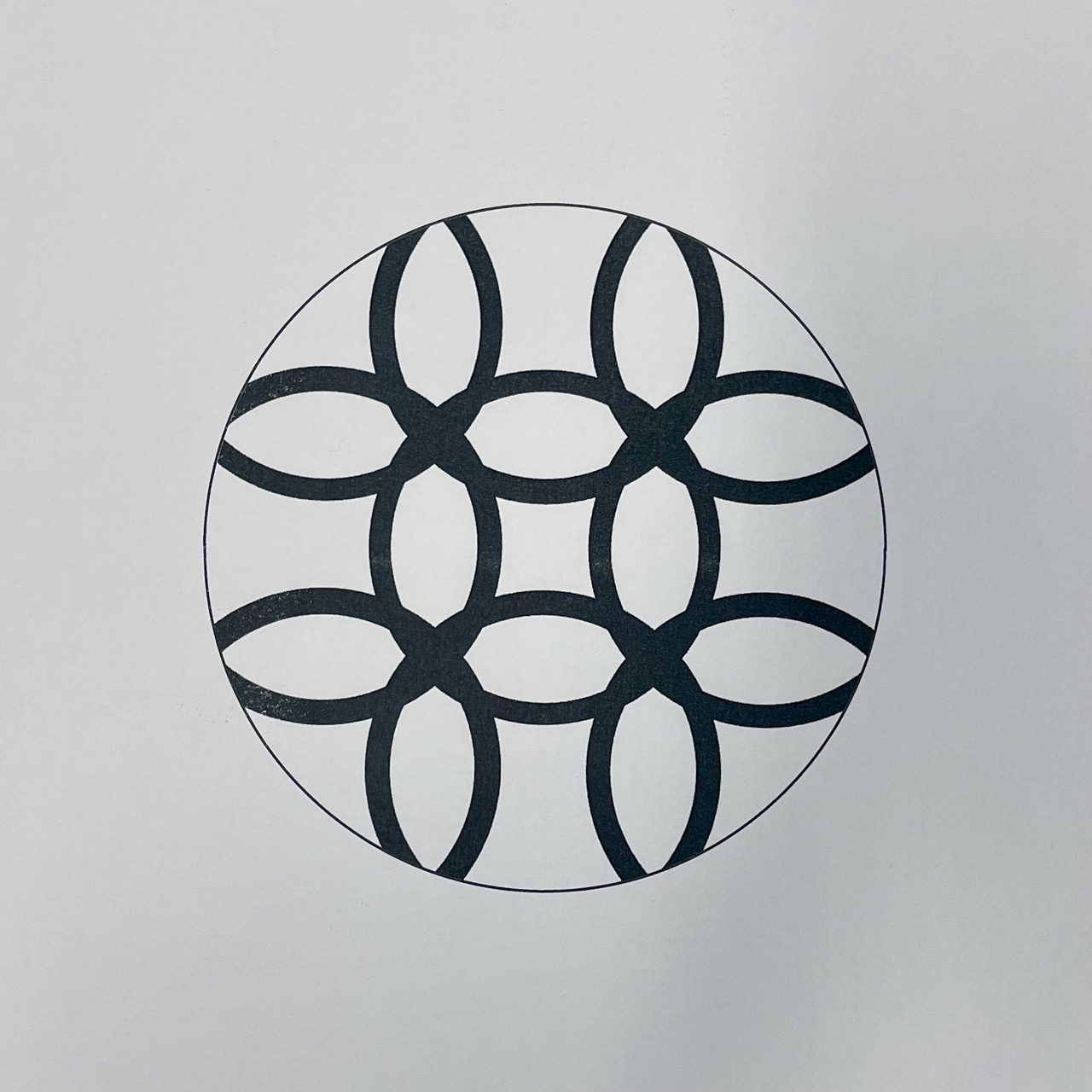
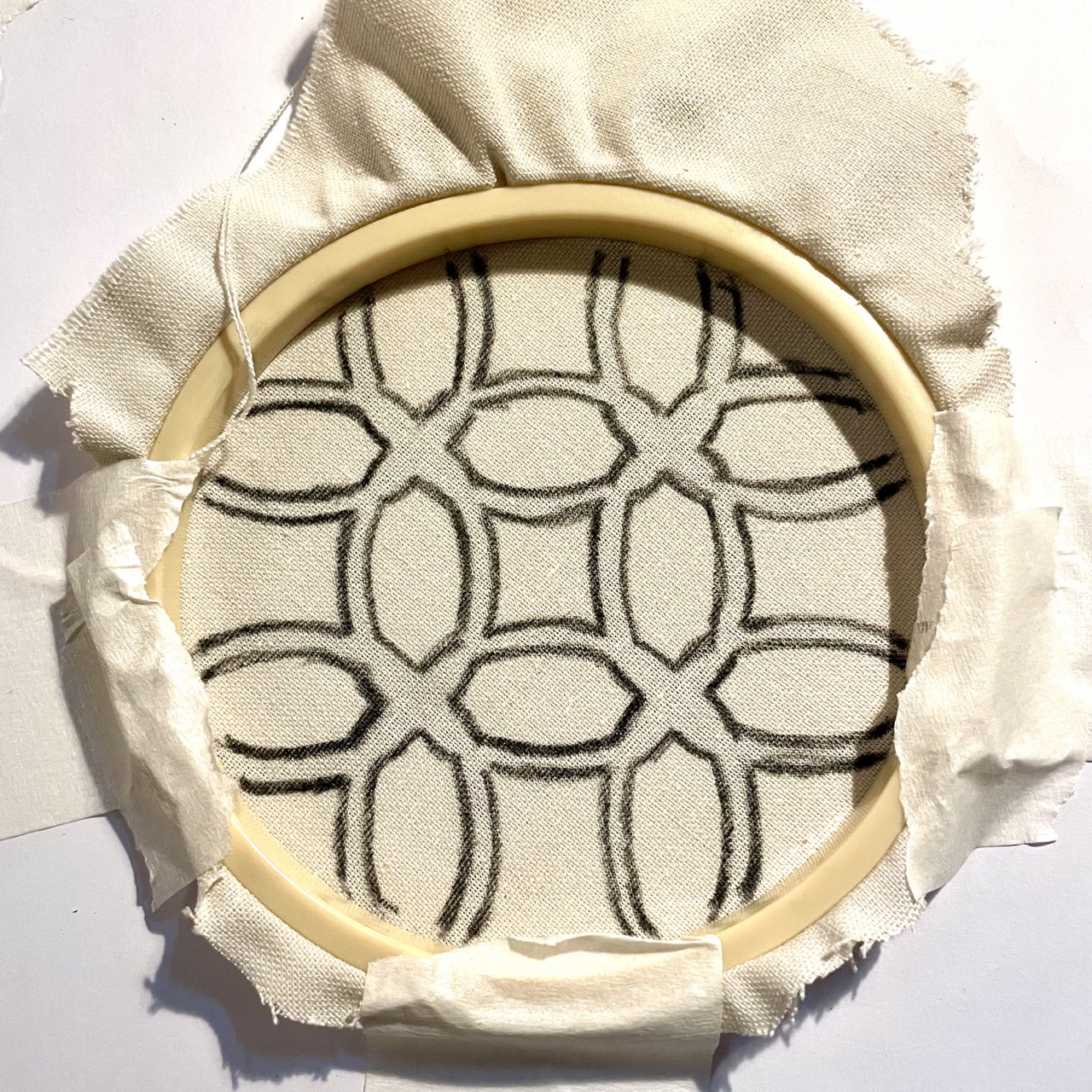
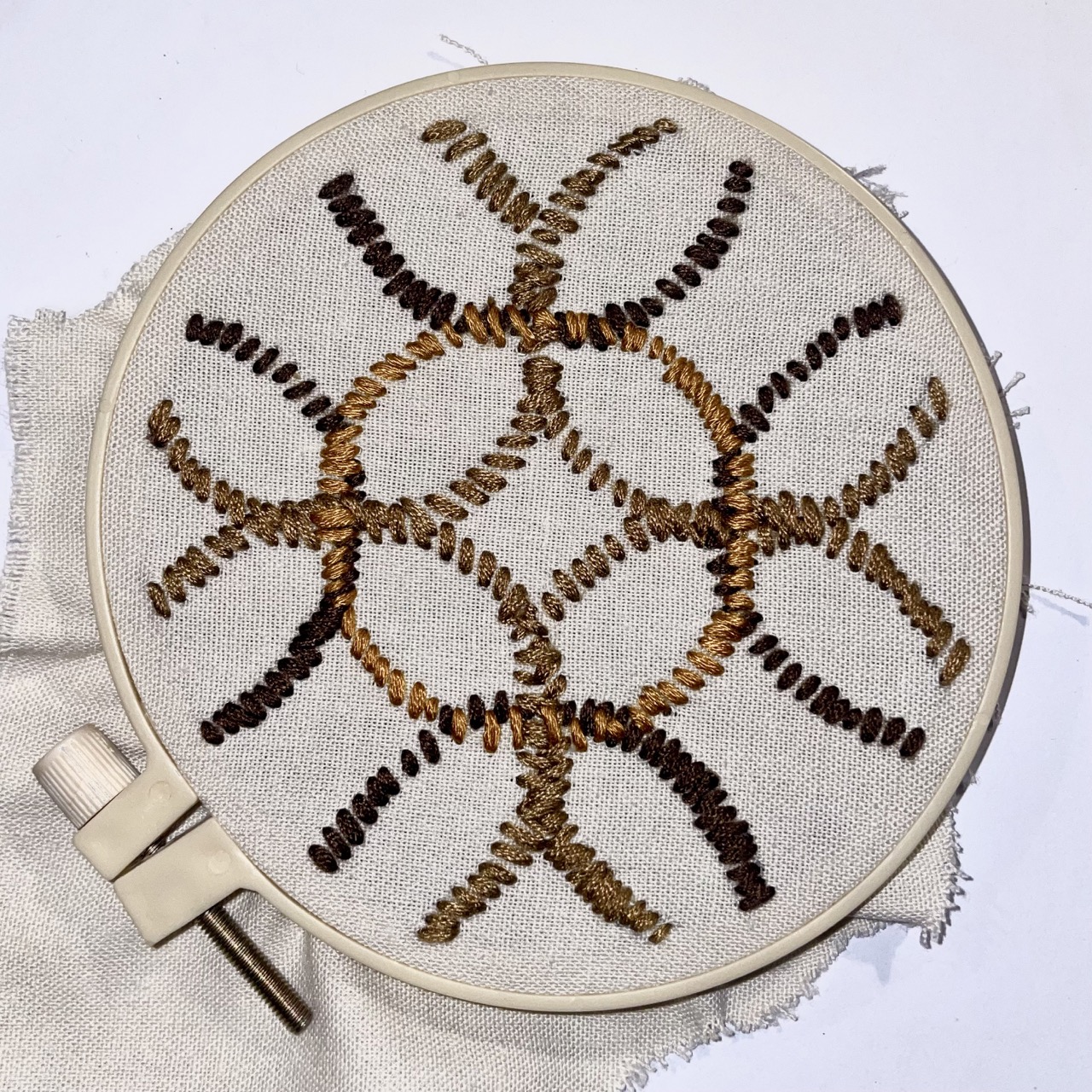
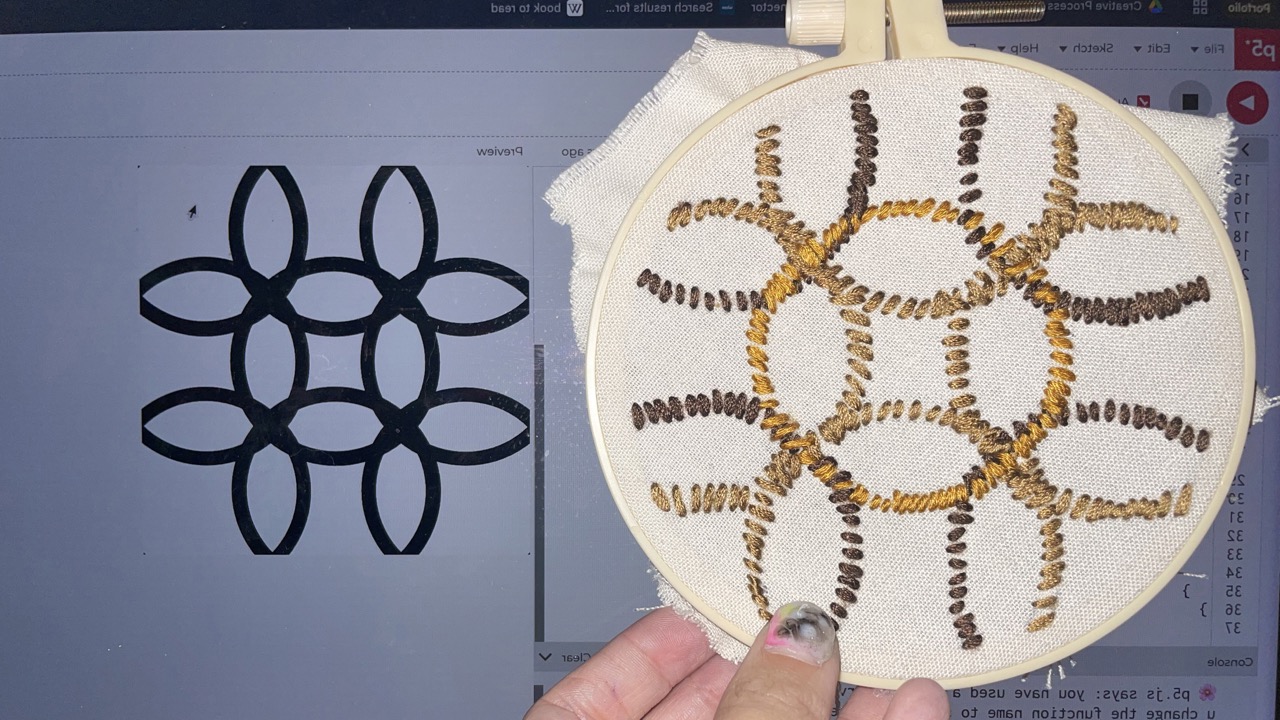
I generated a symmetrical p5.js pattern on screen, traced it onto fabric using a lightbox, then translated it again through embroidery. It began as a simple transfer from digital to physical, but became a question: how do systems shift when filtered through the hand?
On screen
Clean, symmetrical, predictable; precise and repeatable.
Tracing
Pencil slipped, fabric tugged; lines warped with movement.
Embroidery
Stitches became decisions; material resistance shaped the form.
[ What Happened in the Process? ]
On screen
Clean, symmetrical, predictable
On screen, the pattern was precise and repeatable.
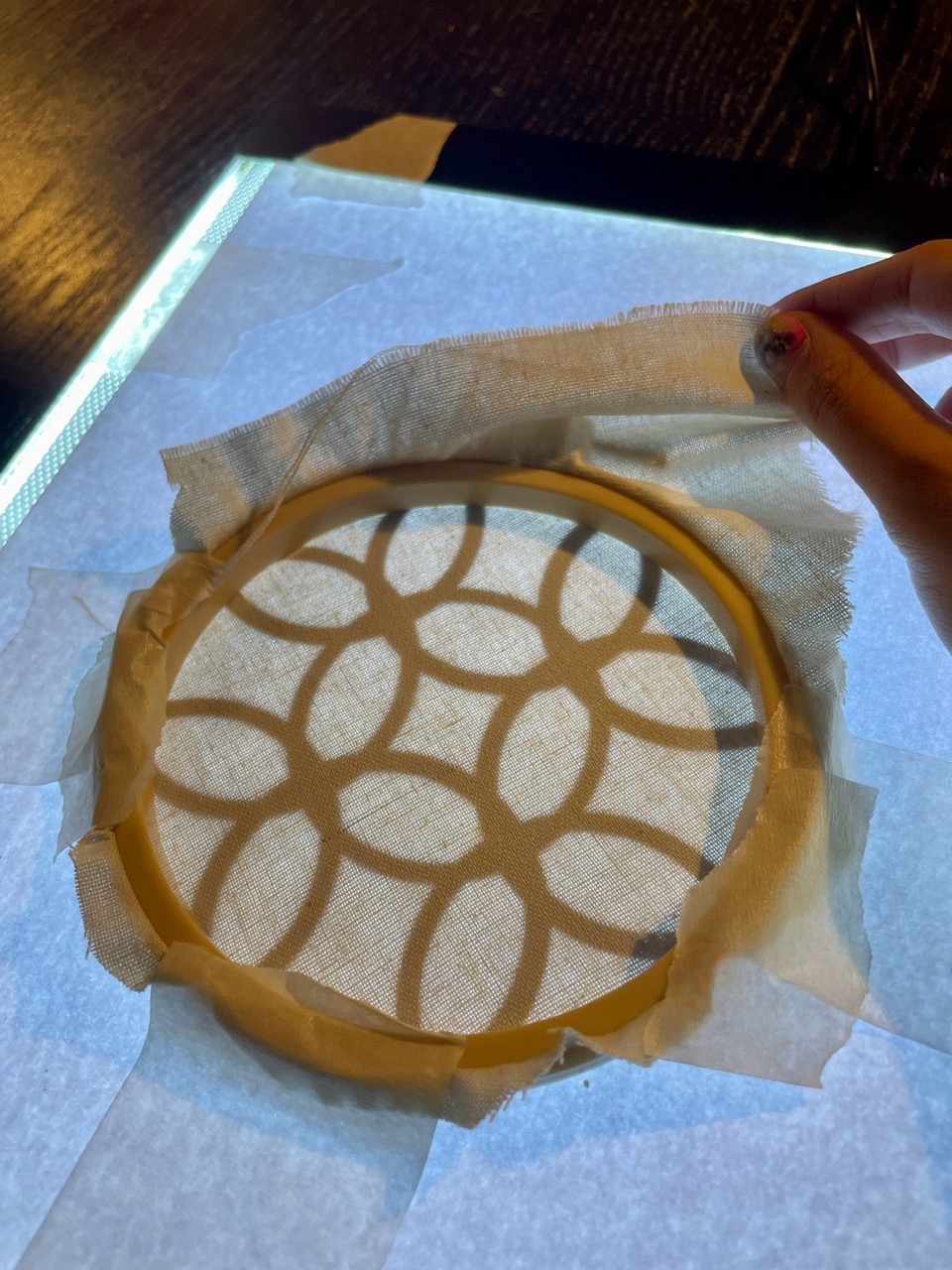
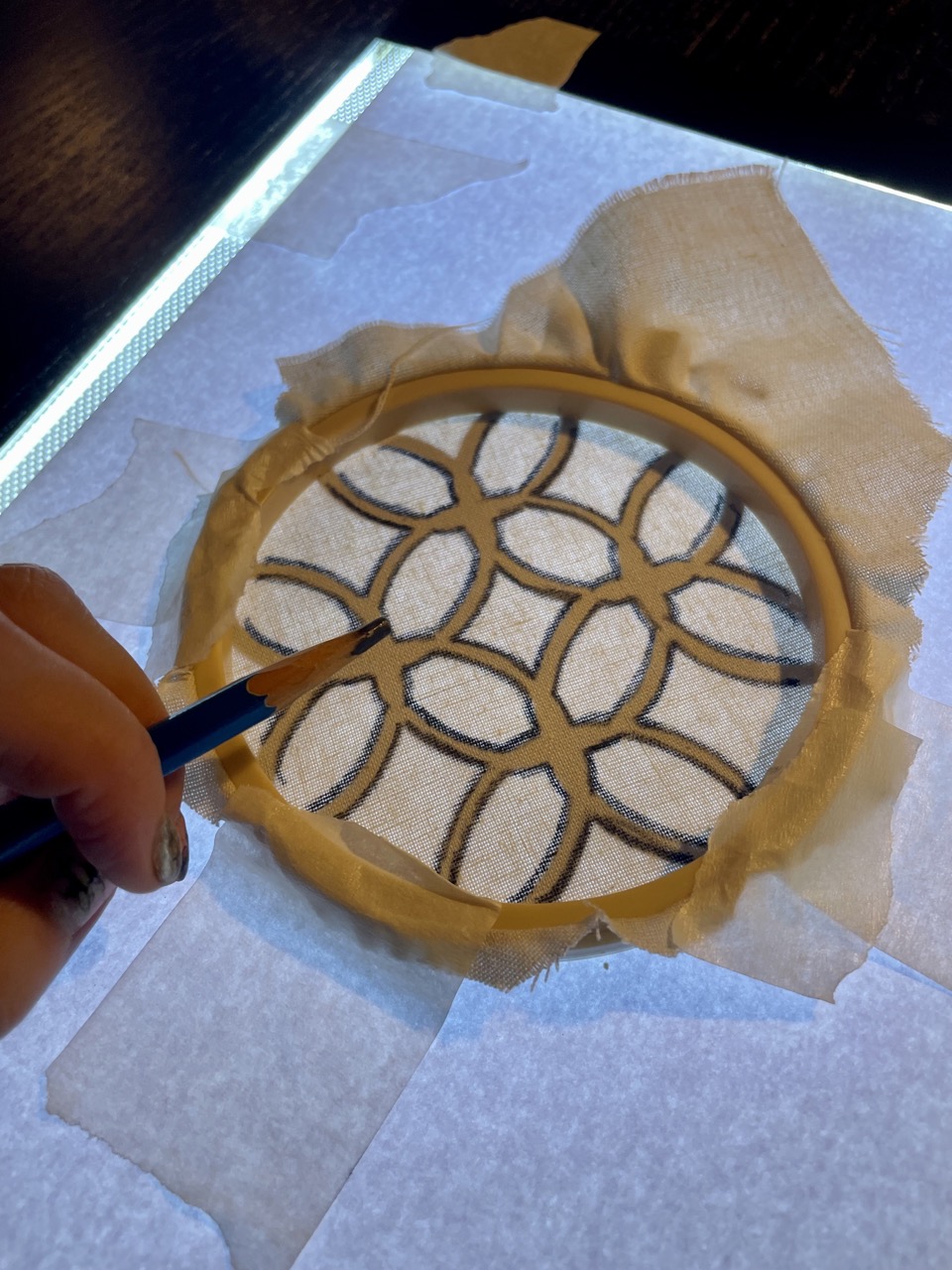
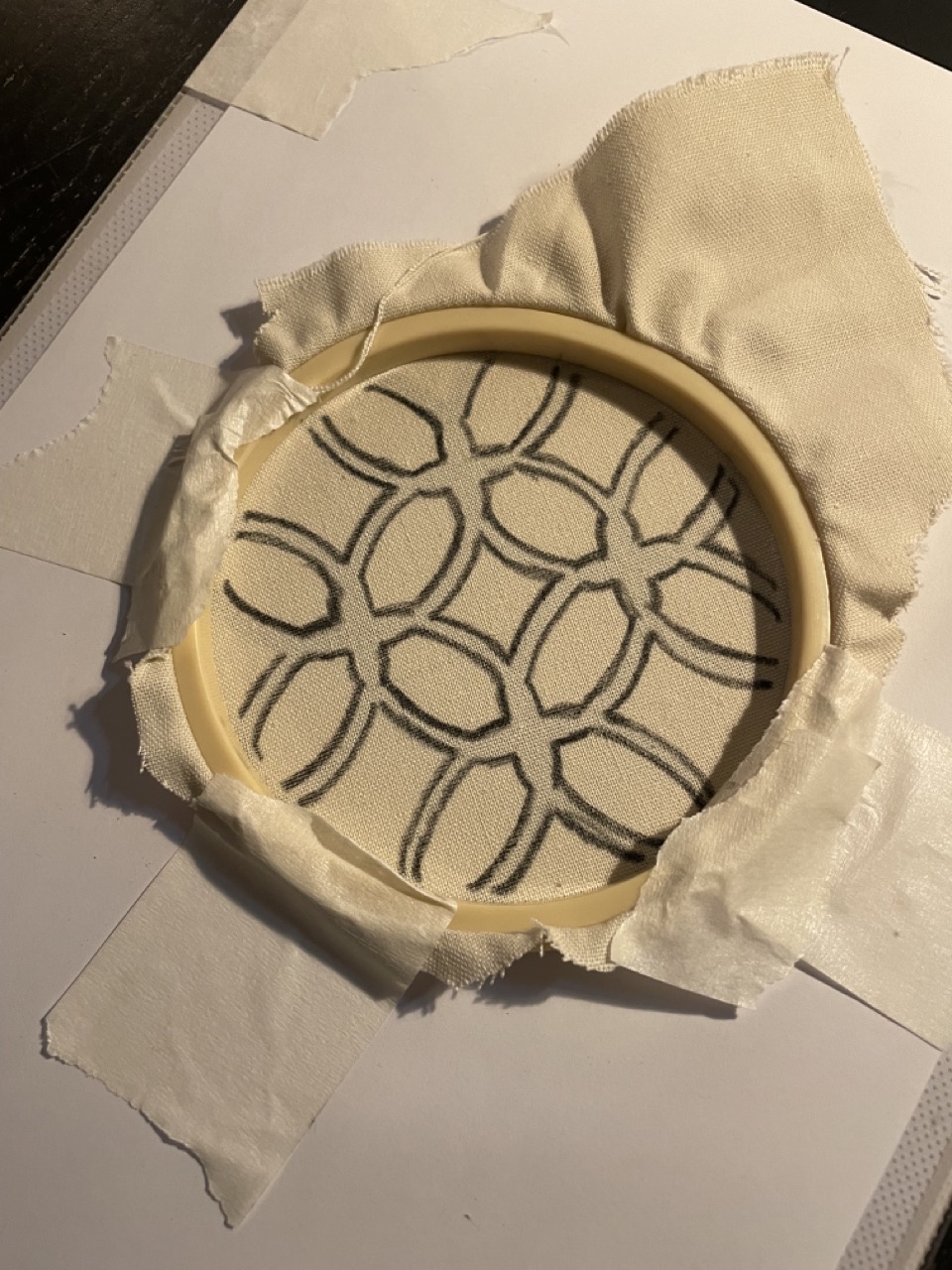
Tracing
Pencil slipped, fabric tugged
The pencil slipped, the fabric stretched, and my hand struggled to follow the clean digital lines.
Embroidery
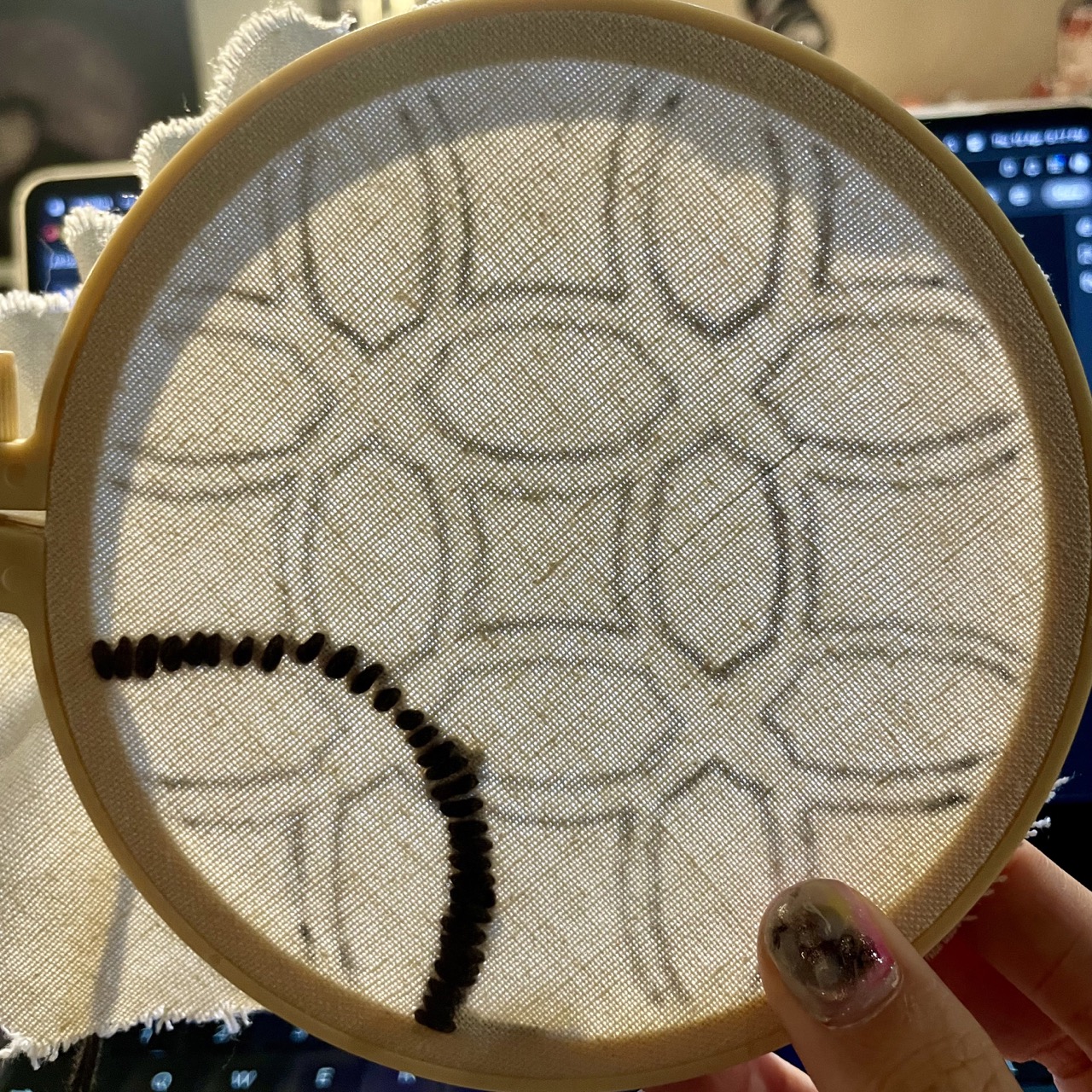
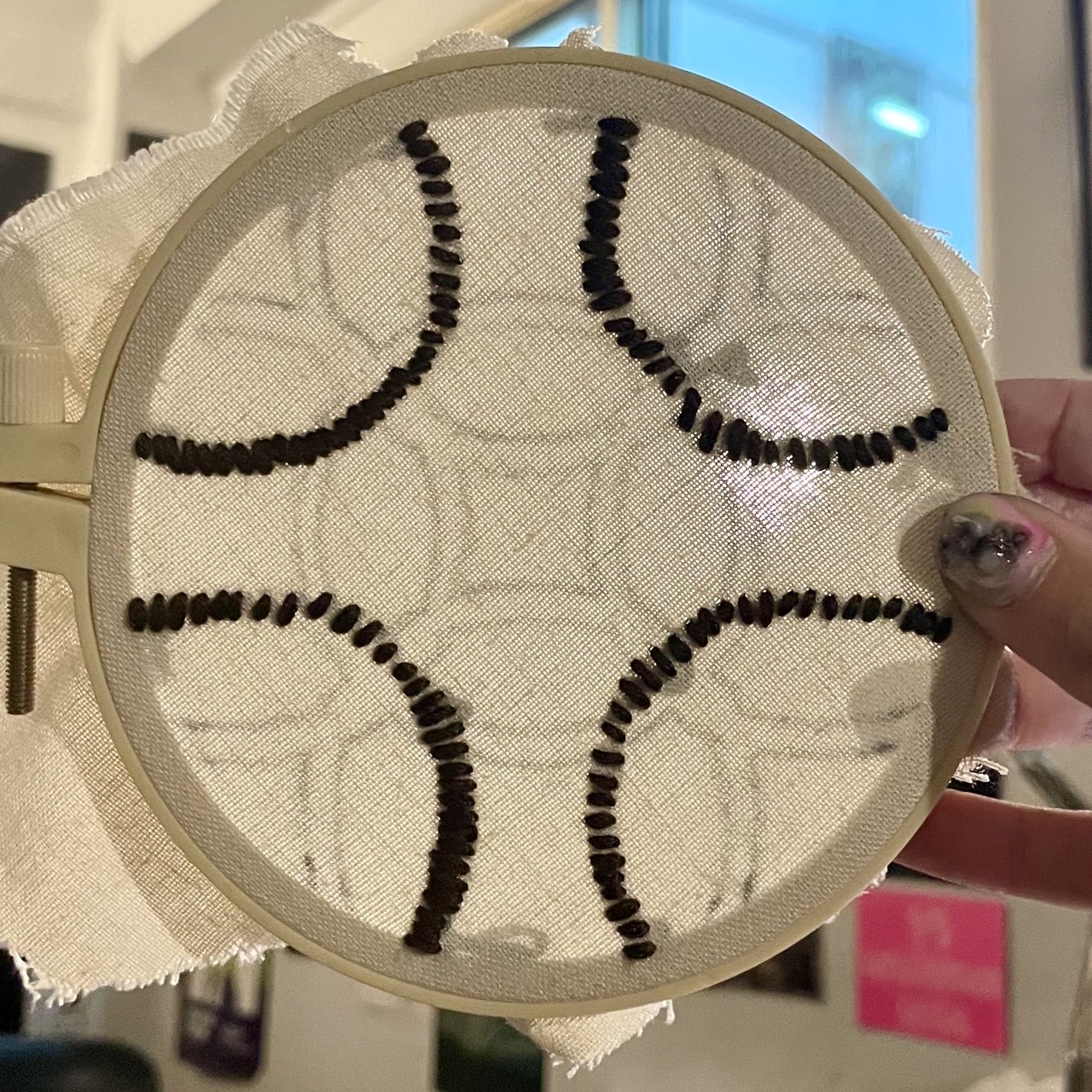
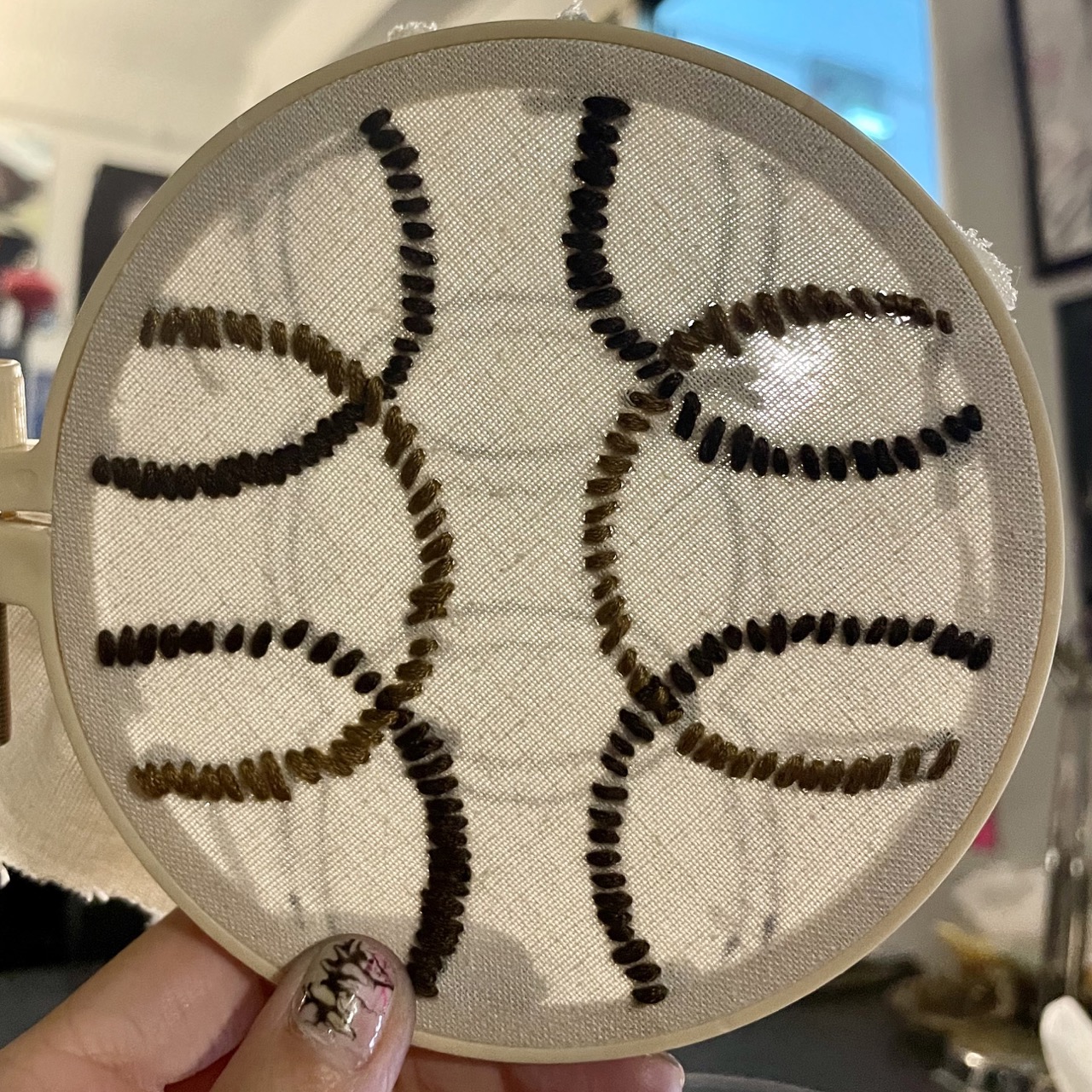
Stitches became decisions
Thread tension resisted; stitches were uneven; each curve became a choice, follow the trace or adapt to what felt natural. The outcome wasn’t a copy of the digital sketch; it was a reinterpretation shaped by material resistance, hesitation, and bodily presence.
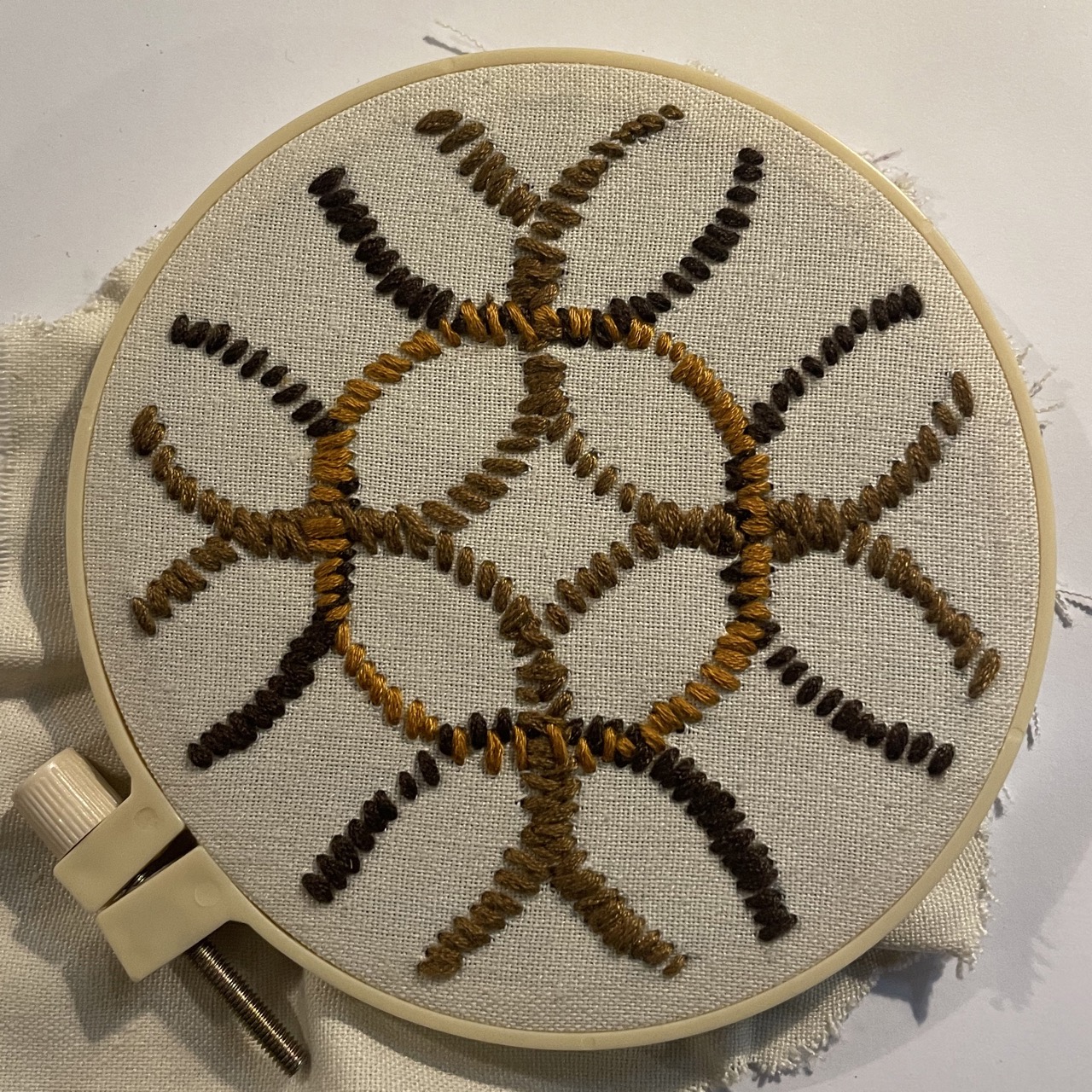
COMPARISON
.
[ What I Realised ]
Making is also a form of thinking
Slowness gave me time to notice, adjust, and reflect. Mistakes revealed presence: uneven stitches carried a trace of care and individuality. The “error” wasn’t a flaw but a new design language.
[ Why It Matters to Me Now ]
Craft and code are not opposites
Both involve iteration, decision-making, and response. The embroidery shows how simple computational forms gain depth when interrupted by material and human presence.
[ Questions Moving Forward ]
What if interruption is invited?
What if code welcomed interruption instead of hiding it? Can digital systems hold slowness, care, or hesitation the way embroidery does? How might imperfection be used as a method in generative design?